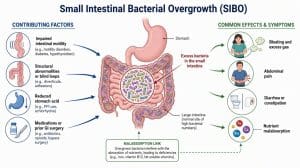
If you’re wondering what causes bloating after every meal, common contributors include gas from digestion, swallowed air, food intolerance, small intestinal bacterial overgrowth (SIBO) and constipation. Bloating after a meal often eases within a few hours, though it can last longer. If it keeps returning, the pattern and any other symptoms can help point towards a cause.
It can be uncomfortable and unsettling when even an ordinary meal leaves your abdomen feeling tight, full or visibly swollen. The timing may seem to offer a clear answer, but bloating can have several overlapping causes, and it doesn’t always mean you’ve eaten the wrong food.
This article explains what bloating is, how food intolerance, SIBO and constipation may contribute, and which tests can help investigate persistent symptoms. You’ll also learn how long post-meal bloating can last and when it’s sensible to seek further advice.
Key Takeaways
- Notice whether bloating follows particular foods, eating habits or changes in bowel movements; patterns can help narrow down possible causes.
- A food-and-symptom diary and, where appropriate, breath tests may help investigate food intolerance or SIBO.
- Constipation can contribute to bloating when digestive contents build up, so bowel habits are an important part of the picture.
- Post-meal bloating often eases within a few hours, but recurring or persistent symptoms deserve further attention.
Can a food intolerance cause bloating?
Yes. Lactose intolerance and difficulty digesting some carbohydrates can cause bloating after eating, though other factors may contribute. Understanding what causes bloating after every meal can help you notice whether symptoms follow a particular food or occur regardless of what you eat.
Bloating is common: around 4 in 10 people experience it occasionally. The timing and combination of symptoms can offer useful clues, but bloating alone doesn’t identify its cause.
Common causes after eating
Post-meal bloating can develop when gut bacteria ferment carbohydrates that haven’t been fully digested, producing gas. Lactose in milk and other dairy foods may trigger symptoms if you have difficulty digesting it.
Other possible contributors include swallowed air, constipation and conditions such as IBS or SIBO. Coeliac disease can also cause digestive symptoms; the NHS estimates it affects at least 1 in 100 people in the UK. Identifying a likely trigger matters because the same symptom can have different causes.
Signs of digestive gas
Digestive gas may cause frequent burping, flatulence or pressure in the abdomen. It can form when bacteria in the large intestine break down carbohydrates that weren’t digested earlier.
Fizzy drinks add gas to the digestive tract, while eating quickly or talking during meals can increase swallowed air. These symptoms can occur during normal digestion. A noticeable change in your usual pattern may help distinguish a food trigger from everyday gas.
Symptoms of bloating
Bloating describes an uncomfortable feeling of fullness, tightness or pressure in the abdomen. Your stomach may feel hard or look visibly swollen, and some people also experience abdominal discomfort.
The sensation of bloating and visible distension don’t always occur together. Around half of people with bloating may experience it without visible distension. Noticing whether you feel pressure, see swelling or experience both can help you describe your symptoms clearly.
Foods that produce gas
Beans, lentils, onions and cruciferous vegetables, including broccoli and cabbage, can produce gas during digestion. Some carbohydrates in these foods reach the large intestine, where bacteria ferment them.
This doesn’t mean you need to avoid these foods. Rinsing tinned beans or cooking vegetables thoroughly may make them easier to tolerate. If you’re exploring what causes bloating after every meal, note whether symptoms follow these foods or fizzy drinks, and whether the pattern repeats.
Testing for SIBO, stool issues and food intolerance
Testing can help investigate recurring symptoms and clarify what causes bloating after every meal. The approach depends on the pattern, including when symptoms start, which foods are involved and whether your bowel habits have changed.
Carbohydrate and food intolerance
Food intolerance can cause symptoms when the digestive system struggles to process a particular food or carbohydrate. Poor absorption allows some carbohydrates to reach gut bacteria, which ferment them and produce gas.
A food-and-symptom diary can reveal patterns. For a couple of weeks, record meals, snacks, drinks and symptoms, noting when they begin and how long they last. This can show whether a food repeatedly precedes discomfort or whether symptoms follow varied meals. A recurring pattern is useful information, but doesn’t establish a diagnosis by itself.
Lactose and fructose intolerance
Lactose intolerance involves difficulty digesting lactose, found in milk and some dairy foods. Fructose malabsorption occurs when the small intestine doesn’t absorb fructose fully. Undigested carbohydrates can pass onwards and contribute to gas and discomfort.
A hydrogen breath test may help assess carbohydrate malabsorption. It measures gases in your breath after you consume a specific sugar, such as lactose. Results need to be considered alongside symptoms, because a finding alone may not explain every cause of bloating.
Food intolerance and IBS
Irritable bowel syndrome (IBS) can involve bloating, abdominal pain and changes in bowel habits. Food-related symptoms may overlap with IBS, so noticing a trigger doesn’t automatically establish an intolerance.
A healthcare professional can consider symptom patterns, foods and bowel movements together. Understanding what causes bloating after every meal may involve weighing these factors rather than focusing on one food. If several foods seem to cause problems, a structured dietary approach can help identify triggers without unnecessarily restricting a wide range of foods.
For suspected small intestinal bacterial overgrowth (SIBO), a breath test can help assess whether excess bacteria may contribute to symptoms. Stool concerns are also explored through bowel movement patterns, including changes in frequency or consistency. If you’d like to ask questions about possible next steps, you can use the free 15-minute intro chat.
Constipation and digestive-content build-up
Constipation can leave stool and other digestive contents moving slowly through the bowel, contributing to pressure and bloating. This may make your stomach feel full after meals, even when a particular food isn’t the main trigger. Hard stools, straining or feeling that you haven’t fully emptied your bowel can help identify constipation as part of the pattern.
Hydration supports regularity, and increasing fibre gradually can help avoid extra gas from a sudden dietary change. Oats, fruit and vegetables add fibre, but a sharp increase may worsen bloating for some people. If your normal bowel habits change and the change lasts more than three weeks, contact your GP.
Small intestinal bacterial overgrowth (SIBO) occurs when bacteria from the colon overflow into the small intestine. These bacteria can ferment carbohydrates and produce extra gas; SIBO may also occur with diarrhoea and weight loss. IBS, chronic idiopathic constipation, pelvic floor dysfunction and functional dyspepsia are other disorders associated with bloating or distension.
Gas and bloating can also accompany coeliac disease, food intolerance or irritable bowel syndrome. These conditions affect digestion in different ways: carbohydrates may be poorly absorbed, bowel movement may be altered, or the gut may become more sensitive to normal amounts of gas. That distinction matters because bloating alone doesn’t identify a specific disease.
Low stomach acid is sometimes suggested as a reason for poor digestion, but bloating by itself cannot establish that stomach acid is low. A clinician considers the wider picture, including symptoms, medicines, medical history and bowel habits, rather than assuming one cause. How symptoms relate to meals and bowel movements can help distinguish constipation from other gastrointestinal problems.
A nutritionist-led functional medicine assessment considers these connected factors, rather than treating gas or distension as the whole problem. If constipation is present alongside persistent bloating, the pattern of bowel movements, food intake and other symptoms can help guide what to investigate next.

Constipation and digestive-content build-up
Constipation can slow the movement of stool through the bowel, allowing digestive contents to build up. This can add pressure and make your abdomen feel full or distended after meals. Hard stools, straining or feeling that you haven’t completely emptied your bowel are useful signs to notice. Changes in these patterns can help distinguish constipation from bloating linked mainly to food.
Small intestinal bacterial overgrowth (SIBO) is another possible contributor. It occurs when bacteria from the colon overflow into the small intestine, where they can ferment carbohydrates and produce excess gas. SIBO can also occur with diarrhoea and weight loss. The pattern matters: frequent bloating alongside changes in bowel movements gives a fuller picture than gas alone.
Several functional digestive disorders are associated with bloating and distension. These include irritable bowel syndrome, chronic idiopathic constipation, pelvic floor dysfunction and functional dyspepsia. Coeliac disease and food intolerance are also linked to bloating, but each involves different processes. For example, constipation affects transit, while coeliac disease involves a reaction to gluten.
Low stomach acid is sometimes proposed as an explanation for digestive symptoms. However, bloating alone does not show that stomach acid is low or identify a particular disease. A considered assessment looks at symptoms, medical history, medicines, eating patterns and bowel habits together. This helps avoid attributing every symptom to one assumed cause.
For ongoing symptoms, record changes in stool consistency, straining and whether bloating eases after a bowel movement. A GP can assess persistent changes in normal bowel habits, while functional medicine considers how digestive symptoms relate to broader health factors. If you want to explore that approach, learn about functional medicine for digestive concerns.
IBS Clinics: Gut Health Tests
IBS Clinics’ nutritionists can help investigate persistent bloating and consider whether gut health testing may be useful. Gut Health Tests can form part of a personalised assessment, alongside your symptoms, food patterns and digestive history, helping guide next steps rather than focusing on one symptom alone.
If food choices seem to affect your symptoms, support with Special Diets may help you explore possible triggers in a considered way. You can also use a free 15-minute intro chat to ask questions and discuss whether this kind of support suits your concerns.
If you’d like to talk through your bloating or testing options, contact IBS Clinics.
Take the next step towards clearer answers
Understanding what causes bloating after every meal starts with treating your symptoms as useful information, not a reason to cut out foods at random. A clearer picture of when discomfort begins, how it changes and what else is happening can help shape a more focused conversation about your digestive health.
Speak to your GP if bloating is persistent or keeps returning. The NHS advises getting symptoms checked if you feel bloated around 12 or more times a month, as this can be relevant to ovarian cancer. Seek urgent medical help for severe or sudden symptoms.
For ongoing digestive concerns, IBS Clinics offers Gut Health Tests and IBS care. You can use its free intro chat to ask questions and discuss what support may be appropriate. The next step depends on your symptoms and health history, and an individual assessment can help guide it.
Contact IBS Clinics to discuss support and take a considered step towards understanding your symptoms.
Frequently Asked Questions
What is bloating?
Bloating is an uncomfortable sensation of pressure or fullness in the abdomen, sometimes accompanied by visible swelling. It can happen without the abdomen looking larger, so the feeling itself matters too. For example, you might notice tightness after lunch but no change in how your clothes fit. Bloating describes a symptom, not a diagnosis, and its pattern can help guide further investigation.
Could bloating be a sign of IBS or coeliac disease?
Yes, bloating can occur with both irritable bowel syndrome (IBS) and coeliac disease, but it cannot confirm either condition. Coeliac disease affects at least 1 in 100 people in the UK, according to the NHS. Persistent bloating alongside diarrhoea, abdominal pain or changed bowel habits deserves discussion with a GP, who can assess your symptoms and decide whether further investigation is appropriate.
Could bloating be a sign of an intestinal parasite?
Bloating alone doesn’t show that you have an intestinal parasite. Digestive symptoms can have several causes, so consider the full pattern, including diarrhoea, abdominal pain, recent travel and possible exposure to contaminated food or water. If symptoms persist or you’re concerned about a specific exposure, speak with your GP. They can assess your history and decide whether an investigation is needed.
Is it normal to feel bloated after every meal?
Occasional bloating can happen, but feeling bloated after every meal is a recurring pattern worth paying attention to, especially if it continues or affects daily life. Notice whether it occurs after particular meals, at different times or alongside changes in bowel habits. A GP can help assess regular or persistent bloating, particularly when changing your diet hasn’t helped.
Is bloating caused by stress and anxiety?
Stress can affect gut movement and sensitivity, which may contribute to bloating or make normal digestive sensations feel more noticeable. For instance, symptoms may feel different during a stressful week than during a calmer one. This doesn’t mean the discomfort is imagined. If bloating is persistent, severe or accompanied by other concerning symptoms, seek medical advice rather than attributing it solely to stress.
Is there anything I can try at home?
Try eating smaller meals, chewing with your mouth closed and taking a gentle walk after eating. These changes may reduce swallowed air or help gas move through the gut. Keep a brief record of meals and symptoms to notice patterns, rather than removing several foods at once. If bloating continues despite these measures or regularly returns, contact your GP for advice.

Article by
Tracey Randell
Tracey Randell is a Registered Nutritionist and IFM Certified Practitioner (Dip BCNH, IFMCP, mBANT, CNHC), specialising in complex digestive health. She founded IBS Clinics in 2011 and has spent more than 15 years supporting people with SIBO, IMO, SIFO, dysbiosis and long-standing IBS, many of whom have tried several approaches without lasting improvement.
Tracey’s approach is terrain-first. She looks beyond symptoms to the whole gut environment, including digestion, motility, the microbiome, blood sugar and stress. She works with clients across the UK via Zoom, alongside GPs and consultants where appropriate.