H2S SIBO, often discussed in relation to small intestinal bacterial overgrowth (SIBO), is also described by the newer name intestinal sulphide overproduction (ISO). It means excess hydrogen sulphide gas is produced in the intestines. Some gut bacteria make this gas as they use sulphur-containing compounds, but hydrogen sulphide is also naturally present in the body in small amounts.
Could this help explain symptoms that have been difficult to make sense of? Ongoing digestive discomfort can be frustrating, especially when different explanations and approaches leave you uncertain. The name is useful, but it doesn’t by itself confirm what is causing someone’s symptoms.
In this article, we explain how sulphate-reducing bacteria may contribute to hydrogen sulphide production, what a low-sulphur diet can and can’t tell you, and how antimicrobial approaches relate to H2S SIBO. Research and testing for this pattern are still developing, so we’ll distinguish emerging ideas from established facts and explain why a personalised, cautious approach to diet and treatment matters.
Key Takeaways
- Understand why reducing sulphur-rich foods may be explored, and why a restrictive diet shouldn’t become a long-term strategy without professional support.
- Learn how sulphate-reducing bacteria can use sulphur compounds and produce hydrogen sulphide as part of their activity in the gut.
- See why antimicrobial approaches need to be considered carefully, with the choice shaped by the wider digestive picture rather than symptoms alone.
- Find out what hydrogen breath testing can assess and why it may not answer every question about intestinal sulphide overproduction in the UK.
Low-sulphur diet
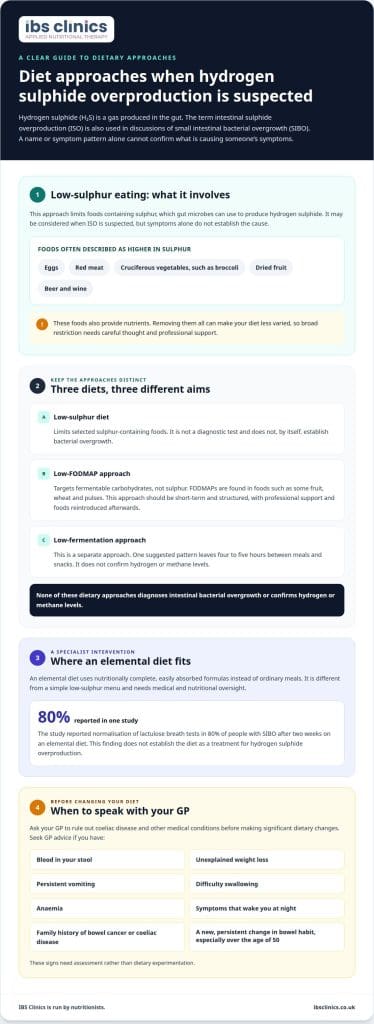
A low-sulphur diet limits foods containing sulphur, which gut microbes can use to produce hydrogen sulphide. It may be considered when intestinal sulphide overproduction is suspected, but symptoms alone cannot establish the cause. Foods often described as higher in sulphur include eggs, red meat, cruciferous vegetables such as broccoli, dried fruit, beer and wine. These foods also provide nutrients, so removing them all can make a diet less varied.
Reducing selected sulphur-rich foods is different from following a low-FODMAP diet. FODMAPs are fermentable carbohydrates found in foods such as some fruit, wheat and pulses. A low-FODMAP approach targets these carbohydrates, not sulphur. It should be short-term and structured, with professional support and subsequent food reintroduction. A low-fermentation diet is another distinct approach; one suggested pattern leaves four to five hours between meals and snacks. Neither approach confirms hydrogen or methane levels or diagnoses intestinal bacterial overgrowth.
An elemental diet is different again. It uses nutritionally complete, easily absorbed formulas rather than ordinary meals, and is a specialist dietary intervention, not a simple low-sulphur menu. One study reported normalisation of lactulose breath tests in 80% of SIBO patients after two weeks on an elemental diet. That finding doesn’t establish it as a treatment for hydrogen sulphide overproduction. Medical and nutritional oversight matters, particularly if you have other health conditions or are considering a restrictive diet.
When to see your GP
Before making significant dietary changes, ask your GP to rule out coeliac disease and other medical conditions. Seek GP advice for blood in your stool, unexplained weight loss, persistent vomiting, difficulty swallowing, anaemia, or symptoms that wake you at night. A family history of bowel cancer or coeliac disease, or a new persistent change in bowel habit, also warrants assessment, especially over the age of 50. These signs need assessment rather than dietary experimentation.
Sulfate-reducing bacteria and sulphate reduction
Sulphate-reducing bacteria are gut microbes that use sulphate in a process called dissimilatory sulphate reduction. They use it instead of oxygen for metabolism, releasing hydrogen sulphide as a by-product. Other gut bacteria can supply hydrogen, which these microbes may also use to produce the gas. This process occurs naturally; the question is how it fits with the wider gut environment and a person’s symptoms.
Desulfovibrio is a recognised hydrogen-sulphide producer. In the colon, estimates suggest it represents about 66% of sulphate-reducing bacteria, while Desulfobulbus represents about 16%. Bilophila wadsworthia follows a different route: it can use taurine, a component of bile, and release hydrogen sulphide as it breaks it down. These examples show why sulphur intake alone cannot explain bacterial activity or gas levels.
Research has examined sulphate-reducing bacteria in inflammatory bowel disease (IBD), which includes Crohn’s disease and ulcerative colitis. One study found these bacteria in the faeces of 68% of people with IBD, compared with 24% of controls. Another study of 187 people with IBD reported higher and more widespread breath hydrogen-sulphide levels than in healthy controls. These findings show an association, not proof that the bacteria cause IBD. IBD and irritable bowel syndrome are distinct conditions, and symptoms such as abdominal pain need proper assessment.
Diet can influence the compounds available to gut microbes, including sulphur-containing foods and bile components. But changing food intake doesn’t establish bacterial overgrowth, and broad restriction can affect nutrition. Findings about sulphate reduction being a major hydrogen-consuming pathway in about 55% of people describe a microbial process, not a diagnosis. Breath testing may measure gases, but testing approaches differ; SIBO breath test results need interpretation alongside symptoms and health history.
Antimicrobial treatments
Antimicrobial approaches aim to affect microbes that produce hydrogen sulphide, but evidence for treating intestinal sulphide overproduction remains limited. Research into hydrogen sulphide is still developing, so findings about one gas or bacterial overgrowth should not be treated as proof of a specific diagnosis. The aim is to understand the possible pattern and consider it alongside symptoms, test results and medical history.
Rifaximin and bismuth are discussed in research and clinical settings in relation to this pattern. Rifaximin is a prescription antibiotic, and decisions about antibiotics belong with an appropriate prescriber. Bismuth compounds have also been studied for their potential to reduce hydrogen sulphide release in the colon. These findings do not establish one standard treatment for every patient or show that either option is suitable for everyone. They are not a reason to start or change medication without medical advice.
When considering an antimicrobial approach, a nutritionist may discuss herbal supplements. Emulsified oregano, berberine and allicin are examples sometimes described as herbal antibiotics. They are not interchangeable, and evidence for their use specifically for hydrogen-sulphide-related symptoms is limited. A practitioner needs to consider a person’s health conditions, medicines, tolerance and the reason for using an antimicrobial, rather than selecting one based on a symptom list.
Reducing the compounds available to sulphate-reducing bacteria may also be discussed, but diet alone cannot establish or resolve bacterial overgrowth. Green tea extract has been investigated for its effects on hydrogen sulphide levels; this research does not make it a proven treatment. The next step is to separate what is known from what remains under study: symptoms, breath-test findings and other health factors all inform the discussion. If digestive symptoms persist or worsen, speak with your GP, particularly before using supplements or prescription treatments.
Definition of intestinal sulphide overproduction (ISO)
Intestinal sulphide overproduction (ISO) describes excess hydrogen sulphide production in the intestines. The term H2S SIBO is also used, particularly when the suspected process involves the small intestine. Hydrogen sulphide is naturally produced in the body in small amounts; ISO refers to a proposed excess, not the mere presence of the gas.
What symptoms are associated with H2S SIBO or intestinal sulphide overproduction? Reported symptoms include urgent diarrhoea, abdominal discomfort, flatulence with a rotten-egg smell, fatigue and brain fog. These symptoms can have other digestive or medical causes, so they cannot confirm ISO on their own.
What does research say about the new term intestinal sulphide overproduction? It describes a developing area of research, not a universally established clinical diagnosis. Researchers are studying hydrogen sulphide production by gut microbes and how excess levels might relate to digestive symptoms. In some cases, hydrogen-sulphide-producing bacteria may move from the large intestine into the small intestine, a pattern described as hydrogen sulphide SIBO.
Breath analysis has helped researchers investigate this gas alongside hydrogen and methane. However, breath-test methods and interpretation vary, and hydrogen sulphide is not routinely measured in UK breath testing for SIBO or IBS. A result therefore needs context: symptoms, medical history and other relevant clinical findings all matter. A test measuring hydrogen and methane alone cannot establish whether hydrogen sulphide production is excessive.
The practical takeaway is that ISO is a useful descriptive term for a possible microbial process, not a conclusion that can be drawn from symptoms alone. It may help explain what research is investigating while leaving room for other causes of digestive symptoms. For broader context on small intestinal bacterial overgrowth, consider how the location of microbial activity and the gases measured affect interpretation.
IBS Clinics: Hydrogen Breath Tests for SIBO
IBS Clinics offers Hydrogen Breath Tests for SIBO to help you explore whether hydrogen or methane production may be relevant to your digestive symptoms. These tests do not routinely measure hydrogen sulphide in the UK, so they cannot confirm intestinal sulphide overproduction. Results need to be considered alongside your symptoms and health history.
Our nutritionists can help you understand what a breath test can and can’t show, and whether other gut health tests or IBS care may be relevant to your situation. If you’re unsure where to begin, you’re welcome to arrange a free 15-minute introductory chat to ask questions and talk through your concerns.
Contact IBS Clinics to arrange an introductory chat.
Take a considered next step
The term H2S SIBO, also known by the newer name intestinal sulphide overproduction, may give you language for a possible digestive process. It doesn’t need to become a label you have to resolve alone. A useful next step is to consider what questions would help make sense of your symptoms, your health history and any testing you’ve already had.
If digestive problems are affecting daily life, you deserve a thoughtful conversation about what support could fit your circumstances. IBS Clinics offers a free 15-minute introductory chat to talk through your situation, alongside Gut Health Tests and IBS care. Appointments are held over Zoom for people across the UK.
You’re welcome to contact IBS Clinics to arrange a free introductory chat and ask your questions. A calm, collaborative conversation can help you decide what to explore next, at a pace that feels manageable.
Frequently Asked Questions
What is hydrogen sulphide SIBO and how is it treated?
Hydrogen sulphide SIBO refers to suspected excess hydrogen sulphide production linked to microbes in the small intestine. It is also described as intestinal sulphide overproduction, a developing area rather than a settled diagnosis. Management depends on the clinical picture; antimicrobial approaches are being explored, but evidence specific to this pattern remains limited. A GP or qualified practitioner can help interpret symptoms and test findings before dietary or supplement changes.
Are there tests available for hydrogen sulphide?
Three-gas breath tests are designed to measure hydrogen, methane and hydrogen sulphide, but hydrogen sulphide is not routinely measured in UK breath testing for SIBO or IBS. A hydrogen and methane breath test can still provide information about those gases, but it cannot establish hydrogen sulphide levels. Ask which gases a test assesses and discuss the result with a healthcare professional, especially if symptoms persist or change.
What is SIBO?
Small intestinal bacterial overgrowth (SIBO) describes an abnormal increase in bacteria in the small intestine. It may be considered when symptoms such as bloating, abdominal discomfort or altered bowel habits occur, but these symptoms can have other explanations. SIBO is distinct from intestinal methanogen overgrowth (IMO), which involves methane-producing archaea rather than bacteria. A clinician considers symptoms and appropriate testing when assessing whether SIBO may be relevant.
What can I do if the test comes back positive?
Discuss a positive result with the practitioner who arranged the test, and ask how it fits your symptoms, test preparation and medical history. Do not start, stop or change medication based on a result alone. If the test measured hydrogen and methane, remember that it does not provide a hydrogen sulphide reading. Seek GP advice for ongoing or worsening symptoms, and rule out medical conditions before making significant dietary changes.
Which gut bacteria produce hydrogen sulphide?
Examples include Desulfovibrio and Desulfobulbus, which use sulphate in their metabolism, and Bilophila wadsworthia, which can use taurine from bile. Some Escherichia coli strains and Fusobacterium nucleatum can also produce hydrogen sulphide. Finding a named bacterium does not by itself show that it is overgrown or causing symptoms. Its relevance depends on the wider clinical picture, not its name alone.
Why do these bacteria overgrow?
There is no single established explanation for everyone. Microbial activity can be influenced by the gut environment, including which compounds are available to microbes and how contents move through the digestive tract. These factors do not prove overgrowth, and diet alone cannot identify its cause. A clinician may consider symptoms, relevant test results, health history and digestive factors together rather than assuming one food or bacterium is responsible.

Article by
Tracey Randell
Tracey Randell is a Registered Nutritionist and IFM Certified Practitioner (Dip BCNH, IFMCP, mBANT, CNHC), specialising in complex digestive health. She founded IBS Clinics in 2011 and has spent more than 15 years supporting people with SIBO, IMO, SIFO, dysbiosis and long-standing IBS, many of whom have tried several approaches without lasting improvement.
Tracey’s approach is terrain-first. She looks beyond symptoms to the whole gut environment, including digestion, motility, the microbiome, blood sugar and stress. She works with clients across the UK via Zoom, alongside GPs and consultants where appropriate.