To understand how to improve the gut-brain connection, start with a varied, plant-rich diet, enough fibre and practical ways to manage stress. The gut and brain communicate in both directions: digestive discomfort can affect mood, while stress can influence gut symptoms. These steps can support gut health, but they don’t replace personalised care when symptoms persist.
It can be unsettling when digestive symptoms and emotional strain seem to rise together. There’s a biological reason they may be linked: gut microbes, the nervous system and immune signals all contribute to communication between the gut and brain.
This article explains how the connection works, how food and probiotics may influence it, and why stress can change digestion and gut sensitivity. You’ll also find practical approaches to consider, without expecting a single food or supplement to solve everything.
Key Takeaways
- Build variety into meals with plant foods such as vegetables, fruit, whole grains, legumes and nuts to nourish a diverse gut microbiome.
- The gut and brain exchange signals through nerves, immune pathways and chemical messengers, so changes in one can influence the other.
- Digestive symptoms and emotional wellbeing can be linked; noticing patterns may help you understand what affects your own symptoms.
- Probiotics may help some people, but effects vary. Consider the specific strain and your needs rather than assuming every supplement works in the same way.
- Stress can affect gut movement and sensitivity. Relaxation practices and psychological support may form part of a broader approach to symptom management.
A varied, plant-rich diet and gut microbiota diversity
Food shapes the gut microbiome, while microbes interact with immune signals and brain chemistry. A diverse diet is a practical foundation for supporting these linked systems.
Plant variety and microbiota diversity
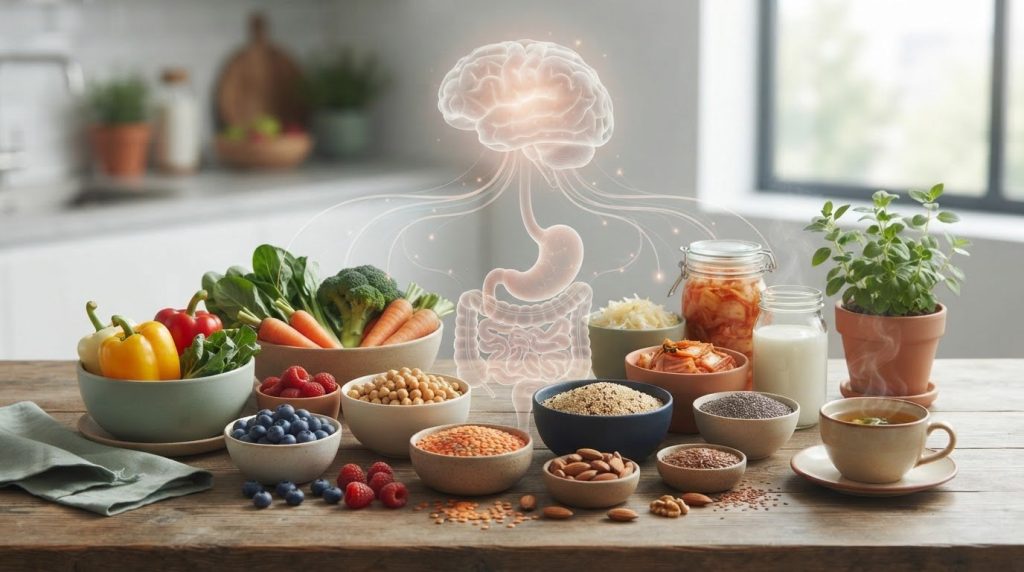
Gut microbiota diversity describes the range of microorganisms living in the gut. A varied, fibre-rich diet can support that diversity and nourish beneficial microbes. Include different plant foods across the week rather than relying on one “superfood”. Vegetables, fruit, whole grains, legumes and nuts each provide distinct fibres and plant compounds.
A practical target is 30 different plants each week. This can include herbs, seeds and different varieties of familiar foods, not just full portions of vegetables. Fruits and vegetables also contain polyphenols, which may help reduce inflammation and offer neuroprotective benefits. A Mediterranean-style pattern combines plant foods with fish, poultry and dairy, and is associated with microbial diversity.
Microbiome and immune interactions
Gut microbiota and the immune system exchange signals that help shape the gut environment. Immune cells monitor gut health and can send the brain messages about changes such as bloating, infection or poor blood flow. Digestive sensations aren’t simply a matter of food moving through the gut; immune activity can also contribute to signals reaching the nervous system.
Some gut bacteria produce short-chain fatty acids, including butyrate, acetate and propionate. These compounds help maintain the intestinal barrier, regulate immune responses and provide energy for colon cells. A high-fibre diet can support their production. By contrast, a diet high in refined sugars and saturated fats, and low in fibre, is associated with lower microbial diversity and more pro-inflammatory bacteria.
Probiotics and microbiome treatments
Probiotics are live bacteria studied for their potential effects on digestion and mood. They may support gut motility, vitamin production and cognitive function, but research doesn’t show that every strain has the same effect. Yoghurt is one dietary source; supplements are another. The specific strain and reason for taking it matter.
Probiotics are generally considered safe to eat, but not every supplement suits every person or symptom. Consider the product’s purpose and your health needs; a registered nutritionist can help you assess specific probiotic recommendations. Antibiotics can also alter the gut microbiome, reducing beneficial bacteria and disrupting the production of short-chain fatty acids and neuroactive compounds. Don’t use a supplement instead of investigating persistent symptoms.
Gut microbes and neurotransmitters
Neurotransmitters carry messages between nerve cells, and gut microbes produce or help produce some of these chemical messengers. This provides a route through which microbiome activity may influence communication between the gut and brain. It doesn’t mean a particular food directly changes mood, or that gut bacteria alone explain depression.
Microbes also influence tryptophan metabolism, which is linked with depressive symptoms when disrupted. Fibre-rich foods feed gut bacteria, supporting their production of short-chain fatty acids. These processes help explain why food can support the gut-brain connection without acting as a stand-alone treatment for mental health or digestive conditions.
What is the gut-brain connection?
The gut-brain axis is the network linking digestion, brain activity and the body’s responses. It carries signals in both directions, helping explain why gut health and emotional states can influence one another.
Gut-to-brain communication pathways
The gut-brain axis includes the enteric nervous system, central nervous system, endocrine system and immune system. Together, these systems carry information between the gut and brain through several pathways. This matters because sensations such as pain or bloating can involve nerve and immune signals.
The enteric nervous system contains more than 100 million nerve cells lining the gastrointestinal tract, from the oesophagus to the rectum. Several independent market sources describe the enteric nervous system as controlling digestion, including swallowing, enzyme release, blood flow that helps nutrient absorption, and elimination. It receives input from the brain but can also work independently.
Gut bacteria and other microbes are part of this wider communication network. They can produce or help produce chemical messengers, while immune cells monitor gut conditions and signal changes such as infection. These pathways don’t mean that one gut symptom points to a particular disease. They show why digestive signals can involve several body systems.
Two-way signalling between gut and brain
Communication travels both ways between the gut and the brain. The vagus nerve, one of the 12 cranial nerves, carries physical signals, whilst neurotransmitters provide chemical messages. This two-way exchange helps the brain respond to gut activity and allows brain signals to affect digestion.
The brain also communicates with the gastrointestinal tract through the sympathetic and parasympathetic nervous systems. The enteric nervous system manages digestive tasks, while input from the brain can influence how those processes work. This helps explain why stress or emotional strain may accompany digestive changes, and why persistent gut discomfort can affect how someone feels.
The enteric nervous system is sometimes called a “second brain”, but it doesn’t think as humans understand thought. Its role is to coordinate gut functions and exchange information with the brain. This distinction can help you understand the gut-brain axis without assuming digestive symptoms are psychological, or that one pathway explains everyone’s experience.
In practical terms, gut-brain communication is a network, not a single switch. Nerves, immune activity, hormones and microbial chemicals all contribute to signals between the gut and brain. This helps explain why gut health can matter beyond digestion, while keeping the focus on each person’s symptoms and patterns.
How does your digestive health impact your mental health?
Digestive and mental health can influence each other through signals carried along the gut-brain axis. If IBS symptoms begin after age 50, discuss them with a healthcare professional, such as your GP.
Digestive symptoms and mental health
Digestive symptoms can affect emotional wellbeing, while stress and anxiety can contribute to gut discomfort. The link is relevant when bloating, pain or altered bowel habits coincide with changes in mood. Irritation in the gastrointestinal system can send signals to the central nervous system, potentially influencing mood and how symptoms feel.
Functional gastrointestinal disorders involve persistent symptoms without an obvious physical cause. IBS is one example, and scientists believe it can involve heightened communication between the gut and brain. This doesn’t mean symptoms are imagined. Gut sensations and brain responses can interact, making pain or discomfort more complex than a single digestive trigger.
Gut inflammation and microbiome changes have been linked with depression and fatigue. This doesn’t mean gut changes alone explain a mental health condition. It does suggest that digestive symptoms and emotional wellbeing are worth considering together, particularly when both affect daily life.
Gut-brain signalling and wellbeing
Gut-brain signalling describes the two-way exchange of messages that can shape digestive and mental wellbeing. Up to 95% of serotonin is produced in the human gut, although this figure does not mean gut serotonin directly determines mood. Signals also involve tryptophan metabolism, which gut microbes help influence; disruptions in this process have been linked with depressive symptoms.
For example, gut irritation can send messages to the central nervous system, while stress can affect the gut barrier and microbiota. This two-way relationship helps explain why psychological support may ease gastrointestinal symptoms and why nutrition interventions may support recovery from mental health conditions. It isn’t a simple cause-and-effect pathway, but it’s a reason to consider digestive and emotional symptoms together.
Some people with IBS find that symptoms fluctuate alongside stress or anxiety. Tracking when discomfort occurs, what was happening emotionally and how eating patterns changed can help reveal personal associations. A record can support a more useful conversation about symptoms without assuming one emotional event or food explains everything.
Plant-based eating and gut health
A plant-based eating pattern with more fibre, fewer refined carbohydrates and little red meat can promote a healthier microbiome and reduce gut inflammation. This matters because gut microbes respond to what reaches the digestive system, and inflammation can influence signalling between the gut and brain.
Fibre from vegetables, fruit, whole grains and legumes nourishes beneficial bacteria. Gut bacteria can turn fibre into short-chain fatty acids, which support the intestinal barrier and immune regulation. This offers a plausible link between eating patterns and gut health, not a promise that a particular meal will change mental symptoms.
Choose foods that suit your tolerance and routine, then observe how symptoms respond over time. For someone with IBS, a low-FODMAP diet may relieve symptoms; avoiding acidic foods may help with GERD symptoms. These approaches address different digestive concerns, so the relevant pattern depends on the symptoms being managed.

Can Probiotics Improve Your Mood?
Gut bacteria may influence anxiety and depression through gut-brain signals and tryptophan metabolism, but they aren’t the sole cause. How quickly dietary changes affect gut health depends on your starting diet, consistency, fibre tolerance and individual response.
Probiotics and mood
Researchers are exploring whether probiotics may affect digestive health and mood. This matters because different strains can have different effects, so evidence about one probiotic doesn’t establish benefits for every product. A review of 21 studies found supplements reduced anxiety symptoms in some cases, while non-probiotic approaches were more effective.
A separate analysis of 14 studies reported similar results. Probiotic supplementation has also been linked with improved cognitive flexibility and reduced stress, particularly in older adults. These findings give a reason for continued research, not a basis for treating a mood condition with supplements alone. Look for recommendations that relate to your symptoms and the strain being considered.
Fermented foods and anxiety
Fermented foods containing probiotics include foods such as yoghurt. A study involving more than 700 people prone to anxiety linked eating these foods with fewer social anxiety symptoms. This is an association, not proof that fermented food treats anxiety, but it offers one example of how researchers are exploring diet and mood.
Food choices still need to suit your digestion. Notice whether a fermented food fits comfortably into your usual eating pattern, rather than adding several new foods at once. This makes it easier to recognise which changes coincide with symptoms. For persistent anxiety, fermented foods aren’t a replacement for appropriate mental health support.
Fibre, prebiotics and probiotics
Fibre-rich foods nourish beneficial gut bacteria, while probiotics provide live bacteria. This distinction matters: fruit, vegetables, legumes and whole grains support microbes already in the gut, while probiotic foods or supplements introduce live organisms. Researchers are studying both dietary fibre and probiotics for their potential roles in digestion and mood.
Try adding fibre-containing foods gradually, such as oats at breakfast or beans in a meal, and notice your digestive response. A sudden increase in fibre can be uncomfortable for some people. A steady, varied pattern makes it easier to assess tolerance than starting several supplements and dietary changes together.
Dietary changes and gut health
There’s no fixed timetable for dietary or lifestyle changes to affect gut health. The response depends on your starting eating pattern, the change itself, consistency, fibre tolerance and individual microbial activity. Symptoms and microbiome activity may not shift together, so track them separately rather than judging a change by one day.
For example, note meals, bowel symptoms and stress in a simple diary, then look for patterns over time. Where practical, change one thing at a time, such as adding a plant food regularly. If you’re considering a probiotic supplement, a registered nutritionist can help assess recommendations against your needs and the evidence for specific strains.
Stress responses and gut nerve sensitivity
Stress can change how quickly food moves through your gut and how strongly you feel pain or bloating. Understanding these responses can help explain why symptoms sometimes shift with emotional strain.
Sleep, movement and stress management
Sleep, movement and relaxation can form part of a routine for managing stress and gut symptoms. A short daily practice is more manageable than waiting for a completely calm day. Try five minutes of breathing or mindfulness, then notice whether tension, discomfort or bloating changes.
Yoga, meditation and gentle breathing exercises may help calm the stress response. Cognitive behavioural therapy (CBT) and gut-directed hypnotherapy are other approaches used for IBS and bowel disorders. Regular movement and a steady sleep routine can also provide structure, though the most useful approach depends on your day and symptoms.
Stress can speed up or slow down the movement of food through the gastrointestinal tract. It can also increase sensitivity to pain or bloating, making an ordinary digestive sensation feel more intense. This response is relevant to irritable bowel syndrome, where gut nerve sensitivity can contribute to discomfort.
Stress can also affect the intestinal barrier and gut microbiota. Changes may allow bacteria to cross the gut lining and trigger immune responses, intensifying gut inflammation. Stress can worsen IBS, inflammatory bowel disease, reflux and food sensitivities. These effects show how emotional strain may influence physical gut processes, not that symptoms are imagined.
Stress, trauma and the gut
Stress is a body response that can influence gut movement, nerve sensitivity and immune activity. Difficult experiences may coincide with digestive changes, but a person’s symptoms shouldn’t be reduced to their emotional history. The gut and brain exchange signals, and several factors can shape how strongly those signals are felt.
Infections can also precede stomach problems, including the onset of eating disorders. Gut microbiota responses may persist after a pathogen is no longer present. This is one reason a history of illness, stress and digestive symptoms can provide useful context, without assuming one event explains every symptom.
CBT helps people with gastrointestinal disorders work with thoughts, behaviour and emotional responses related to pain and stress. Relaxation practices may work best alongside CBT, while biofeedback combined with symptom-management techniques has shown positive effects in functional gastrointestinal disorders. A practical starting point is to note stressful situations, symptoms and daily routines, then discuss recurring patterns with a suitable health professional.
If stress and gut symptoms are difficult to manage together, you can book a free 15-minute intro chat to ask questions about personalised IBS care.
IBS Clinics: Free 15 Minute Intro chat / ask your questions
IBS Clinics provides personalised nutritional support for people managing ongoing digestive symptoms, including IBS. If food changes feel confusing or symptoms continue despite your efforts, its IBS care can help you explore a considered approach to gut health.
Gut Health Tests and Special Diets are available as part of its offerings. The right next step depends on your symptoms, history and eating patterns, rather than a one-size-fits-all plan. You can use the Free 15 Minute Intro chat to ask questions and discuss whether its support fits your needs.
Contact IBS Clinics to ask your questions and explore a suitable next step.
Take a considered next step for your gut health
Understanding how to improve your gut-brain connection can help you make thoughtful changes, but you don’t need to change everything at once. Choose one manageable step, such as noting how symptoms relate to meals or stressful situations, and use what you learn to guide your next conversation about care.
If digestive symptoms continue to affect daily life, personalised support can help you explore what may be contributing and which options suit your needs. IBS Clinics offers IBS care and Gut Health Tests, alongside a Free 15 Minute Intro chat to ask questions. You can contact IBS Clinics to discuss support and consider a next step that feels appropriate for you.
Small, informed decisions can help you move forward with greater clarity. Keep noticing your experience and take the next step at a pace that feels manageable.
Frequently Asked Questions
What types of medical conditions or symptoms might involve the gut-brain axis?
The gut-brain axis is relevant to symptoms and conditions involving digestion, mood or both. Examples include irritable bowel syndrome, reflux, food sensitivities, bloating, abdominal discomfort, anxiety and depression. This doesn’t mean the axis is the sole cause of these conditions. It describes communication between body systems that can contribute to how symptoms develop or feel. Track changes and discuss persistent or concerning symptoms with a healthcare professional.
Do probiotics affect the gut-brain axis?
Probiotics can influence gut-brain research because live microbes interact with digestive processes and microbial activity. Studies have explored effects on stress, cognition and anxiety, but findings vary across supplements and approaches. A review of 21 studies found probiotic supplements reduced anxiety symptoms in some cases, while non-probiotic approaches were more effective. Strain, dose and the reason for taking a supplement all matter, so match recommendations to your individual needs.
How do stress and difficult emotions affect your gut?
Stress and difficult emotions can affect gut movement and sensitivity, contributing to constipation, diarrhoea, pain or bloating. For instance, an anxious period can coincide with a faster or slower bowel pattern. Stress can also affect the gut barrier and microbiota, influencing immune activity. Noticing what was happening emotionally when symptoms changed can help you recognise patterns, without assuming feelings alone explain a digestive problem.
What Does Your Gut’s Brain Control?
The enteric nervous system coordinates many digestive functions, including swallowing, releasing enzymes, regulating blood flow that supports nutrient absorption and eliminating waste. It receives input from the brain, yet can also operate independently. Think of it as a local control network for digestion, not a centre for human thought. Its activity helps move food through the digestive tract and supports the body’s handling of nutrients.
What can I do at home to nurture my gut-brain axis?
To explore how to improve the gut-brain connection at home, keep a simple daily record of meals, bowel changes, discomfort, sleep and stressful events. This can reveal whether a particular routine or situation repeatedly coincides with symptoms. Choose one manageable change at a time, such as adding a plant food to a familiar meal or pausing for slow breathing. Note your response instead of trying several new habits together.
What is the gut-brain connection and how does it work?
The gut-brain connection is the two-way communication network between the digestive system and the brain. It involves nerves, immune activity, hormones and chemical messengers. Signals from the gut can inform the brain about digestive activity, while brain signals can influence gut function. The enteric nervous system helps coordinate digestion, and the wider network links those local processes with the body’s responses.
What evidence-based lifestyle changes improve the gut-brain connection?
Approaches studied for digestive symptoms include cognitive behavioural therapy, gut-directed hypnotherapy, mindfulness, meditation, breathing exercises and yoga. If you’re considering how to improve the gut-brain connection, start with five minutes of daily relaxation and observe whether it affects stress or symptoms. Psychological support can help people work with thoughts and responses linked to pain. These practices complement, rather than replace, care for ongoing digestive or mental health concerns.
How do diet and fibre affect the gut-brain axis?
Fibre feeds gut bacteria, which can produce short-chain fatty acids such as butyrate, acetate and propionate. These compounds help support the intestinal barrier and regulate immune responses. Sources include oats, beans, fruit, vegetables and whole grains. If you’re increasing fibre, add foods gradually and pay attention to comfort and bowel changes. Individual tolerance matters, particularly if specific foods affect your symptoms.

Article by
Tracey Randell
Tracey Randell is a Registered Nutritionist and IFM Certified Practitioner (Dip BCNH, IFMCP, mBANT, CNHC), specialising in complex digestive health. She founded IBS Clinics in 2011 and has spent more than 15 years supporting people with SIBO, IMO, SIFO, dysbiosis and long-standing IBS, many of whom have tried several approaches without lasting improvement.
Tracey’s approach is terrain-first. She looks beyond symptoms to the whole gut environment, including digestion, motility, the microbiome, blood sugar and stress. She works with clients across the UK via Zoom, alongside GPs and consultants where appropriate.