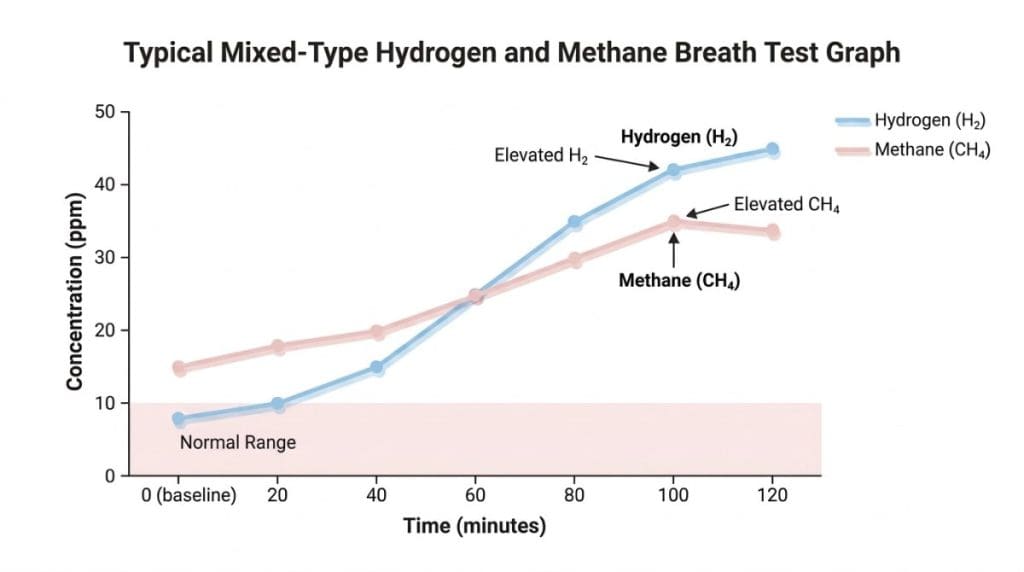
SIBO methane, now more accurately called intestinal methane overproduction (IMO), involves methane-producing archaea and can affect both the small and large intestines. On a breath test, methane levels above 10 parts per million (ppm) at any point are considered high. Constipation is a common concern because methane can slow the movement of contents through the gut, although symptoms alone can’t confirm IMO.
Persistent constipation, bloating or abdominal discomfort can be frustrating, especially when the cause is unclear. This article explains what IMO means, how it differs from bacterial overgrowth, which symptoms are commonly associated with it, and how diet and gut motility fit into the wider picture. You’ll also learn why recognising the pattern is useful, while keeping in mind that symptoms can overlap with other digestive conditions.
Key Takeaways
- Learn why methane overproduction is called IMO, and how it differs from bacterial overgrowth.
- Understand how breath-test results can help distinguish methane patterns from hydrogen-dominant SIBO.
- Recognise why constipation and bloating may occur when methane slows intestinal movement.
- Explore how food choices, meal spacing and motility support can fit into a personalised approach.
- Find out when gut health testing and tailored nutritional support may help you make sense of persistent digestive symptoms.
What is intestinal methanogenic overgrowth (IMO)?
Intestinal methanogen overgrowth, or IMO, describes an excess of methane-producing archaea in the gut. Breath testing measures methane alongside gases associated with bacterial overgrowth, helping distinguish patterns that symptoms alone cannot identify.
The Renaming of Methane-Positive SIBO
Methane-positive SIBO was renamed IMO because methane is produced by archaea, not bacteria. This distinction matters: methanogens can live in both the small and large intestines, so SIBO does not accurately describe every site involved. Methanogens use hydrogen made by gut bacteria to produce methane, meaning both types of organisms can contribute to the same overgrowth pattern.
Breath Testing for IMO
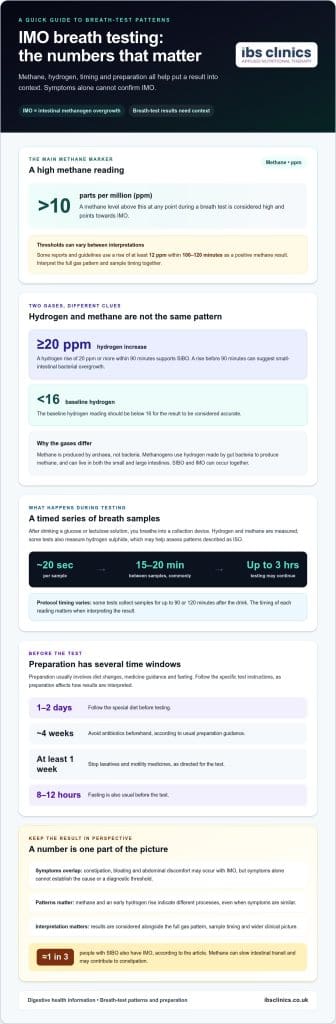
A breath test measures gases after you drink a glucose or lactulose solution. You breathe into a collection device for around 20 seconds per sample, with samples commonly taken every 15-20 minutes; testing may continue for up to three hours. Some protocols collect samples for up to 90 or 120 minutes after the drink.
Hydrogen and methane testing for SIBO can assess both SIBO and IMO. A rise in hydrogen before 90 minutes can suggest small-intestinal bacterial overgrowth; a hydrogen increase of 20 ppm or more within 90 minutes supports SIBO. High methane points towards IMO, since archaea produce that gas. Some tests also measure hydrogen sulphide, which may help assess patterns described as ISO.
Preparation usually includes following a special diet for one or two days before testing, avoiding antibiotics for about four weeks, and stopping laxatives and motility medicines for at least one week. Fasting for 8 to 12 hours is also usual. Follow the specific test instructions, since preparation affects how results are interpreted.
In the UK, testing can be discussed with a healthcare professional or arranged through a private testing service. The cost of private testing depends on the case and is provided after a quote request; factors include which gases are measured and how testing is arranged. Treatment options are considered after interpreting the results alongside the wider clinical picture.
Methane Thresholds in Diagnosis
A methane reading above 10 parts per million (ppm) at any point during a breath test is considered high. Some reports and guidelines use a rise of at least 12 ppm within 100-120 minutes as a positive methane result, so thresholds can differ across interpretations. The baseline hydrogen reading should be below 16 for the result to be considered accurate.
These figures are interpreted alongside the full gas pattern and the timing of each sample. A methane result and an early rise in hydrogen indicate different processes, even when constipation or bloating overlap. Breath testing can help distinguish methane overproduction from hydrogen-associated bacterial overgrowth; symptoms alone do not establish a diagnostic threshold.
What Is Methane SIBO?
Methane SIBO is the familiar term for digestive symptoms associated with methane-producing archaea; the more accurate name is intestinal methanogen overgrowth, or IMO. Archaea differ from bacteria, but use hydrogen produced by gut bacteria to make methane. This relationship helps explain why SIBO, which refers to bacterial overgrowth, and IMO can occur together.
Roughly one in three people with SIBO also have IMO. Methane can slow intestinal transit, which may contribute to constipation. A breath test can identify elevated methane, but treatment decisions also depend on symptoms, test findings and the wider digestive picture.
Antibiotic treatment options
For methane-positive overgrowth, treatment may include rifaximin alongside neomycin or a similar antimicrobial agent. Rifaximin alone is often reported as less effective for methane-producing cases, although study results vary. Reported response rates include about 85% for rifaximin with neomycin and about 56% for rifaximin alone; another report found success rates of up to 87% for the combination and around 30% for rifaximin alone.
These figures describe different reported outcomes, not a personal forecast. In one study, 87% of participants taking rifaximin with neomycin eradicated methane on breath testing, compared with 28-33% taking either medicine alone. A clinician considers the breath-test pattern and the person’s health history when deciding whether antibiotics are suitable. Antibiotics are prescription medicines, so choices and use require clinical oversight.
How treatment differs for SIBO and IMO
Hydrogen-dominant SIBO and methane-positive IMO involve different gases and organisms, so an approach used for one pattern may not suit the other. Rifaximin is often prescribed for hydrogen-dominant SIBO; methane-positive cases may involve rifaximin with neomycin or metronidazole. The distinction depends on test results, not constipation or bloating alone.
Antibiotics are only one part of managing recurring digestive symptoms. Functional medicine can take a broader view of contributing factors, including gut health, medical history and lifestyle. A functional medicine approach can help place test findings and symptoms into that wider picture.
Cancer treatment and gut microbiota
IMO treatment addresses digestive overgrowth; it is not cancer treatment. If you are receiving cancer care, decisions about antibiotics, supplements or dietary changes should be made within that care context, rather than as a stand-alone IMO plan. Keeping your care teams informed helps ensure digestive concerns are considered alongside your existing treatment.
SIBO Constipation: How does SIBO affect bowel movements?
Intestinal methanogen overgrowth (IMO) is particularly associated with constipation, because methane can slow intestinal transit. People may also experience bloating, abdominal discomfort and changes in bowel habits. Symptoms can persist or fluctuate and overlap with other digestive conditions, so symptoms alone cannot identify the cause.
Constipation can mean infrequent bowel movements, hard stools, straining or feeling that the bowel has not fully emptied. When methane slows transit, stool may move through the intestine less readily. For example, someone might notice bloating and discomfort building as constipation continues, then easing after a bowel movement. That pattern is useful to record, but does not prove IMO.
Bloating is another common complaint associated with methane overproduction. It can accompany constipation when stool and gas remain in the digestive tract, although it has many other possible causes. Tracking when bloating appears, what bowel changes accompany it and whether particular meals seem relevant can give a clearer picture than noting bloating alone.
SIBO symptoms are often vague and can be difficult to distinguish from other conditions. Hydrogen-dominant SIBO is linked with diarrhoea-predominant irritable bowel syndrome (IBS-D) and diarrhoea, while methane is associated with slowed transit and constipation. These are broad patterns, not a way to identify the gas type from bowel habits: symptoms can overlap, and some people have both SIBO and IMO.
Hydrogen sulphide may also be relevant when diarrhoea is the main bowel change, since elevated levels may be linked to IBS-D. This helps explain why “SIBO” alone does not describe every possible breath-test pattern. A useful symptom record can include stool consistency, constipation or diarrhoea, bloating, abdominal discomfort and when each symptom occurs. A healthcare professional can consider this information alongside testing and medical history.
Constipation and bloating are common digestive symptoms, but they can have causes other than IMO. Unexplained weight loss, blood in the stool, ongoing vomiting or severe abdominal pain are warning signs that need prompt medical attention. For ongoing bowel changes without these warning signs, consider whether symptoms fit a methane-associated pattern, a hydrogen-associated pattern or another explanation.
Up to two-thirds of adults report recurrent digestive issues such as bloating, constipation and diarrhoea; roughly 1 out of every 3 people with SIBO also have IMO. Slowly increasing gentle, non-fermentable fibre may help, while fermentable fibres can exacerbate IMO symptoms. Rifaximin with neomycin or metronidazole are possible antibiotic treatments for IMO, and specialists at IBS Clinics can provide further guidance.
Dietary adjustments and motility support
Dietary changes may ease gas, bloating and constipation associated with intestinal bacterial overgrowth, but they are not a cure for IMO. Low-FODMAP changes may reduce gas and bloating for some people. They are best viewed as symptom support, not as a way to remove methane-producing organisms or replace appropriate care.
Food choices can be adjusted to suit your symptoms. Lean proteins, cooked vegetables, healthy fats, white rice and potatoes are options to consider. Fermentable fibres can worsen symptoms for some people with IMO, while gentle, non-fermentable fibre may be easier to tolerate. Increase fibre gradually rather than making several restrictive changes at once, and note how abdominal symptoms respond.
For constipation, fluid intake and food-based options may help. Guidance suggests aiming for 2-3 litres of fluid per day to soften stools, and trying two kiwi fruits daily is another option. These approaches don’t suit everyone, so consider your wider health needs and usual intake. A brief record of fluids, fibre, bowel movements and bloating can help show which changes make a difference.
Meal timing may also support motility. Advice includes leaving around 3-4 hours between meals, whilst another recommendation is to leave at least four hours. The migrating motor complex helps sweep material through the gut between meals; its third phase occurs roughly every 90-120 minutes. This is one reason regular spacing, rather than continuous grazing, may be considered as part of a broader plan.
Some motility support involves medicines or supplements called prokinetics. These support gut movement and may help prevent recurrence; a gastroenterologist may prescribe prucalopride or linaclotide to promote movement. Supplements are not interchangeable, and evidence for a specific supplement depends on its ingredients and intended use. Discussing their role with a suitably qualified professional helps distinguish them from prescribed treatments such as rifaximin.
An elemental diet is a different, more restrictive approach: a nutritionally complete liquid formula is used as the sole source of nutrition for about two weeks under healthcare-team guidance. It is not simply another everyday food swap. After a restrictive phase, foods can be reintroduced gradually, expanding dietary diversity to support the microbiome and reduce relapse risk.
Overall, evidence supports dietary changes mainly for symptom management, not as a proven cure for IMO. Low-FODMAP changes may help with gas and bloating for some people; meal spacing, fluids and gradual fibre adjustments address related symptoms, while prokinetics target motility.
What methane SIBO and IMO mean
“Methane SIBO” is a familiar phrase, but it can blur two different types of gut organisms. SIBO means small intestinal bacterial overgrowth; IMO means intestinal methanogen overgrowth. Methanogens are archaea, not bacteria, and may be present in either the small or large intestine. IMO is therefore the more accurate term when a breath test identifies methane.
The distinction matters because a methane result does not establish bacterial overgrowth by itself. Methanogens use hydrogen produced by gut bacteria to make methane, so the organisms can be connected without being the same thing. A clinician interpreting a breath test considers the gases measured and their timing, rather than treating every raised gas reading as one condition.
Finding methane also doesn’t automatically mean someone has a disorder requiring treatment. An estimated 30-50% of the world’s population produce methane, and many have no constipation or other symptoms. A clinical interpretation therefore considers methane levels alongside bowel habits, discomfort, medical history and the reason for testing. The number alone is not a complete account of someone’s digestive health.
For people with symptoms, the pattern can help guide what to investigate. Methane is associated with slower intestinal transit and constipation; hydrogen-dominant SIBO is linked with diarrhoea-predominant IBS and diarrhoea. These associations provide context, not a diagnosis based on symptoms alone. For example, constipation and bloating can have causes other than IMO, while different gas patterns can overlap.
Eating can affect symptoms, but reacting to a particular food does not identify which organisms are present. A low-FODMAP approach may ease gas and bloating for some people, but it does not cure IMO. Nutrition is one part of the picture: symptom relief, adequate nourishment and a clear understanding of test findings all matter. Restrictive eating based only on a suspected methane pattern can overlook that wider context.
The practical takeaway is to keep the terms distinct: bacterial overgrowth is SIBO, while excess methane associated with methanogens is described as IMO. Breath-test findings, symptoms and clinical history together help make the terminology meaningful. They also help distinguish a methane finding from a broader digestive complaint that needs further investigation.
If you’re trying to understand how symptoms, nutrition and test findings fit together, book a free 15-minute intro chat to ask your questions.
IBS Clinics: Free 15 Minute Intro chat / ask your questions
IBS Clinics can help you make sense of persistent digestive symptoms and consider support suited to your situation. Its Gut Health Tests can form part of investigating gut concerns, while IBS care and Special Diets provide nutritional support tailored to individual needs.
If you’re unsure how to interpret a methane breath-test result, or how constipation and food choices relate to your symptoms, the Free 15 Minute Intro chat is a place to ask questions and discuss possible next steps. It’s also a useful starting point if symptoms continue despite dietary changes, or if you want help understanding how testing and nutrition could fit together.
Contact IBS Clinics to arrange a Free 15 Minute Intro chat and ask your questions.
Choose a considered next step for your gut health
Understanding methane SIBO and its newer name, intestinal methanogen overgrowth (IMO), can help you describe what you are experiencing and ask more focused questions. The next step is to consider your symptoms, test findings and nutrition needs together, rather than trying to make every digestive change fit one label. A clear, measured approach can make ongoing concerns easier to discuss.
IBS Clinics offers Gut Health Tests and IBS care to support investigation and nutritional care. If you’d like to talk through your questions, contact IBS Clinics. You can take the process one conversation at a time, with your experience at the centre of the discussion.
Frequently Asked Questions
What are the symptoms of IMO?
Constipation is a common symptom associated with IMO, and people may also report bloating, abdominal discomfort and changes in bowel habits. For example, constipation and bloating may occur together, but neither symptom identifies methane overproduction on its own. These complaints overlap with other digestive conditions, so note how they change over time and discuss persistent symptoms in the context of your health history.
What causes IMO?
IMO involves methane-producing archaea in the gut. These organisms use hydrogen made by gut bacteria to produce methane, so an increase in hydrogen-producing bacteria may precede increased methane. Methanogens can occur in both the small and large intestines. This helps explain why the condition’s name refers to intestinal methanogens, rather than bacteria in the small intestine alone.
How is it diagnosed?
IMO is assessed with a breath test that measures methane, often alongside hydrogen, after you drink a glucose or lactulose solution. Samples are collected over time, allowing clinicians to consider both gas levels and when changes appear. Preparation commonly includes fasting for 8 to 12 hours and following a special diet for one or two days beforehand. Follow the instructions for your specific test.
What are the treatment methods for IMO?
Treatment may combine clinician-prescribed antimicrobials with attention to gut motility and symptom management. Rifaximin with neomycin or a similar antimicrobial may be considered for methane-positive overgrowth; antibiotics are prescription medicines and require clinical oversight. Dietary approaches can help manage symptoms, but a restrictive diet alone is not a cure. The breath-test pattern, symptoms and health history all inform the overall approach.
Can IMO come back?
Symptoms can return after improvement, so renewed constipation or bloating is a reason to review what has changed rather than assume the cause. Gut motility matters because slower movement is associated with methane and constipation. A useful next step is to record bowel changes, abdominal symptoms and dietary changes, then discuss the pattern and whether further assessment is appropriate with a healthcare professional.
How does methane affect digestion?
Methane is associated with slower intestinal transit, which can make bowel movements less regular and contribute to constipation. Archaea produce the gas using hydrogen made by gut bacteria. This relationship means methane and hydrogen patterns can appear together, but they represent different gases and organisms. Symptoms such as bloating may accompany altered bowel habits, although they do not show which gas is elevated.
So, what does a raised methane indicate?
A methane reading above 10 parts per million (ppm) at any point during a breath test is considered high. Some reports and guidelines use a rise of at least 12 ppm within 100-120 minutes as a positive result. A raised reading points towards methane overproduction, but interpretation also considers sample timing, other measured gases and the person’s symptoms.
What is intestinal methane overproduction (IMO), and how does it differ from SIBO?
IMO describes excess methane associated with methanogenic archaea, whereas SIBO refers to bacterial overgrowth in the small intestine. The distinction matters because archaea aren’t bacteria, and methane-producing organisms can be present in the large intestine as well. A breath test can assess methane and hydrogen, helping distinguish a methane pattern from one associated with hydrogen-producing bacterial overgrowth.

Article by
Tracey Randell
Tracey Randell is a Registered Nutritionist and IFM Certified Practitioner (Dip BCNH, IFMCP, mBANT, CNHC), specialising in complex digestive health. She founded IBS Clinics in 2011 and has spent more than 15 years supporting people with SIBO, IMO, SIFO, dysbiosis and long-standing IBS, many of whom have tried several approaches without lasting improvement.
Tracey’s approach is terrain-first. She looks beyond symptoms to the whole gut environment, including digestion, motility, the microbiome, blood sugar and stress. She works with clients across the UK via Zoom, alongside GPs and consultants where appropriate.