How Do I Know If I Have SIBO?
SIBO stands for small intestinal bacterial overgrowth.
Research says that 85% of percent of people with IBS have SIBO, but having IBS symptoms isn’t enough evidence that you have SIBO.
If you have IBS symptoms, like diarrhoea, constipation or bloating, a SIBO test should be your first port of call, but you need to look into the health of your gut as a whole too. You can find out what your gut is trying to tell you with a gut health test.
What is SIBO?
SIBO is a disease of your small intestine. If you have too many bacteria living there, it can cause uncomfortable symptoms. That’s because your small intestine is meant to only house a limited number of bacteria, unlike your lower intestine, or colon.
Your small intestine should have no more than 10,000 bacteria per millilitre of fluid. Your large intestine, or colon has around 1,000,000,000 (1 billion) bacteria per millilitre of fluid. Despite being connected, your small intestine is very different to your large intestine, with specific jobs to do, like helping your body to absorb nutrients from your food. Initial research is suggesting that the types of bacteria that live there are key to those jobs.
Your small intestine is also an important part of your immune system, fighting infections and regulating inflammation.
Until recently, most experts believed that it was almost sterile, but now we know that important communities of bacteria live there. They just exist in much lower numbers than in your colon. The microbiome in your small intestine:
- protects against potentially pathogenic bacteria and yeasts
- helps your body absorb nutrients
- produces several nutrients (such as short chain fatty acids) and vitamins like folate and vitamin K
- maintains the normal muscular activity of your small bowel, pushing your food along
 How do you get SIBO?
 How do you get SIBO?
 Your body naturally prevents you from getting SIBO through a variety of mechanisms. However, it’s not a perfect machine, and they don’t always work. Modern life, medications, illness and stress can all get in the way of your body’s natural processes.
Here are some of the most common reasons SIBO happens:
Low stomach acid
You need stomach acid to kill the bacteria that you eat with your food. There are many reasons why you might not have enough. Commonly prescribed medications like proton pump inhibitors are designed to suppress it, for instance.
Insufficient bile
Your body uses bile to protect your small intestine against invading bacteria (among many other things). If you don’t have enough, bacteria in your small intestine can build up.
Weak digestive enzyme production
Digestive enzymes like lactase and amylase break down your food and help your body to assimilate it. If your body isn’t producing enough digestive enzymes, your food can hang around in your small intestine and feed your bacteria, helping them to multiply.
An imbalanced immune system
Research tells us that post-infectious IBS (IBS symptoms that begin after a bout of food poisoning) is on the rise. We also know that people with SIBO and IBS have higher levels of inflammation in their guts, so an imbalanced immune reaction is going on (we just don’t know what came first, the immune system issues or the SIBO).
If your immune system isn’t working as well as it should, bacteria can grow and multiply in your body more easily. If that happens in your small intestine, SIBO can result.
A malfunctioning ileocaecal valve
There’s a ‘door’ between your small and large intestine that should stop your food from going backwards. Once it hits your large intestine, it starts to become stool, so if it doesn’t shut when it’s supposed to, some of the hundreds of trillions of bacteria in your colon can end up in your small intestine.
A faulty migrating motor complex
Your gut is essentially a tube that runs all the way from your mouth to your anus. To move your food through, it contracts and relaxes. This is your migrating motor complex (MMC), and it happens approximately every 90-120 minutes, in between mealtimes. Abnormalities in your MMC make it more likely that you’ll develop SIBO.
SIBO symptoms
 SIBO symptoms
 The symptoms of SIBO are also the symptoms of many other gut conditions, and many of them are also the symptoms of IBS. We know that people with IBS are five times more likely to have SIBO than people without IBS, and many experts think that SIBO and IBS are really the same condition: an imbalance of bacteria in your gut, whether that’s in your small intestine, your large intestine, or both.
Because IBS is a set of symptoms rather than a testable condition, every person in a group of people with IBS could have a different root cause for their symptoms. They could all have SIBO too, or none of them could have SIBO (although this is unlikely as the two conditions are found together so often).
The SIBO symptoms we see most often at IBS Clinics are:
- abdominal pain
- belching
- bloating
- brain fog
- constipation
- diarrhoea
- fatigue
- fatty stools
- flatulence
- nausea
You can have these symptoms without having SIBO, of course. Most of us have had all of these symptoms at some point in our lives. That’s why we always recommend taking a SIBO test to make sure that SIBO is the problem before starting any treatment.
SIBO treatment involves a special diet and a course of antimicrobial supplements that can deplete the microbiome in your large intestine. If you don’t have SIBO, you don’t need the treatment. SIBO symptoms are a sign that you need to address your gut health, though, and there are other tests that can shine a light on the root causes of your diarrhoea, constipation or bloating.
Can you have SIBO for years and not know it?
While there’s not a lot of research on this, we do know that some people have high levels of bacteria in their small intestine but no gut symptoms. So technically, yes, it’s possible to have SIBO and not know it.
It’s important to remember that SIBO symptoms don’t always show up in your gut. Research has found links between SIBO and the following conditions:
- Acne
- Anaemia
- Anxiety
- Autism
- Brain fog
- Chronic fatigue syndrome
- Gallbladder disease
- Hypochloridia (low stomach acid)
- Leaky gut
- Multiple sclerosis
- Osteoporosis
- Psoriasis
- Rheumatoid arthritis
- Rosacea
If you have one or more of these conditions, it doesn’t mean you have SIBO. This is a list of conditions that often appear alongside SIBO, but we don’t yet know if the condition or the SIBO comes first.
What are the first signs of SIBO?
As we explained before, the symptoms of SIBO are similar to many other gut conditions, so it’s hard to define any that are SIBO specific.
However, there are a few tell-tale signs that we’ve found to be good reasons to take a SIBO test.
Probiotics and/or prebiotics make your symptoms worse
If your symptoms worsen when you take probiotics or prebiotics, it could be because they’re feeding your overgrown bacteria. They’re designed to reach your large intestine and pass through your small intestine, but if you have SIBO, the misplaced bacteria in your small intestine get there first.
FODMAPs are no fun
 FODMAPs are no fun
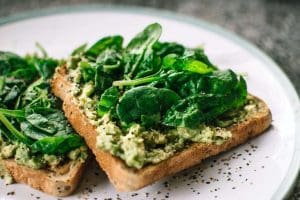
If FODMAP foods like garlic, onion, apples and wheat make your symptoms worse, it’s another sign that your errant bacteria in your small intestine are getting to the nutrients before the ones in your large intestine. Many practitioners use a low-FODMAP diet to address SIBO.
Starches and/or fibre bother you
The Specific Carbohydrate Diet (SCD), that eliminates grains, most root vegetables, sugar and most dairy products is also used to starve SIBO bacteria by many health practitioners.
Research has proven that the types of carbohydrates not allowed on the SCD feed bacteria in the small intestine.
You have low iron
SIBO bacteria love iron, so SIBO can mean that you end up with an iron deficiency. You may or may not have anaemia too.
You have high levels of folate (or other vitamins)
Interestingly, because some SIBO bacteria produce vitamins and nutrients, high levels of particular vitamins on a blood test can be another sign you might have SIBO.
What do stools look like with SIBO?
SIBO doesn’t cause stools to appear in any particular way. Because SIBO often comes with IBS symptoms, diarrhoea and constipation are common. At IBS Clinics we often recommend a SIBO test for clients with chronic diarrhoea or constipation, because most people with these conditions have some level of SIBO (research has found up to 85% of people with IBS symptoms have SIBO).
If you’ve been suffering with diarrhoea or constipation for over three months, talk to your GP. You’ll probably get a diagnosis of IBS, and you may get a referral for a SIBO test. If you don’t, you can take a SIBO test at home through us, or another provider.
SIBO stool color
If you have SIBO, your stools are probably a ‘normal’ colour. There’s no evidence that SIBO makes stools look any different to regular stools.
Some people with SIBO have trouble digesting fats, which can cause ‘steatorrhoea’, where stools are looser, paler and smaller, and may float. However, not everyone with SIBO has steatorrhoea, and not everyone with steatorrhoea has SIBO.
Does SIBO make you fart a lot?
SIBO causes gas, and gas causes farting!
The SIBO test actually measures the gases that the bacteria in your small intestine are producing, so the more bacteria you have, the more gas you’ll produce. Having said that, not everybody with SIBO has a problem with bloating or gas, so there’s not a direct correlation between the amount of gas you produce and the amount you pass wind.
That’s probably because when we produce gas in our small intestine, it doesn’t necessarily make its way down to our large intestine and out the other end. It can be ‘absorbed’ along the way, reducing the chance of embarrassing sounds (or smells!)
SIBO pain location
It’s difficult to define SIBO pain. Most people with SIBO don’t suffer from pain, but if SIBO is making you bloat, you may have pain anywhere in your abdomen.
A ‘classic’ sign of SIBO is bloating or discomfort shortly after a meal. Food usually takes around two hours to reach your small intestine, and around six to reach your large intestine. So if you’re feeling symptoms like bloating or pain sooner rather than later, it’s a signpost towards SIBO.
However some people with SIBO feel pain in their lower abdomen or much later after a meal, so there’s no specific location for SIBO pain.
Can SIBO make you gain weight?
It’s more common for SIBO to cause weight loss as the bacteria can eat your nutrients before you do. But at IBS Clinics we see some people with SIBO who struggle to lose weight. There’s also a clear link in recent research between SIBO and obesity, but obesity could easily be the cause rather than the result of SIBO.
There are a few reasons why SIBO might make you put on weight:
Slower transit time
If you have the methane-producing SIBO, you’re likely to have a slower transit time, which means that food stays in the digestive tract longer than it should, potentially causing weight gain
Higher calorie intake
Calorie intake is about more than the calories in your food. With methane-producing SIBO, you may be extracting more calories from fibre-rich food—like whole grains and vegetables—because methane producing bacteria are very ‘good’ at turning fibre into energy.
Sluggish metabolism
SIBO can affect your body’s production of leptin and insulin, hormones that impact how fast your body burns energy and the rate you put on or lose weight.
Symptoms of SIBO vs IBS
As we’ve explained before, IBS is a set of symptoms rather than a condition. A doctor could diagnose you with IBS if you’ve had diarrhoea or constipation for three months or longer, but there are no tests for IBS.
Many people with IBS symptoms have SIBO: One piece of research found that 85% of people with IBS had SIBO. The biggest difference between IBS and SIBO is that SIBO is a condition that can be confirmed or ruled out with a test.
However, not everyone with SIBO has IBS symptoms, and not everyone with IBS has SIBO. SIBO has been linked to many conditions outside of the gut, like chronic fatigue syndrome, fibromyalgia and rosacea. These conditions often exist alongside IBS symptoms, but not always.
IBS symptoms can happen for an almost infinite number of reasons. If your SIBO test comes back negative, we often recommend a gut health test to shine a light into your large intestine where imbalances, overgrowths and dysbiosis can contribute to IBS symptoms.
How to diagnose SIBO
The best way to diagnose SIBO is by a breath test. SIBO breath tests measure the hydrogen and methane gas produced by the bacteria in your small intestine.
You might ask how it’s possible that your breath can reflect what’s going on in your gut. While you expel 80% of the gas in your intestines out through your intestinal walls and into your body, the other 20% is absorbed into your blood and makes its way to your lungs, where you breathe it out. So, the levels of gases in your breath mirror the degree of bacterial overgrowth in your gut.
How can I test myself for SIBO?
 How can I test myself for SIBO?
 If you’ve ordered a SIBO test through IBS Clinics, the test kit will be delivered straight to your door.
You can take the test whenever you like, but most people do it on a weekend, as you can use Saturday to prepare (you’ll need to follow a restrictive diet the day before) and then Sunday morning to do the test, after fasting overnight. Make sure you follow all the instructions properly, as incorrect prep can affect the results.
To take the test, first give a baseline breath sample using one of the breath bags in the kit. Then, drink the sugary solution, and wait 30 minutes before starting to give your test samples.
You’ll give the rest of the samples once every 20 minutes for a total of 2.5 hours. Pack the bags safely, then send them off to the lab for interpretation. You can go back to eating normally as soon as you finish the test. You should get your results back within 7-10 working days.
SIBO test
A SIBO test works not by measuring the overgrown bacteria themselves, but the levels of the gases they produce. When we know that, we can estimate the number of bacteria.
Because the gases they’re measuring (hydrogen and methane) are gases produced by bacteria, not by your body, we know that the levels of those gases in your breath reflect the levels of bacteria in your small intestine.
Some SIBO breath tests only measure hydrogen, but it’s better to measure hydrogen and methane to get a more accurate picture of potential overgrowth. At IBS Clinics, the SIBO test we use is called a ‘hydrogen breath test’ but it measures both methane and hydrogen.
Can SIBO just go away on its own?
We need more research here, but it appears that SIBO can go away on its own. People who have tested positive for SIBO have then tested negative, with no treatment in between tests. We’ve also found that some people respond well to changes in diet and may not need to follow an antimicrobial treatment plan.
However, at IBS Clinics we’ve seen that the majority of people with SIBO get the quickest and most effective relief from their symptoms with the combination of diet, lifestyle changes and an antimicrobial treatment plan. Because antimicrobial supplements are powerful and can deplete the microbiome in your large intestine, we recommend that you take them only for a limited time.
Working with a professional maximises your chances of success.
Conclusion
SIBO is an overgrowth of bacteria in your small intestine, which should be home to about one millionth of the amount of bacteria in your large intestine. There are many ways you can get SIBO, but if your gut isn’t moving properly—or making the right amount of substances to break your food down properly—bacteria can build up in your small intestine.
Evidence has shown that a lot of people with IBS have SIBO, and treating the SIBO can help the IBS symptoms. However not everyone with IBS has SIBO, and not everyone with SIBO has IBS.
If you have SIBO symptoms, we recommend that you take a test to confirm or rule out SIBO. At IBS Clinics, we’ll look at your health history and your symptoms alongside your SIBO test results to work out how to treat your symptoms and—perhaps more importantly—why you developed them in the first place.
Author
Alexandra Falconer MA (Dist) DipCNM mBANT is a Nutritionist and Registered Nutritional Therapist. After graduating from Brighton’s College of Naturopathic Medicine in 2018, she set up her nutrition practice specialising in gut health, IBS, IBD and related conditions.
Before becoming a nutritionist, Alex was a journalist and copywriter. Now, she combines her two great loves—words and natural medicine—to help bring vibrant health to everyone who needs it.