Could a food allergy, intolerance, medical recommendation or personal choice change what feels suitable to eat? Special diets can look very different, and the right approach depends on why certain foods are being avoided. It’s understandable to want clear guidance, especially when digestive symptoms and conflicting advice make food choices feel uncertain.
This article explains how allergies differ from intolerances, why medical advice matters before making major dietary changes, and what to consider when eating vegetarian or vegan. The distinction is important: an allergy involves the immune system and can cause a serious reaction, while an intolerance does not.
We’ll explore how to adapt special diets without overlooking nutrition or the reason for a restriction. If digestive symptoms are affecting your food choices, understanding what may be behind them can help you take a more considered approach.
Key Takeaways
- Understanding whether a food reaction is an allergy or an intolerance can help guide the right kind of support.
- Medical advice matters before making major dietary changes, and certain digestive symptoms should be discussed with your GP.
- Vegetarian and vegan eating can be planned with attention to key nutrients and individual needs.
- A nutritionist can help consider dietary options in the context of digestive symptoms, preferences and personal goals.
Food allergies and intolerances
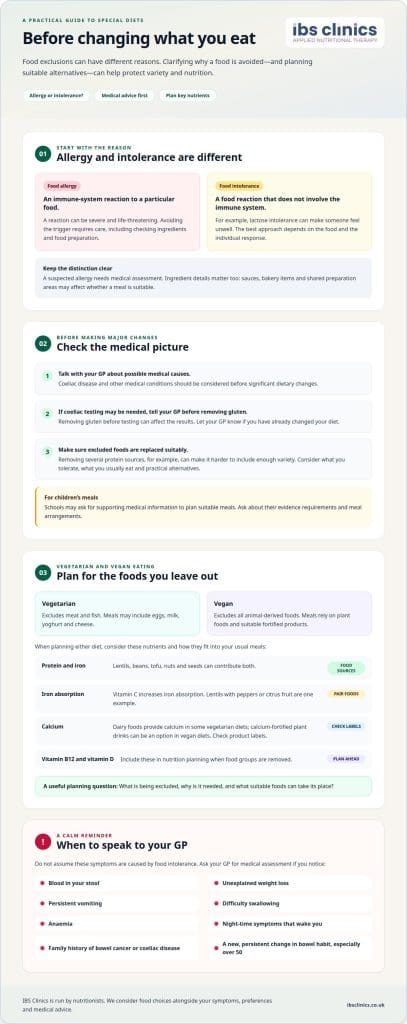
A food allergy is an immune-system reaction to a particular food. Symptoms can follow exposure, and severe reactions can be life-threatening. A food intolerance is a reaction to food that does not involve the immune system. Lactose intolerance, for example, can make someone feel unwell, but it is not an allergy. Allergies require careful avoidance of the trigger; an intolerance plan depends on the food and the individual response.
Allergen information identifies substances in food that can trigger an allergic reaction. For school foods, allergen information is provided under the Food Information Regulations (FIR) 2013. Ingredient details matter too. A packaged sauce, bakery item or shared preparation area may affect whether a meal suits someone with an allergy. A special diet should distinguish a necessary exclusion from a preference, whilst protecting dietary variety where possible.
When eating out or travelling in the UK, a nutritionist can help you plan choices that suit your needs and prepare clear questions about ingredients and food preparation. For example, you could plan how to explain an allergy to catering staff or find an alternative when a usual meal contains the trigger. A nutritionist can also help adapt an intolerance plan to menus and travel routines, while recognising that allergies and intolerances are different. This support cannot replace medical assessment for a suspected allergy; your GP can advise on appropriate investigation.
Parents or guardians can discuss the menu with their child or dietitian to help choose suitable meals. Highland Council can make reasonable adjustments to school menus for pupils with specific dietary needs.
Medical evidence and advice
A medically prescribed diet is an eating plan recommended for a health condition. Supporting medical documentation might include a letter from a GP or consultant. Schools may ask for evidence of a child’s allergy or intolerance to plan suitable meals. A health professional can clarify which foods need to be excluded and whether alternatives are appropriate.
Restrictive diets can create nutritional risks when removed foods are not replaced suitably. For example, excluding several protein sources may make it harder to include enough variety in meals. A nutritionist can review your food choices, restrictions and routine, then help identify practical alternatives and potential gaps to discuss with your healthcare team.
To help make a special diet balanced, a nutritionist considers why each restriction is needed, which foods you tolerate and what you usually eat. They can suggest options such as alternative protein sources or suitable fortified foods, taking your preferences into account. This is especially useful when several restrictions overlap.
NHS guidance includes information about food allergy, including symptoms and when to seek medical help. It can help you understand what to discuss with your GP if you’re concerned about a possible allergy. For dietary questions linked to ongoing digestive symptoms, a nutritionist can help you consider food choices alongside medical advice.
If your child needs a diet related to a health condition, ask the school about its requirements for supporting evidence and meal arrangements. A GP or other relevant health professional can advise on your child’s needs. If you think your child has a medical condition that affects their diet, seek medical advice.
A food preference alone may not establish a need for a special diet. For older people, soft, moist foods can make chewing and swallowing easier. These considerations can guide conversations about suitable choices, while medical or dietetic advice can help address needs related to a health condition.
When to see your GP
Digestive symptoms can be unsettling, particularly when they disrupt meals or sleep. Speak to your GP if you notice blood in your stool, unexplained weight loss, persistent vomiting, difficulty swallowing or anaemia. These symptoms need medical assessment rather than an assumption that food intolerance is the cause. Tell your GP what has changed and when it began, so they can consider the full picture.
Night-time symptoms that wake you also warrant a GP discussion. Mention any family history of bowel cancer or coeliac disease, as this information helps inform assessment. A new, persistent change in bowel habit should also be discussed, especially if you’re over 50. Changes might include a lasting difference in stool frequency or consistency, or a new pattern that doesn’t settle.
Before making major dietary changes, speak with a doctor about possible medical causes, including coeliac disease. Removing gluten before coeliac testing can affect the results, so tell your GP if you have already changed your diet. Mention any medicines, supplements or food exclusions that could help explain when your symptoms began; primary care services such as staymedical.com emphasise evaluating health thoroughly before adopting restrictive eating plans.
A brief record can help prepare for your appointment. Note when symptoms occur, how long they last and any other changes, as well as recent dietary restrictions and relevant family history. This information does not replace medical assessment, but it can help your GP understand what is happening and decide what to explore next.
Vegetarian and vegan diets
A vegetarian diet excludes meat and fish, while a vegan diet excludes all animal-derived foods. Vegetarian meals may include eggs, milk, yoghurt and cheese; vegan meals rely on plant foods and suitable fortified products. Both diets can be varied, but removing food groups changes which sources of key nutrients are part of everyday meals.
Nutrition planning considers protein, iron, vitamin B12, calcium and vitamin D. Lentils, beans, tofu, nuts and seeds can contribute protein and iron. Vitamin C increases iron absorption, and iron contributes to the normal formation of red blood cells and haemoglobin. Pairing lentils with peppers or citrus fruit is one practical example. Dairy foods provide calcium in some vegetarian diets, while calcium-fortified plant drinks can be an option in vegan diets. Check labels, as products differ.
Vitamin B12 needs particular attention in vegan eating because reliable sources are limited to fortified foods and supplements. A nutrition professional can review the whole pattern, including food preferences, digestive symptoms, appetite and existing exclusions. They can help identify suitable sources and discuss whether further assessment is appropriate, without assuming one meal plan fits everyone.
Digestive symptoms may make some plant foods difficult to tolerate, but that does not mean you need to remove every source. A nutritionist can consider portions, preparation methods and alternatives such as firm tofu or smooth nut butter. If coeliac disease or another medical condition is possible, seek medical advice before making major dietary changes.
Which special diets are suitable for weight loss or specific health goals?
A weight-loss diet is an eating pattern intended to support an individual’s weight goal. No single plan suits everyone: a nutritionist considers health, preferences, digestive symptoms and daily routines. Meal timing, appetite and access to cooking facilities can all shape practical food choices.
A balanced eating pattern might include vegetables, fruit, wholegrains and varied protein sources such as beans, eggs or fish. A nutritionist can adapt these choices to vegetarian preferences or digestive symptoms, rather than removing foods without a clear reason. If weight loss is a goal, focus on a sustainable pattern and adequate nourishment, not rapid loss or severe restriction.
For irritable bowel syndrome (IBS), a low FODMAP diet is a short-term, structured approach that reduces certain fermentable carbohydrates. It is best followed with professional support, with foods later reintroduced to identify personal tolerances and broaden choices. It is not intended as a permanent list of forbidden foods. If you’re considering fermented foods, learn more about probiotic foods and how to choose foods with live cultures.
For coeliac disease, a strict gluten-free diet is medically necessary, but testing should take place before gluten is removed. Other goals, such as managing symptoms after meals, may call for a different approach. A nutritionist can review your history, current restrictions and usual meals, then help you consider options that fit your needs without unnecessary exclusions. Discuss any suspected medical condition with your GP before making major dietary changes.
IBS Clinics: Special Diets
IBS Clinics is a nutritionist-run practice supporting adults with digestive symptoms and food restrictions. Our special diets support can help you examine why foods have been excluded, how those changes affect daily meals and where suitable alternatives may fit. We consider your symptoms, preferences, medical history and any advice from your GP or consultant.
Our IBS care offers nutrition-focused support for people living with irritable bowel syndrome (IBS). We can explore how your current eating pattern relates to symptoms and everyday routines. If you’re managing several exclusions or finding meals difficult, personalised support may help you review whether each restriction still has a clear purpose.
Gut Health Tests may be appropriate when they relate to a clinical question. We order and interpret relevant tests alongside your health history, rather than treating a result as a complete explanation on its own. This can inform discussions about dietary approaches, while medical assessment remains important when symptoms need investigation.
A free 15-minute introductory chat gives you time to outline your concerns and ask questions before deciding on next steps. Appointments are held over Zoom for people across the UK. You can explain what you’ve tried and what feels difficult; you don’t need to arrive with a plan. If you’d like to talk things through, book a free introductory chat with IBS Clinics.
Frequently asked questions
What does a tailored eating pattern mean?
A tailored eating pattern adapts everyday food choices to a person’s health needs, preferences and circumstances. It may be a long-term approach or a temporary plan that is reviewed over time. For example, someone with digestive symptoms may need to consider how meal size, timing and food variety fit their routine. The aim is a suitable, nutritionally adequate pattern, not a standard template.
Which eating patterns are commonly used, and what do they involve?
Common approaches include vegetarian or vegan eating, dairy-free choices and plans adapted for digestive symptoms. Their practical impact varies. A vegan diet, for example, excludes animal-derived foods, so meal planning needs to account for suitable nutrient sources. The label alone does not show whether a plan is balanced or appropriate; its purpose, duration, range of foods and effect on everyday eating all matter.
What dietary approaches are used for coeliac disease, diabetes and food allergies?
For coeliac disease, a GP can arrange appropriate assessment and follow-up, including consideration of nutritional adequacy. Diabetes meal planning is individual, and a healthcare professional can help align food choices with personal needs and treatment. For food allergies, a clinician can advise on safe choices and what to do after accidental exposure. These conditions need different support, so one general plan cannot address them all.

Article by
Tracey Randell
Tracey Randell is a Registered Nutritionist and IFM Certified Practitioner (Dip BCNH, IFMCP, mBANT, CNHC), specialising in complex digestive health. She founded IBS Clinics in 2011 and has spent more than 15 years supporting people with SIBO, IMO, SIFO, dysbiosis and long-standing IBS, many of whom have tried several approaches without lasting improvement.
Tracey’s approach is terrain-first. She looks beyond symptoms to the whole gut environment, including digestion, motility, the microbiome, blood sugar and stress. She works with clients across the UK via Zoom, alongside GPs and consultants where appropriate.