

Freshly prepared meat, chicken or turkey, individually quick-frozen fish, and tolerated fresh fruit and vegetables can be a starting point when deciding what to eat when you have SIBO and histamine intolerance. Foods often limited on a low-histamine approach include aged cheese, cured meats, alcohol and fermented foods, but tolerance varies from person to person. Histamine intolerance refers to a possible build-up of histamine when the body doesn’t break it down effectively.
It can be frustrating when foods associated with one condition seem to aggravate the other. SIBO and histamine intolerance can involve overlapping digestive symptoms, so a restrictive diet isn’t automatically the clearest or most nourishing solution.
This article explains histamine intolerance, which foods are commonly higher in histamine, and why symptoms may overlap with SIBO. It also covers practical dietary approaches for both, including why freshness and individual tolerance matter when deciding what to include or limit.
Key Takeaways
- SIBO and histamine intolerance can cause overlapping symptoms, so tracking when symptoms arise may help reveal patterns.
- Histamine build-up can relate to how effectively the body breaks it down, as well as gut health and individual responses.
- Food freshness and storage matter; keeping a diary can help you notice which foods and circumstances affect your tolerance.
- Dietary restrictions are best treated as a tailored, short-term approach, rather than combining restrictive plans without guidance.
Overlapping SIBO and histamine intolerance symptoms
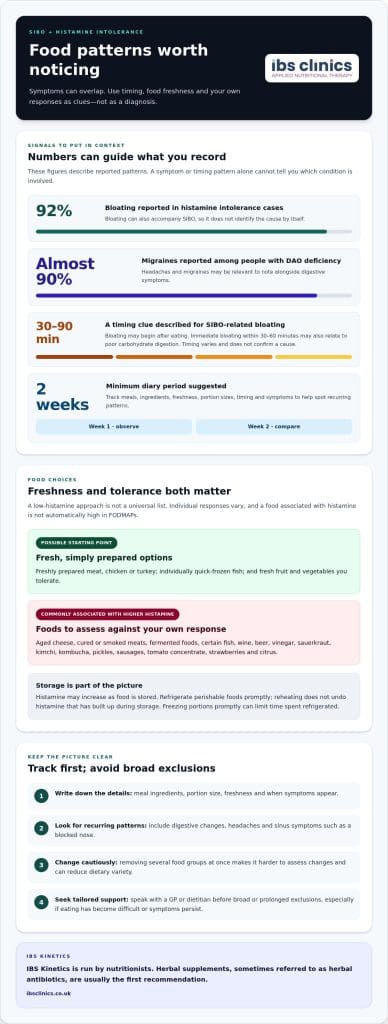
Could one meal leave you bloated, headachy and congested? SIBO and histamine intolerance can produce overlapping symptoms, making food patterns difficult to interpret. Bloating is reported in 92% of histamine intolerance cases, and it can also accompany small intestinal bacterial overgrowth. A symptom alone cannot establish which condition is involved.
Timing may offer a useful clue, though it doesn’t confirm a cause. SIBO-related bloating is described as beginning 30-90 minutes after eating; immediate bloating within 30-60 minutes may also relate to poor carbohydrate digestion. Histamine-related symptoms may occur after eating, but timing varies. Record the meal, timing and symptoms rather than relying on memory.
Digestive symptoms are only part of the picture. Histamine-related responses may include headaches, and migraines have been reported in almost 90% of people with DAO deficiency. Sinus symptoms, such as a blocked nose after wine or fermented food, are also worth recording as a personal pattern. They don’t, by themselves, show that histamine is the cause.
Keep a food-and-symptom diary for at least two weeks. Record ingredients, freshness, portion sizes, digestive changes, headaches and sinus symptoms. Look for recurring patterns across different meals. Avoid removing several food groups at once: it makes changes harder to assess and can reduce dietary variety.
Restrictive diets can narrow food choices and make it harder to maintain a varied, nourishing diet. Speak with a GP or dietitian before making broad or prolonged exclusions, especially if eating has become difficult or symptoms persist.
In the UK, a GP can help assess ongoing digestive symptoms, while a dietitian can support food choices and symptom tracking. Bring your two-week diary to make the discussion more specific.
What is Histamine Intolerance?
Histamine is a chemical made by the immune system that helps the body respond to outside invaders. It also contributes to stomach acid and digestion. The body produces diamine oxidase, or DAO, an enzyme that helps break down histamine in the digestive tract. Histamine intolerance describes a situation in which histamine isn’t broken down effectively and levels build up.
Gut health may influence this balance. Inflammation associated with an infection such as SIBO may contribute to a DAO deficit, reducing the body’s capacity to break down histamine. SIBO means bacterial overgrowth in the small intestine, where fewer bacteria are normally present than in the colon. This connection doesn’t mean that everyone with SIBO has histamine intolerance.
Some gut bacteria can produce histamine. Lactobacillus casei and Lactobacillus bulgaricus are among the species shown to increase its production. Klebsiella aerogenes has been reported to produce up to 100 times more histamine than other bacterial isolates. These examples help explain why gut bacteria may matter, but they don’t identify which bacteria are present in an individual.
Testing assesses different parts of the picture. SIBO is typically assessed with a breath test that measures hydrogen or methane after a lactulose- or glucose-water mixture. No single blood test provides a definitive diagnosis of histamine intolerance, so symptoms, food responses and clinical context also matter when considering possible underlying factors.
Food handling can affect histamine levels. Histamine may increase as food is stored, so choose fresh ingredients and refrigerate perishable foods promptly. Reheating doesn’t undo histamine that has accumulated during storage; freezing portions promptly can help limit how long leftovers spend refrigerated.
If you’re exploring underlying gut factors, a functional medicine approach to gut health can help bring testing and dietary patterns into one considered picture.
What foods are high in histamine?
Foods often associated with higher histamine include fermented products, aged cheese, cured or smoked meats, certain fish, wine, beer and vinegar. When considering both conditions, distinguish histamine triggers from foods limited for other reasons, such as their FODMAP content.
Foods commonly high in histamine
Histamine-rich foods are commonly aged, fermented, cured or stored for longer periods. Examples include sauerkraut, kimchi, kombucha, pickles, sausages and tomato concentrate, as well as wine and other alcoholic drinks.
Strawberries and citrus are also associated with histamine-related responses, although they aren’t fermented foods. A low-histamine approach may temporarily limit these examples, but excluding too many foods can make your diet less varied. Freshness and individual response matter, so record what you eat and any symptoms rather than assuming every listed food causes a reaction.
Individual tolerance and food overlap
Tolerance to foods associated with higher histamine varies considerably. Diamine oxidase (DAO) helps break down histamine, but an individual’s response may also depend on gut health, food freshness and the amount eaten.
FODMAP content and histamine content are different properties. Some foods may be limited for one reason, the other or both; a food’s association with histamine alone doesn’t mean it’s high in FODMAPs. This distinction matters when deciding what to remove, because combining restrictive diets can unnecessarily narrow your choices.
During SIBO treatment, some dietary approaches also reduce or remove sugar, alcohol and carbohydrates. Alcohol is commonly associated with histamine symptoms, so it may be relevant to both approaches. Fermented foods such as kimchi and kombucha may be temporarily limited on a low-histamine diet. These are approaches to discuss and tailor, not a universal list for everyone.
Rather than treating every association as a permanent rule, compare your responses with the food type and preparation. A food-and-symptom diary can help distinguish a recurring pattern from a one-off reaction. Guidance can also help protect dietary variety when considering histamine and FODMAP restrictions together.
Dietary approaches for people with SIBO and histamine intolerance
If you’re deciding what to eat when you have SIBO and histamine intolerance, start with foods you already tolerate. The aim is a workable, varied eating pattern, not the longest possible list of foods to avoid.
Foods low in FODMAPs and histamine
Fresh meat, chicken and turkey, individually quick-frozen fish, potatoes, carrots and broccoli are examples of lower-histamine choices. Which of these also fit a low-FODMAP approach depends on the food and portion, so the categories don’t perfectly overlap.
Try a simple meal built around fresh poultry, a tolerated vegetable and plain potato. Keeping ingredients familiar can make it easier to notice whether a particular food seems to trigger symptoms.
Meeting nutritional needs on a restricted diet
To maintain fibre, nutrients and calories, include tolerated choices from different food groups rather than relying on one “safe” meal. Rotate suitable proteins and vegetables, and include tolerated fruit or other appropriate carbohydrate sources to support variety.
Notice whether exclusions make meals difficult to finish or leave you with very few options. A dietitian can help adapt your choices and protect nutritional balance while you explore individual triggers.
A low-histamine elimination phase is suggested for 3-6 weeks, as a short-term strategy while underlying factors are addressed. Combining low-histamine and low-FODMAP diets without medical guidance can make eating overly restrictive. To decide what to eat when you have SIBO and histamine intolerance, consider the purpose and duration of each restriction, not just the foods removed.
Meal-spacing advice varies: recommendations include leaving 4-5 hours between meals, while another approach suggests 3-4 hours to support the migrating motor complex. These intervals shouldn’t be stacked as extra rules; meal timing needs to fit the overall plan. Refrigerate perishable foods promptly, and avoid keeping leftovers if they trigger symptoms.
If you’d like to discuss a suitable dietary approach, ask your questions in a free 15 Minute Intro chat.
IBS Clinics: Free 15 Minute Intro chat / ask your questions
IBS Clinics offers personalised nutritional care for people navigating digestive symptoms and difficult food choices. IBS Kinetics is run by nutritionists. IBS Clinics can help you consider how gut health, symptoms and dietary patterns fit together, including whether Gut Health Tests or support with Special Diets may be relevant.
If you’re unsure how to approach food restrictions, or your symptoms continue despite dietary changes, a conversation can help you explore possible next steps. IBS Clinics offers a Free 15 Minute Intro chat to ask your questions and discuss the support that may suit your situation.
Contact IBS Clinics to arrange your Free 15 Minute Intro chat.
Move towards a food plan that feels manageable
Deciding what to eat when you have SIBO and histamine intolerance shouldn’t mean living with an ever-growing list of foods to avoid. Consider how your eating pattern affects everyday life: do meals feel manageable, and do your choices remain varied? This wider view can help keep food decisions grounded in your needs rather than fear of a possible trigger.
As your understanding develops, revisit the plan rather than treating restrictions as permanent. Note what you’re avoiding, what you tolerate and what you’d like help exploring. If symptoms continue to shape your meals, IBS Clinics can discuss personalised nutritional support, including IBS care and dietary guidance, alongside your questions about gut health.
Contact IBS Clinics to discuss your next steps. With a considered plan and the right support, you can work towards eating with greater confidence.
Frequently Asked Questions
What is SIBO?
SIBO is an increase in bacteria in the small intestine, where bacterial numbers are normally lower than in the large intestine. It can be associated with digestive symptoms such as bloating and changes in bowel habits. Breath testing commonly assesses hydrogen or methane after a drink containing lactulose or glucose. Test results need to be interpreted alongside symptoms and health history.
Can SIBO Cause Food Sensitivities?
SIBO may contribute to food sensitivities because gut inflammation can affect the intestinal barrier and how foods are tolerated. A reaction to a meal doesn’t identify SIBO on its own, however. Symptoms after several unrelated foods, for example, may reflect overlapping factors. Tracking ingredients and responses can help a clinician consider whether further assessment is appropriate.
Does SIBO cause mast cell activation?
SIBO symptoms alone don’t show that mast cells are activated, and the two terms describe different clinical questions. Flushing, itching or reactions across several body systems deserve assessment rather than being automatically attributed to bacterial overgrowth. Note what happens, how soon it starts and any suspected trigger, then discuss the pattern with a GP or suitable clinician.
What can you eat for breakfast, lunch and dinner with both SIBO and histamine intolerance?
Build meals from foods you already tolerate, prepare them fresh and keep ingredients simple. For example, breakfast could be fresh turkey with potato; lunch, chicken with carrots; and dinner, individually quick-frozen fish with broccoli. These are starting combinations, not a universal menu. Adjust ingredients and portions to your responses, and record any symptoms after each meal.
Are low-histamine and low-FODMAP diets supported by evidence for SIBO symptoms?
Low-histamine and low-FODMAP diets are used as short-term dietary strategies, but they don’t establish the underlying cause of SIBO or histamine-related symptoms. The approaches address different food characteristics, so combining them can make meals unnecessarily restrictive. A practical plan considers a person’s symptoms, tolerated foods and nutritional needs, then reviews whether each restriction remains useful.
Can probiotics, fermented foods or supplements worsen SIBO or histamine intolerance?
These approaches can affect people differently, so introduce changes thoughtfully and note your response. For SIBO, herbal supplements are usually the first recommendation; they may be called “herbal antibiotics”, though they aren’t prescription antibiotics. Fermented foods and probiotics may not suit everyone with histamine concerns. Discuss supplements with a qualified practitioner, particularly if you take medication or have other health conditions.


