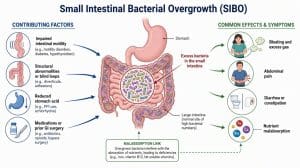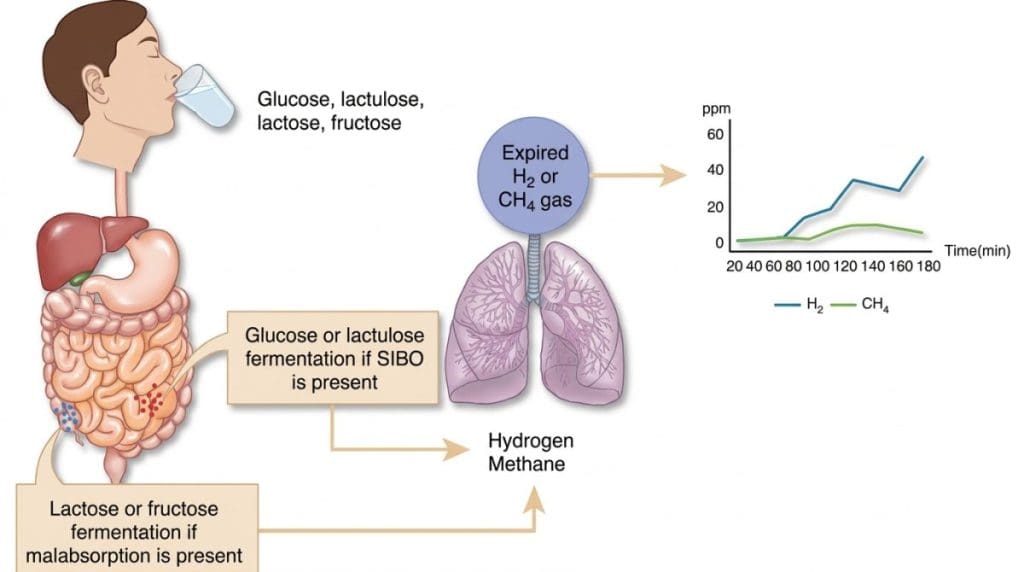
The test sugar can change what a SIBO breath test detects. In standard IBS clinic protocols, lactulose is generally the preferred sugar; it is mixed with water and followed by hydrogen and methane measurements, with samples commonly collected every 15 minutes for just over two hours. Breath test results can provide clues about possible bacterial overgrowth in the small intestine.
If digestive symptoms have left you unsure what a breath test can tell you, that uncertainty is understandable. Results depend not only on the gases measured, but also on how the test sugar moves through your gut.
This guide explains how hydrogen and methane readings are assessed, why lactulose is generally preferred for SIBO testing, and when glucose may be used as an alternative. You’ll also find out how to prepare, including the restricted diet and 12-hour fast used before testing.
Key Takeaways
- Understand why breath testing can help investigate both small-intestinal bacterial overgrowth and sugar malabsorption.
- Learn how hydrogen and methane readings are interpreted, and why measuring both can matter.
- Prepare for testing by understanding the restricted diet and fasting period involved.
- See why lactulose is generally preferred for SIBO testing and how glucose differs as an alternative.
What is a SIBO breath test?
A breath test measures gases in your breath after you drink a test sugar, generally lactulose for SIBO testing, mixed with water. Glucose is an alternative in selected situations. The test can help investigate small-intestinal bacterial overgrowth and sugar malabsorption, but results need to be interpreted alongside your symptoms and medical history.
Breath testing for SIBO and sugar malabsorption
A SIBO test can investigate bacterial overgrowth or whether sugars such as lactose and fructose are absorbed. Gut bacteria ferment sugars and produce gases that pass into breath. Private testing costs vary according to what’s included, such as the postal kit, laboratory analysis and report. Ask what the fee covers before booking, so you understand the components being paid for.
Hydrogen and methane breath sampling
The test involves collecting breath samples before and after drinking the sugar solution. In a commonly described protocol, samples are taken every 15 minutes for just over two hours. The laboratory measures hydrogen and methane levels across the samples, looking at how they change over time. Some tests can be completed at home using a sample collection kit, rather than attending a clinic.
Breath-test limitations with IBS
A breath-test result should be considered alongside the wider clinical picture when assessing possible SIBO. In the study by Dr Mark Pimentel and colleagues, 78% of people with IBS tested positive on a lactulose breath test, compared with 20% of healthy controls. This is one study rather than a universal estimate, and findings vary according to the population, test sugar and diagnostic criteria used. UK guidance for gastroenterologists advises against routine breath testing to diagnose SIBO in people with IBS. Small-bowel aspirate and fluid culture are invasive and may be affected by sampling error or contamination.
Risks and side effects of breath testing
A SIBO test is non-invasive: you drink a glucose or lactulose solution and breathe into sample containers. It requires no needle or endoscope, although collecting repeated samples takes time and preparation may include fasting. If fasting could affect a health condition or your medication routine, discuss the test instructions with your healthcare professional before testing. The result is one part of a wider assessment, not a diagnosis on its own.
Hydrogen and methane measurements
Breath-test results show how gas levels change after you drink the test sugar. A SIBO test compares readings with your baseline and considers when each rise occurs.
Hydrogen levels in breath
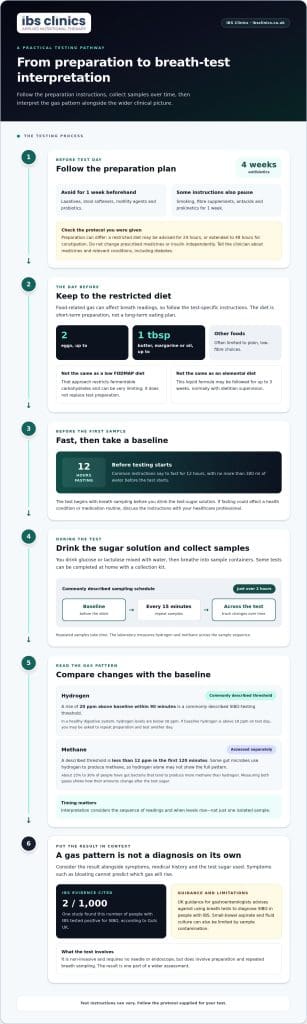
Hydrogen measurement tracks the amount of this gas in each breath sample. Gut bacteria produce hydrogen when they ferment sugars, and it enters the bloodstream before being breathed out. In a healthy digestive system, hydrogen levels are below 16 parts per million (ppm). If your baseline is above 16 ppm on test day, you may be asked to repeat the preparation diet and test another day.
Methane levels in breath
Methane measurement adds a second gas to the assessment. Some gut microbes use hydrogen to produce methane, so hydrogen levels alone may not show the full pattern. About 15% to 30% of people have gut bacteria that tend to produce more methane than hydrogen. Measuring both gases helps show how their amounts change after the test sugar.
Interpreting hydrogen readings
Interpretation compares later hydrogen samples with the baseline and notes when levels rise. For SIBO testing, a hydrogen increase of 20 ppm above baseline within 90 minutes is a commonly used threshold. Methane is considered positive at 10 ppm or more at any point during the test. These criteria help organise the readings, but don’t explain the underlying cause of symptoms on their own.
A SIBO test result is considered alongside your symptoms, medical history and the sugar used. Bloating, for example, may prompt investigation, but it cannot predict whether hydrogen, methane or both will rise. Sampling times matter too: the clinician interprets the sequence, not just one isolated reading. This broader view helps distinguish a gas pattern from an assumption based on symptoms alone.
Pre-test diet and fasting
Preparation can reduce food-related gas that might affect breath readings. Follow the instructions supplied with your test, as the restricted diet and medication guidance help establish a useful baseline.
Common instructions include fasting for 12 hours before testing, with no more than 300 ml of water before the test starts. On the preceding day, the restricted diet may allow up to 2 eggs and 1 tablespoon of butter, margarine or oil. Other foods are limited, often to plain, low-fibre choices. These short-term rules are different from a long-term diet for digestive disorders.
- Antibiotics: avoid them for 4 weeks before testing.
- Laxatives, stool softeners, motility agents and probiotics: avoid them for 1 week beforehand.
- Smoking, fibre supplements, antacids and prokinetics: some hydrogen-test instructions advise stopping these for 1 week.
Preparation instructions can differ between testing protocols. For example, some recommend a restricted diet for 24 hours, with clinicians extending it to 48 hours for constipation. Don’t change prescribed medicines or insulin independently; medication changes can affect health as well as test conditions. Tell the clinician arranging the test about your medicines and relevant conditions, including diabetes.
A low FODMAP diet is different from the short-term preparation diet. It restricts fermentable carbohydrates and can be very limiting, so it should not be followed long-term. It may be considered as a dietary approach to symptoms, but it does not replace test preparation instructions or establish whether bacterial overgrowth is present.
An elemental diet is different again: it uses a liquid formula and may be followed for up to 3 weeks, normally with dietitian supervision. It is not simply a pre-test menu. Keep the purpose clear: the restricted diet and fast prepare for testing, whilst longer dietary approaches need individual nutritional oversight.
Lactulose as the preferred test sugar for SIBO
Lactulose is generally the preferred sugar for SIBO breath testing in IBS clinic protocols. It is not absorbed in the small intestine, so it travels through the length of the small bowel and is fermented by bacteria, producing hydrogen and methane that can be measured in breath. Glucose is also used, but its different absorption pattern gives it a narrower role.
Lactulose’s main advantage is its sensitivity: because it travels further through the small intestine, it can detect fermentation in areas that glucose may not reach. This makes it useful when investigating possible overgrowth throughout the small bowel. It also provides a longer transit pattern that can help the clinician assess the timing of gas production.
The main limitation of lactulose is that it eventually reaches the colon, where normal bacteria ferment it. A later rise in gases may therefore reflect colonic fermentation rather than small-intestinal overgrowth, particularly when gut transit is rapid. Lactulose can also cause temporary bloating, wind or loose stools. These factors are why the timing of the rise and the wider clinical picture matter when interpreting the result.
Glucose has different advantages and disadvantages. It is absorbed in the upper small intestine, so it is less likely than lactulose to produce a positive result from fermentation further along the digestive tract. This gives glucose greater specificity and may make it useful when a more targeted test is needed. However, if bacterial overgrowth is further down the small intestine, glucose may be absorbed before it reaches that area, producing a false-negative result. This lower sensitivity is the main reason glucose is not usually the first choice for SIBO testing.
In practical terms, lactulose is generally preferred because its greater reach and sensitivity provide a fuller assessment of the small intestine. Glucose can be a useful alternative when specificity is especially important or when altered gastrointestinal anatomy affects how lactulose travels. The clinician considers the test sugar, gut motility, surgical history, symptoms and breath-gas pattern together rather than relying on one reading in isolation.
If you’re weighing up how your history may affect the choice, discuss your test options with a nutritionist.
IBS Clinics: Free 15 Minute Intro chat / ask your questions
IBS Clinics can help you make sense of gut health testing when symptoms persist or you are unsure what to explore next. Its personalised nutritional care considers your digestive symptoms, medical history and wider health picture, putting test findings into context rather than viewing a breath result in isolation.
A Free 15 Minute Intro chat gives you space to ask questions and discuss whether Gut Health Tests may be relevant to your situation. If food choices are part of your concerns, support with Special Diets can help you consider an approach suited to your needs. IBS care is also available for people managing ongoing symptoms.
If you’d like to talk through your questions, contact IBS Clinics to arrange a Free 15 Minute Intro chat.
Make your next step a considered one
Test information is most useful when it helps you decide what to explore next. Instead of focusing only on a result, consider how symptoms affect your daily life, what questions remain and what support would be practical. A SIBO test can contribute to that conversation, but ongoing digestive concerns deserve attention beyond a single measurement.
IBS Clinics offers gut health tests and IBS care for people seeking a more joined-up understanding of their digestive health. In a free introductory conversation, you can explain what you are experiencing and ask about possible next steps, even if you have not yet worked out what you need.
If you’d like to discuss your concerns, contact IBS Clinics for support. A thoughtful next conversation can help you move forward with greater clarity.
Frequently Asked Questions
Is SIBO common in people with irritable bowel syndrome (IBS)?
Reported rates of positive SIBO breath tests in people with IBS vary between studies. In the study by Dr Mark Pimentel and colleagues, 78% of people with IBS tested positive using a lactulose breath test, which is within the 60% to 85% range reported in some research. This result should not be treated as the prevalence for every person with IBS, because results vary according to the population studied, test sugar and criteria used. UK guidance for gastroenterologists advises against routine breath testing to diagnose SIBO in people with IBS.
What are breath tests for?
Breath tests can investigate small-intestinal bacterial overgrowth and malabsorption of sugars, including lactose or fructose. They track gases produced when gut bacteria ferment a test sugar, helping assess how the body handles it. For example, if symptoms follow dairy foods, a lactose breath test may investigate lactose malabsorption. A clinician considers the result alongside symptoms and medical history, rather than using it alone to explain digestive problems.
Can I do this test whilst pregnant?
Speak with your midwife or doctor before arranging a breath test during pregnancy. The test involves drinking a sugar solution, and preparation may include fasting, so your maternity team can consider these factors alongside your health and symptoms. Share the specific test instructions with them, including the proposed sugar and fasting requirements. Do not change your usual food intake or medicines for testing without discussing it with your care team.
Do I need to fast before the test?
Yes, the preparation described for a SIBO breath test includes fasting for 12 hours beforehand. On the test day, the instructions allow a maximum of 300 ml of water before testing starts. Plan the fast around the appointment and follow the specific kit instructions. If fasting could affect a condition such as diabetes, discuss the preparation and medicines with your healthcare team beforehand.
How does SIBO affect you over time?
Persistent SIBO can interfere with normal nutrient absorption and contribute to gas and digestive symptoms. In more serious cases, associated malnutrition can cause lasting harm, so nutritional deficiencies need attention. Vitamin B12, calcium and iron may require supplementation for some people. Symptoms can also return after antibiotics stop. Ongoing or worsening symptoms deserve review, particularly with unintentional weight loss or signs of poor nutrition.
How is it performed?
A SIBO breath test starts with baseline samples, followed by a lactulose drink in the usual protocol, or glucose where clinically appropriate, and repeated breath collection. Southampton University Hospitals NHS Trust instructions advise taking two baseline samples and holding each breath for 15 seconds before exhaling into the sample bag. Samples may then be collected every 15 minutes. The laboratory measures gas levels across the series to assess how they change after the drink.