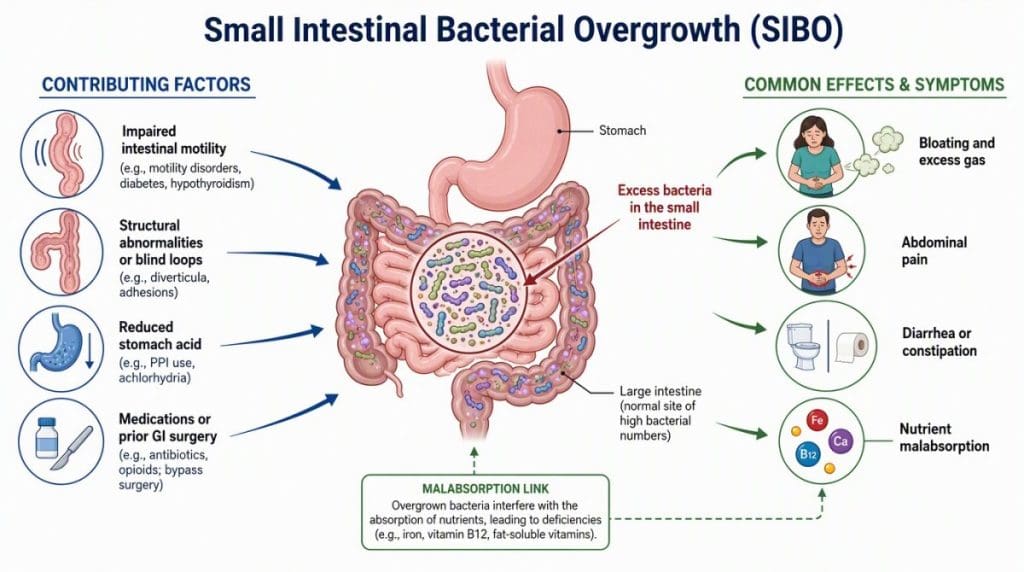
SIBO can affect more than digestion: this form of intestinal overgrowth means there are more bacteria than usual in the small intestine. It may cause bloating, excess gas, diarrhoea or nausea, and over time can impair nutrient absorption, contributing to deficiencies such as vitamin B12 deficiency. Persistent diarrhoea, rapid unintentional weight loss or severe abdominal pain calls for medical attention.
Ongoing digestive symptoms can be draining, especially when it is unclear whether food, another condition or something else is contributing. Intestinal overgrowth, including SIBO, is one possible explanation, but symptoms alone cannot establish the cause.
This article explains how SIBO may affect you over time, the symptoms and conditions associated with it, and how antibiotics may be used. It also outlines when to seek medical care, so you can better understand what deserves attention and what to discuss with a health professional.
Key Takeaways
- Notice patterns in bloating, gas, bowel changes and how you feel after eating; persistent symptoms can affect nutrient absorption over time.
- Explore how digestive conditions, changes in gut movement and previous abdominal surgery may be relevant when considering possible causes.
- Herbal supplements, often referred to as herbal antibiotics, are typically the primary recommendation at IBS Clinics; conventional antibiotics may be used in some clinical settings.
- Seek medical attention for severe abdominal pain, persistent diarrhoea or rapid unintentional weight loss, and for abdominal pain lasting more than a few days.
What are symptoms of SIBO?
SIBO, a form of intestinal overgrowth, can cause digestive symptoms and affect nutrient absorption. The pattern may offer clues, but symptoms alone cannot confirm the cause.
Common SIBO symptoms
Common symptoms include bloating, abdominal distention, excess gas, belching, nausea and feeling overly full after eating. Diarrhoea can also occur, meaning loose or watery stools three or more times a day. Some people experience brain fog or an upset belly. Symptoms vary, so note how they relate to meals and changes in your usual bowel habits.
Private SIBO testing and care costs depend on the tests and support involved; fees are provided after a quote request.
Effects on digestion
Bacteria in the small intestine can ferment carbohydrates, producing gas that contributes to bloating and discomfort. Some fermentable carbohydrates, including certain fibres, starches and sugars, may worsen symptoms. Some people also find high-fat foods harder to tolerate. A low-FODMAP diet may help manage symptoms, but dietary changes alone cannot cure SIBO.
In the UK, assessment for SIBO outside research uses medical history and breath testing. Discuss NHS access with your GP. Breath tests measure hydrogen and methane, but there is no universally accepted gold-standard test. Guts UK says breath testing is less exact than direct sampling of the small bowel. Results need to be interpreted alongside symptoms and clinical history.
Symptoms and nutrient deficiencies
Over time, SIBO can interfere with absorbing fats, carbohydrates and proteins, potentially contributing to malnutrition, diarrhoea and weight loss. It may also affect absorption of vitamins A, D, E and K. Reduced vitamin B12 can cause weakness, fatigue, tingling or numbness in the hands and feet; advanced deficiency can cause mental confusion. Poor calcium absorption may contribute to osteoporosis or kidney stones. These effects show why persistent digestive symptoms and unexplained weight changes deserve attention, rather than being managed through food restriction alone. Previous dietary changes and ongoing symptoms are useful details to share during assessment.
Surgery and conditions associated with SIBO
Small intestinal bacterial overgrowth (SIBO) means more bacteria than usual live in the small intestine. Intestinal overgrowth can also refer to methane-associated intestinal methanogen overgrowth (IMO) or small intestinal fungal overgrowth (SIFO); these differ from IBS and coeliac disease, though symptoms can overlap.
Health conditions associated with SIBO
Some health conditions are associated with SIBO because they can affect intestinal movement, digestion or the gut environment. These include Crohn’s disease, coeliac disease, cirrhosis, pancreatitis, fatty liver and short bowel syndrome. IBS is also associated with SIBO, but is not the same condition. This distinction matters: shared symptoms such as bloating or changes in bowel habits cannot identify the cause, and the conditions can coexist.
Surgery and SIBO risk factors
Previous abdominal or intestinal surgery can be relevant because changes to the gut may affect how its contents move. Impaired intestinal movement is another risk factor. Diabetic neuropathy, systemic sclerosis, amyloidosis, hypothyroidism and idiopathic intestinal pseudo-obstruction can hinder bacterial clearance. These links help explain why medical history matters when bloating continues after surgery or alongside another condition.
Other possible contributors include achlorhydria and changes in intestinal movement, which may occur in older people. Proton pump inhibitor use has been associated with SIBO in a small number of people, although the relationship remains disputed. These factors are not proof of bacterial overgrowth; they provide context for understanding symptoms and considering a diagnosis.
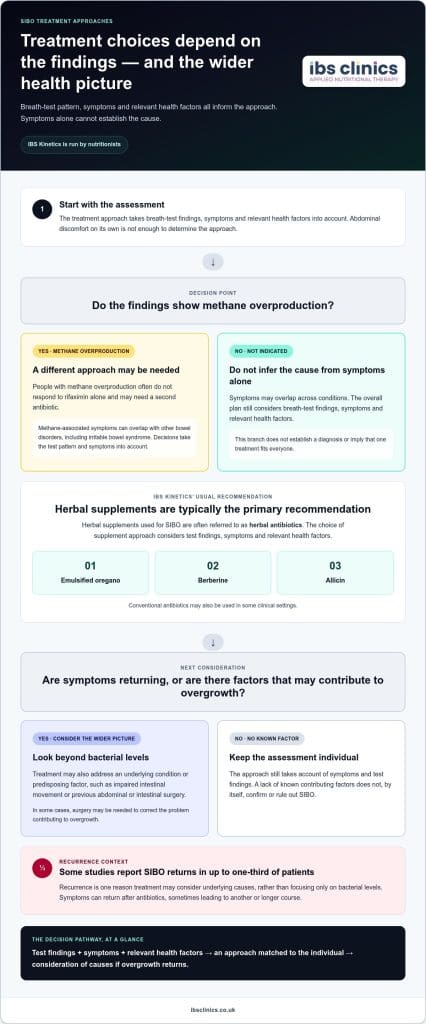
Recurrence is also relevant: some studies report that SIBO returns in up to one-third of patients. Treatment therefore considers underlying causes or predisposing factors, rather than focusing only on bacterial levels. In some cases, surgery may be needed to correct the problem contributing to overgrowth. Persistent symptoms, weight changes and a history of surgery are useful details to share during medical assessment.
SIBO treatment approaches
How is SIBO treated?
SIBO treatment usually has two parts: reducing the overgrowth itself, and addressing the reasons it developed in the first place. Without the second part, relapse is common.
Our approach: herbal antimicrobials first
As nutritionists, we don’t prescribe antibiotics such as rifaximin. Our first-line approach is a carefully selected herbal antimicrobial protocol. Commonly used options include emulsified oregano, berberine-containing herbs and allicin (a stabilised extract from garlic). We choose the combination, dose and duration based on your breath-test pattern, your symptoms and your wider health picture.
There is encouraging, though still limited, evidence for this approach. A 2014 study from Johns Hopkins compared herbal protocols with rifaximin and found them comparable: 46% of people taking herbs had a normal breath test afterwards, compared with 34% of those taking rifaximin.¹ Herbs also worked in some people who hadn’t responded to rifaximin.¹ It was a relatively small study in which patients chose their own treatment, so we see it as promising rather than conclusive. Larger, randomised trials are still needed.
If antibiotics are a better fit for you, we’re happy to discuss this and work alongside your GP or a prescribing doctor.
Methane-dominant SIBO (IMO)
When a breath test shows raised methane, this usually points to intestinal methanogen overgrowth (IMO), which is driven by archaea rather than bacteria. IMO is often linked with constipation and tends to respond differently to treatment. In conventional care, it often needs a combination of antibiotics. Herbal protocols for IMO typically include allicin, and supporting gut motility becomes especially important. Because methane-related symptoms overlap with IBS and other bowel conditions, we base treatment on your test pattern and symptoms together, not on bloating or discomfort alone.
Why SIBO comes back, and what we do about it
SIBO can recur after any treatment, herbal or pharmaceutical. When it does, repeating the same course is rarely the answer. We look for what’s allowing bacteria to build up, such as:
- slowed gut motility, for example after food poisoning
- low stomach acid or long-term acid-suppressing medication
- previous abdominal surgery or adhesions
- thyroid function
- other health conditions
Supporting motility and repairing the gut environment are central to our approach and help reduce the risk of relapse.
What about diet and probiotics?
Dietary changes can ease symptoms considerably, but diet alone doesn’t usually clear SIBO. The evidence on probiotics is mixed: Guts UK notes there isn’t yet enough evidence that they treat SIBO,² and some people find they temporarily worsen symptoms. We use them selectively and at the right stage, rather than as a substitute for treatment.
We’ll talk all of this through with you and build a plan around your test results, symptoms and health history.
References
- Chedid V, Dhalla S, Clarke JO, et al. Herbal therapy is equivalent to rifaximin for the treatment of small intestinal bacterial overgrowth. Glob Adv Health Med. 2014;3(3):16–24. doi:10.7453/gahmj.2014.019
- Guts UK. Small Intestinal Bacterial Overgrowth (SIBO) [patient information leaflet]. June 2025.
When to seek medical care
Severe abdominal pain warrants immediate medical care. If abdominal pain lasts more than a few days, arrange a medical assessment rather than assuming SIBO is responsible. Pain can have several causes, and symptoms alone cannot distinguish bacterial overgrowth from another digestive disease. The duration and severity of pain help show how promptly to seek care.
Persistent diarrhoea or rapid, unintentional weight loss also calls for a full medical evaluation. These changes matter because ongoing digestive problems can affect nutrient absorption, not just comfort after meals. Tell the clinician how long diarrhoea has continued, whether your weight has changed and whether carbohydrates or other foods affect your symptoms. Those details help build a clearer picture.
Seek particular attention for these symptoms after abdominal surgery. Previous surgery can be relevant to intestinal movement, while impaired motility can contribute to bacterial overgrowth. Surgical history is one part of the clinical picture, alongside conditions such as Crohn’s disease, coeliac disease, diabetes-related neuropathy or short bowel syndrome. Sharing these details helps distinguish possible contributors from symptoms that overlap with IBS.
No single symptom pattern confirms SIBO. Bloating, diarrhoea and weight loss can occur with different digestive disorders, so assessment considers the whole picture, including medical history and changes over time. SIBO can recur, making it important to discuss why symptoms return. If symptoms persist after treatment, report what changed and when, rather than repeating dietary restrictions without guidance.
Keep a concise record of pain, bowel changes, weight changes and previous surgical procedures before seeking care. This makes it easier to explain the timeline and identify concerns that need prompt attention. For continuing digestive symptoms, you can use the free 15-minute intro chat to ask questions about next steps.
IBS Clinics: Free 15 Minute Intro chat / ask your questions
IBS Clinics provides personalised nutritional care for people seeking support with ongoing digestive concerns, including SIBO and IBS. Its approach considers gut health, medical history and lifestyle to help explore possible factors behind persistent symptoms and how nutrition may support your care.
Gut Health Tests and tailored Special Diets may form part of that support where appropriate. If you’re unsure what to ask or where to begin, the Free 15 Minute Intro chat gives you space to raise questions and discuss your concerns without pressure.
To discuss your digestive health questions, contact IBS Clinics or visit ibsclinics.co.uk.
Take a considered next step
Persistent digestive symptoms can make it difficult to know what to focus on next. Rather than trying to interpret every change alone, note what you want answered and what support would be useful, such as discussing testing or finding a manageable approach to food. This can help make a conversation more focused.
For concerns about suspected intestinal overgrowth, IBS Clinics offers Gut Health Tests and IBS care. Its Free 15 Minute Intro chat gives you space to ask questions and consider whether its nutritional approach fits your needs. Testing and dietary support can be discussed in the context of your wider digestive health, rather than as isolated answers.
If you’d like to explore that support, contact IBS Clinics to discuss SIBO. Taking time to understand your options is a constructive step towards feeling more informed about your digestive health.
Frequently Asked Questions
How does SIBO affect you over time?
With persistent intestinal overgrowth, reduced nutrient absorption may develop gradually rather than causing one sudden change. You might notice a pattern, such as increasing fatigue alongside ongoing bowel symptoms or unintentional weight loss. Keep a record of symptom duration, food tolerance and weight changes. This timeline can help a health professional understand how your symptoms are evolving and what further assessment may be useful.
Is SIBO common in people with irritable bowel syndrome (IBS)?
SIBO should not be assumed to be the cause of IBS symptoms. Guts UK cites one study in which 2 out of 1,000 people with IBS tested positive for SIBO. UK guidelines for gastroenterologists advise against breath testing for SIBO in people with IBS. Ask how a proposed test could affect your care, and how its result would be interpreted alongside your medical history.
Is there anything I can do myself?
Record how meals relate to symptoms and allow time between eating occasions. Guts UK says three meals a day can allow time for the gut’s natural cleansing waves, with at least three hours between meals or snacks considered ideal. A strict low-FODMAP phase is temporary; gradual food reintroduction is recommended after about four to six weeks. Avoid prolonged restriction without nutritional guidance.
What should I ask your doctor?
Ask which conditions could explain your symptoms, whether your medical history affects assessment and what a breath-test result could mean for treatment. If testing is discussed, ask how hydrogen and methane findings are interpreted and what the next step would be if symptoms continue. Bring notes on bowel changes, meals, medicines and previous abdominal procedures to make the discussion more specific.
What are the symptoms of small intestinal bacterial overgrowth (SIBO)?
SIBO can involve abdominal swelling, excess wind, belching, nausea, loose stools or feeling full quickly. Brain fog can also occur. Symptoms may appear in different combinations, so a single sign such as bloating cannot establish the cause. Note when symptoms begin, how long they last and whether bowel movements change at the same time; this can help inform an assessment.
What causes SIBO, and who is most at risk?
SIBO is associated with factors that disrupt normal bowel clearance or change the gut environment. Examples include impaired movement linked with diabetes-related neuropathy or systemic sclerosis, and structural changes after intestinal surgery. Coeliac disease, Crohn’s disease and short bowel syndrome are also associated. These conditions provide relevant context, but their presence alone does not establish SIBO; symptom history matters too.