A fermented food isn’t automatically a probiotic food. Probiotics are live microorganisms, and some fermented foods contain live cultures, but their type and amount can vary with how the food is made and stored. That distinction matters when you’re trying to make sense of what might suit your digestion.
If you have ongoing symptoms, it’s understandable to want a clear answer about which foods might suit you. Adding several fermented foods at once can make it difficult to tell how you respond, so start gradually and notice any changes.
This guide explains what probiotics are, how they differ from fermented foods, and what to look for on labels when choosing products with live cultures. It also covers how to introduce them in small amounts and why the right approach depends on your symptoms and wider digestive health.
Key Takeaways
- Fermentation alone doesn’t mean a food still contains live cultures; how it’s made and stored matters.
- Learn which label wording can help you identify foods with active cultures.
- Consider how foods, drinks and supplements differ, and introduce fermented options gradually.
- Know which symptoms call for a GP’s advice before making significant dietary changes.
Fermented foods: What’s the difference?
Fermentation changes food, but it doesn’t automatically make it probiotic.
Fermented and probiotic food differences
Fermented foods are made through microbial activity. Probiotic foods contain live microorganisms that may support the gut microbiome. Not every fermented product fits this description: the types and amounts of bacteria can vary with preparation and storage. This distinction matters when choosing foods to see whether they suit your symptoms. Heat can kill live bacteria, while fermentation can also change a food’s flavour and texture.
Live labels and fermentation choices
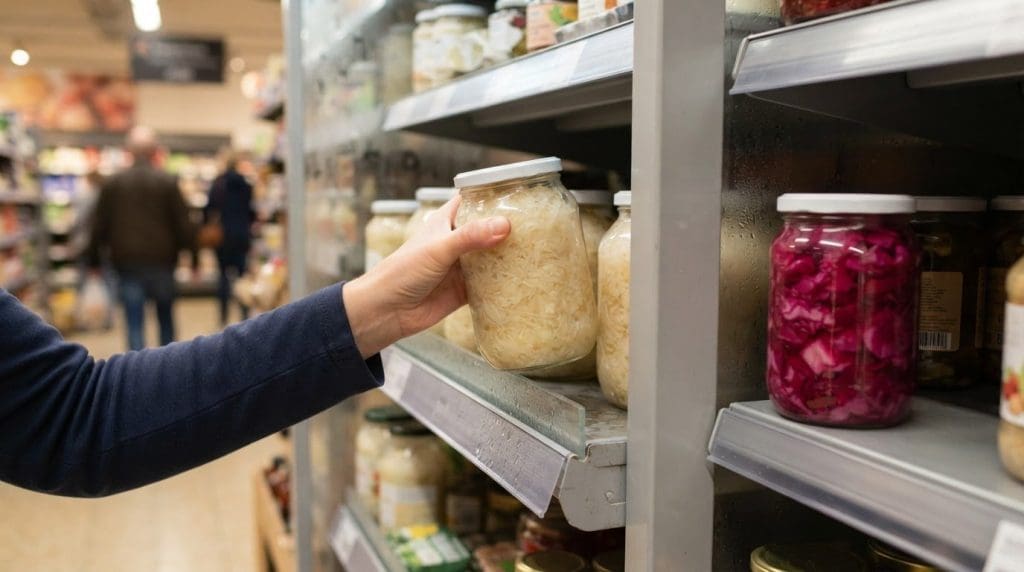
Labels can help you distinguish products with live cultures from heat-treated versions. For yoghurt, look for “live” or “active cultures”; choose refrigerated sauerkraut rather than shelf-stable varieties. Yoghurt, kefir, sauerkraut, kimchi and kombucha differ in ingredients and microbes, and their live-culture content varies. If fermenting food at home, use clean equipment and a trusted recipe, follow its salt and temperature guidance, and store the finished food as directed.
Fermented soy foods
Tempeh, miso and natto are fermented soy foods, each made differently. Tempeh is a firm food made from whole soybeans; miso is a paste fermented with koji, a culture used in its production. Natto has a distinctive sticky texture. These foods aren’t interchangeable, and preparation affects whether live microbes remain. Adding miso to boiling liquid, for example, may destroy live cultures.
Foods compared with supplements
Fermented foods are whole foods, while supplements are formulated with specified microbial strains and amounts. A supplement label may name its strains and colony-forming units, but the live-culture content of food can vary. Neither option suits everyone. Cheese, yoghurt and fermented vegetables also differ in nutrients, ingredients and salt. Consider your usual diet and symptoms when deciding what to try; don’t assume all products have the same effects.
Choosing foods with live active cultures
Naturally fermented yoghurt, kefir, sauerkraut and kimchi can contain live microbes. In UK shops, look in the chilled section and check the product label.
Finding probiotic foods in the UK
Common UK options include yoghurt, kefir, refrigerated sauerkraut and kimchi. Their cultures and amounts vary, so starting with familiar foods can make it easier to notice how they relate to your digestion. Kombucha is also available, but its microbial content and health benefits vary. Fermented foods can provide different compounds and nutrients; no single option is essential for gut health.
Live cultures and naturally rich foods
If you want live bacteria, choose yoghurt labelled “live” or “active cultures”. Some products are heat-treated, which can affect the cultures. Refrigerated sauerkraut is more likely to retain live cultures than shelf-stable versions. Pickles made with vinegar aren’t naturally fermented and don’t provide live probiotics. Kimchi may contain active microbes, but preparation and storage affect how many remain.
Choosing and storing probiotic foods
Follow storage instructions for yoghurt, kefir, kimchi and other chilled products. Heat can reduce live bacteria, so add miso after cooking rather than boiling it. For supplements, check the label for named strains and colony-forming units (CFU) for each strain. See whether the stated CFU count applies through the expiry date. These details help you compare products, but they don’t show that a supplement will suit your symptoms.
Is it best to take probiotics and prebiotics as foods, supplements or drinks?
Foods, drinks and supplements differ in their microbes, ingredients and evidence. The right comparison depends on the specific strain and the digestive question you want to address.
Probiotic and prebiotic foods
Probiotics are live microorganisms; prebiotics are substances that gut microbes use as food. They are related, but not interchangeable. Onions, garlic, asparagus, artichoke and chicory root are sources of prebiotics. Yoghurt with live cultures is one example of a food containing microorganisms. Including both types of food in a varied diet is one option, but you don’t need them at every meal. If certain foods trigger symptoms, your tolerance will determine whether they suit you.
Health benefits and strength of evidence
Evidence for probiotic benefits depends on the strain, amount and outcome studied. Some evidence suggests certain probiotics may help ease some irritable bowel syndrome symptoms, but that doesn’t mean every yoghurt, drink or supplement has the same effect. Kefir and kombucha can contain microorganisms, though evidence for their proposed health benefits remains limited. Supplements may list strains and amounts, but that alone doesn’t show a product suits your needs. Treat broad claims about digestive or immune-system benefits cautiously. If you have a weakened immune system or an existing health condition, discuss supplements with your GP before use.
Probiotic supplement labels should state the number of colony-forming units for each bacterial strain. For children, consult a paediatrician or gastroenterologist before starting supplements.

Introducing probiotic foods gradually
Introducing fermented foods slowly makes it easier to notice your response. Start with a small portion of one food, such as sauerkraut, rather than trying several new items together. There’s no universal portion or schedule; tolerance varies by person and food.
Keep that food consistent before increasing the amount. For example, add a little sauerkraut to a familiar meal and note any symptom changes. If it feels comfortable, increase gradually; if symptoms become troublesome, pause that trial. Changing one thing at a time makes the pattern easier to interpret.
Yoghurt or fermented milk may be a practical first choice. Kimchi has a stronger flavour, while sauerkraut can be salty. Live cultures can include bacteria such as Lactobacillus, but each food contains different microorganisms. Fermentation and storage affect which organisms remain. Ingredients also shape the food’s nutritional profile, including its minerals.
How much should you eat, and how often? Start with a small serving and increase gradually if it suits you. No single amount or frequency works for everyone. Keep other meals steady during the trial. Adding a prebiotic food, such as onion, at the same time introduces another change. Try changes separately to help identify which foods relate to symptoms.
Over time, you can include a variety of fermented foods, introducing them gradually and starting with small amounts. Children should also start with small servings of probiotic-containing foods and increase them gradually.
When to see your GP
Ongoing digestive symptoms deserve attention, particularly if they are new, persistent or changing. Contact your GP if you notice blood in your stool, unexplained weight loss, persistent vomiting, difficulty swallowing or anaemia. Seek medical advice too if symptoms wake you at night or you have a family history of bowel cancer or coeliac disease.
A new, persistent change in bowel habit should be discussed with your GP, especially if you’re over 50. Describe what has changed, when it began and whether it is continuing. This information can help your GP understand the pattern and decide what assessment is appropriate. Don’t assume that a change is caused by a particular food or by your gut microbiome.
Before making significant dietary changes, ask a doctor to rule out coeliac disease and other medical conditions. Changing what you eat can affect how symptoms appear and may complicate an investigation. In particular, don’t remove major food groups to manage symptoms before seeking medical advice. A restrictive diet can make eating more difficult and narrow your choices unnecessarily.
Once medical concerns have been assessed, you can consider dietary changes with suitable support. If symptoms persist despite adjustments, or you’re unsure what triggers them, share that history with your GP. A clear account of your symptoms, family history and previous dietary changes can help guide the next conversation.
IBS Clinics
IBS Clinics is run by nutritionists. Our registered nutritionists help adults make sense of persistent digestive symptoms and food choices. If fermented foods seem to affect how you feel, we consider your response alongside your history, usual diet and wider digestive health. Our personalised support focuses on the questions and patterns that matter to you.
In one-to-one nutritional care, we explore when symptoms occur, which foods you’re eating, and whether several changes happened together. We can discuss special diets where appropriate, without assuming that restricting foods is the answer. Significant dietary changes should follow medical assessment, including ruling out coeliac disease with your doctor, as explained in the NHS information on coeliac disease.
If questions remain, gut health tests may be considered as part of a wider investigation. We interpret results alongside your symptoms and history, rather than treating a result in isolation. Your GP remains involved in medical assessment and care.
Ongoing symptoms can be tiring, especially after several attempts to find a pattern. A measured approach gives you time to review what feels manageable and decide whether dietary support or a further discussion with your GP is the next useful step.
If you’d like to talk through your situation, book a free 15-minute call with IBS Clinics. All appointments are held over Zoom across the UK.
Frequently asked questions
What are probiotics?
Probiotics are live microorganisms that can provide a health benefit when consumed in suitable amounts. The term applies to specific microbes, rather than every bacterium in fermented food. A fermented product may contain live cultures without having the same evidence as a probiotic supplement with named strains. The type of microorganism and the reason for using it both matter.
Are there any risks?
Fermented foods can be salty, so check the label if you need to limit sodium. For children who already have stomach or bowel symptoms, foods containing live cultures may increase gas, bloating or mild cramping. If symptoms are persistent or concerning, speak with a GP rather than assuming a particular food is responsible. Tolerance and reactions vary from person to person.
How can I eat with this in mind?
Choose foods that fit your usual meals and preferences rather than trying several unfamiliar products at once. For example, add a small amount of one fermented food to a familiar dish, then keep other changes steady. This makes it easier to notice how that food fits into your eating pattern. There’s no single amount or schedule that everyone needs to follow.
How can I identify live cultures, and can cooking or pasteurisation kill them?
For yoghurt, look for label wording such as “live cultures” or “active cultures”. Heating, including pasteurisation, can reduce live bacteria, so a fermented name alone doesn’t show that cultures remain. Follow the storage instructions on the pack. If retaining live cultures matters to you, avoid heating the food and choose a product labelled accordingly.
Are these foods safe for children, pregnant people and people with weakened immune systems?
There isn’t enough evidence to say that all children under four, pregnant people or people with kidney failure need to avoid kombucha. However, kombucha may contain small amounts of alcohol and caffeine, and its acidity and sugar content vary. If you are pregnant, have kidney failure or are choosing it for a young child, ask a healthcare professional for advice. Children with existing digestive symptoms may experience gas, bloating or mild cramping after eating foods with live cultures. A child with a condition that increases infection risk, or who has a central line, needs advice from a healthcare professional before using probiotics. People with weakened immune systems should speak with their GP or a specialist before using them.

Article by
Tracey Randell
Tracey Randell is a Registered Nutritionist and IFM Certified Practitioner (Dip BCNH, IFMCP, mBANT, CNHC), specialising in complex digestive health. She founded IBS Clinics in 2011 and has spent more than 15 years supporting people with SIBO, IMO, SIFO, dysbiosis and long-standing IBS, many of whom have tried several approaches without lasting improvement.
Tracey’s approach is terrain-first. She looks beyond symptoms to the whole gut environment, including digestion, motility, the microbiome, blood sugar and stress. She works with clients across the UK via Zoom, alongside GPs and consultants where appropriate.