
Could worrying about needing a loo make IBS symptoms harder to manage? Stress and anxiety can trigger flare-ups, according to the NHS, and social plans may add another layer of strain. Understanding how to manage social anxiety with IBS starts with recognising that the mind and gut communicate closely. This doesn’t mean symptoms are imagined or that anxiety caused your IBS.
Unpredictable discomfort, bloating or changes in bowel habits can make social situations difficult. It’s understandable to feel anxious about being away from home, finding a toilet or explaining how you feel.
This article explains how stress and anxiety may affect IBS and offers practical ways to approach social plans, notice possible triggers and support everyday wellbeing. It also explores counselling strategies, including how discussing anxiety may help you understand its effects on daily life. The aim isn’t to promise a quick fix, but to offer a calm starting point for finding manageable approaches.
Key Takeaways
- Recognise how stress and anticipation may affect bowel sensitivity without making your symptoms any less real.
- Understand the two-way relationship between gut and brain, and why anxiety and IBS can influence one another.
- Explore ways to make social situations feel more manageable, notice possible triggers and consider counselling strategies.
- Know which symptoms call for GP advice and how nutrition support can sit alongside medical care.
Can stress cause bowel problems?
Stress can affect bowel sensitivity and digestive function, making symptoms harder to predict. The NHS notes that stress and anxiety may trigger IBS flare-ups in some people.
Stress and bowel sensitivity
Stress is the body’s normal fight-or-flight response, and it may heighten bowel sensitivity in people with IBS. Under pressure, familiar sensations such as gas or bowel movement may feel more intense. You might notice them while waiting for a presentation to begin, for example. Recognising this possible connection can help you consider the context without assuming stress explains every symptom.
Stress-related symptom flare-ups
A flare-up is a period when familiar symptoms, such as cramps, bloating or urgency, become more troublesome. The NHS identifies stress and anxiety as possible triggers for some people, although patterns vary. If distressing news leaves you on edge, switch off alerts or choose set times to read updates. This can limit repeated exposure without requiring you to avoid important information altogether.
Stress and digestive function
Stress may influence digestive activity through communication between the brain and gut. During a tense commute, for instance, you might notice urgency or abdominal discomfort. Someone else may experience a different change, and one episode doesn’t establish a cause. Afterwards, note the situation and sensation, such as rushing for a train, to see whether similar circumstances recur.
People with IBS may be sensitive to emotional stress, but anxiety does not cause the digestive disorder. IBS involves heightened bowel sensitivity, and stress from internal or external circumstances may influence symptoms. This distinction helps separate a possible influence from the underlying condition, rather than treating emotional difficulty as its cause.
Stress may influence symptoms, but evidence does not establish that it triggers IBS through the immune system. Experiences vary, and stress or trauma does not cause IBS in everyone. Some people find that reducing stress helps them manage symptoms, although it cannot be assumed to prevent symptoms or lead to recovery. The aim isn’t necessarily to eliminate all pressure, but to notice possible links with symptoms and consider ways to reduce its impact.
How is irritable bowel syndrome connected to anxiety?
IBS and anxiety can influence one another, but the relationship and its direction vary from person to person. Speak with your GP if symptoms persist or anxiety affects daily life. Seek prompt medical advice for blood in your stool, persistent vomiting or another concerning change.
Gut health and mental health
The gut and brain communicate through nerve signals, so digestive sensations and emotional states can affect each other. This two-way connection helps explain why anxiety may make bowel sensations more prominent, while unpredictable symptoms can increase social worry. For example, concern about finding a toilet may heighten awareness of abdominal discomfort before travelling. That experience is real, but it doesn’t mean anxiety caused IBS.
Anxiety, stress and IBS symptoms
Anxiety and stress may coincide with changes in IBS symptoms, while symptoms themselves can create worry about eating out, commuting or meeting friends. The relationship is complex: anxiety doesn’t explain every flare-up, and digestive symptoms can have several influences. Tracking when worry and symptoms occur may help you describe the pattern to your GP, without assuming one caused the other.
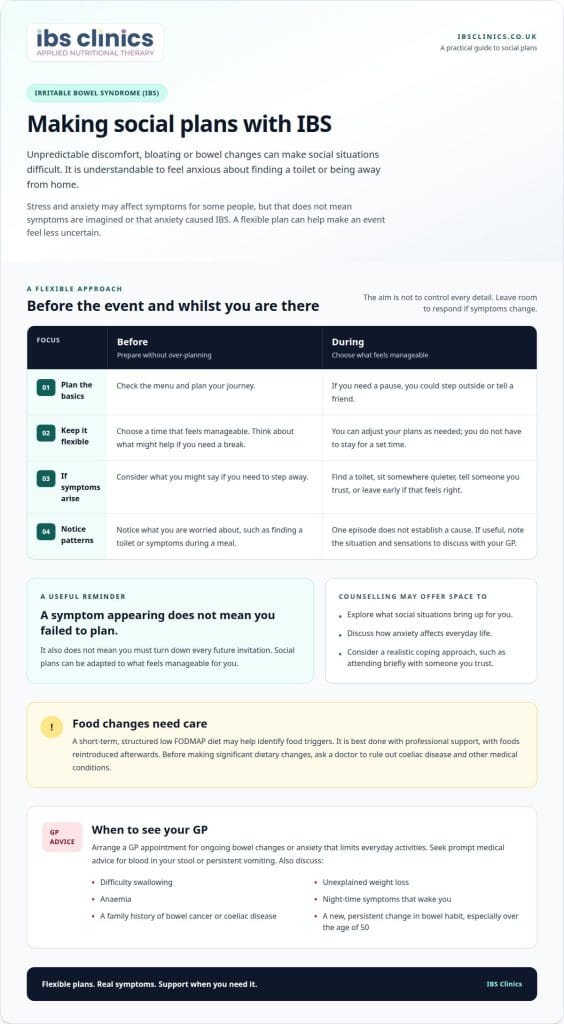
Arrange a GP appointment for ongoing bowel changes or anxiety that limits everyday activities. Blood in the stool or persistent vomiting needs prompt medical advice. Also discuss difficulty swallowing, unexplained weight loss, anaemia, night-time symptoms, a family history of bowel cancer or coeliac disease, or a new, persistent change in bowel habits with your GP.
Lifestyle changes and avoiding triggers
A flexible plan can make social occasions feel less uncertain while leaving room to respond if symptoms change.
Planning for symptoms before social events
A practical part of how to manage social anxiety with IBS is preparing without trying to control every detail. Before a meal out, check the menu, plan your journey and choose a time that feels manageable. Consider what might help if you need a pause, such as stepping outside or telling a friend you may take a break. Flexible plans can ease the pressure to stay for a set time.
Managing symptoms during social events
If symptoms arise, focus on one immediate choice: find a toilet, sit somewhere quieter or tell someone you trust that you need a moment. You can leave early if that feels right. A symptom appearing doesn’t mean you failed to plan or must turn down every future invitation. Planning what to say if you need to step away can be part of managing social anxiety with IBS.
For ongoing symptoms, discuss suitable options with your GP. Treatment depends on your symptoms and what may be contributing to them. A short-term, structured low FODMAP diet may help identify food triggers, with professional support and foods reintroduced afterwards. Before making significant dietary changes, ask a doctor to rule out coeliac disease and other medical conditions. Your GP can also discuss symptom-specific care and support for anxiety.
Counselling strategies for managing anxiety
Counselling can help you explore what social situations bring up and how anxiety affects daily life. To start managing social anxiety with IBS, identify a specific concern, such as fearing symptoms during a work lunch, then discuss what support or coping approach feels realistic.
In sessions, you might examine thoughts that make an event feel unsafe and consider a manageable alternative. Instead of cancelling every invitation, for example, you could discuss attending briefly with someone you trust. Managing social anxiety with IBS can also involve practising how to explain your needs while keeping expectations flexible. Counselling doesn’t replace medical assessment of digestive symptoms.
When speaking with friends, family or an employer, share only what you’re comfortable disclosing. You could explain that IBS can be unpredictable and request a practical adjustment, such as a short break during a meeting.
In the UK, ask your GP about talking therapies. In England, NHS Talking Therapies offers a route to support for anxiety, including self-referral in many areas. Guts UK’s digestive health information may help you prepare questions about IBS.
Before an initial conversation, write down what you want help with, such as avoiding social plans or feeling anxious on public transport. This can make it easier to explain how anxiety and symptoms affect your routines and discuss whether counselling is appropriate for you.
When to see your GP
IBS symptoms can be distressing, but don’t assume a new or persistent change is caused by IBS or anxiety. Arrange a GP appointment if you notice any of these warning signs:
- Blood in your stool or unexplained weight loss.
- Persistent vomiting or difficulty swallowing.
- Anaemia or symptoms that wake you at night.
- A family history of bowel cancer or coeliac disease.
- A new, persistent change in bowel habit, especially over the age of 50.
When describing symptoms, explain what has changed and when it began. Note whether you’ve seen blood, how often vomiting occurs or whether discomfort wakes you from sleep. Share relevant family history too. These details can help your GP understand your concern and decide what assessment is appropriate.
Before making significant dietary changes, speak with a doctor so coeliac disease and other medical conditions can be ruled out. This is important before removing foods or starting a restrictive eating plan, as changing your diet first may complicate an assessment.
If anxiety makes an appointment feel difficult, write down your concerns beforehand or ask someone you trust to accompany you. Mention both your physical symptoms and how they affect daily life. Seeking medical advice is a sensible way to clarify what may be happening and discuss appropriate next steps.
IBS Clinics: Supplement Recommendations with discount on RRP
IBS Clinics’ nutritionists support people seeking a clearer understanding of ongoing digestive symptoms. Its IBS care considers symptoms, food patterns, lifestyle and stress together, rather than treating social anxiety as a problem that supplements can solve.
Supplement recommendations are considered within the wider digestive picture. Supplements aren’t a substitute for medical assessment or counselling, and no product is a guaranteed way to ease IBS or anxiety. Recommendations should take your health history and other medicines into account.
IBS Clinics offers supplement recommendations with a discount on RRP. This is a purchasing arrangement, not evidence that a supplement is suitable for everyone. Discuss the reason for a recommendation, possible interactions and how it fits alongside GP care.
If you’ve tried changes without gaining clarity, consider what remains difficult: meals out, anticipatory worry or symptoms disrupting plans, for example. These details can help shape a conversation about the support you need, without assuming supplements address anxiety itself.
A free 15-minute introductory chat gives you a chance to ask questions and talk through your situation. All appointments are held over Zoom across the UK.
If you’d like to explore whether this support fits, book a free 15-minute call with IBS Clinics.
Frequently asked questions
How are social anxiety and IBS connected?
Social anxiety and IBS can interact, but one doesn’t automatically cause the other. Worrying about visible symptoms during a meal may make you more alert to sensations, while an uncomfortable episode can make future meals feel daunting. This can create a difficult cycle of anticipation and avoidance. Noticing which situations feel hardest can help you explain your concerns to a GP or counsellor.
What strategies help manage social anxiety when you have IBS?
Choose a small, meaningful goal for a social occasion rather than expecting yourself to feel completely relaxed. You might aim to stay for the first part of a gathering or talk with someone you trust. Afterwards, note what felt manageable as well as what was difficult. This gives you a more balanced picture than judging the whole event by whether symptoms occurred.
Can CBT help with social anxiety and IBS, and how can I access it in the UK?
Cognitive behavioural therapy (CBT) helps people examine unhelpful thought patterns and practise different responses. A therapist can explore whether it suits your needs. In England, adults can usually contact NHS Talking Therapies directly or ask their GP about access. Services differ across Scotland, Wales and Northern Ireland, so your GP can explain local routes. CBT doesn’t replace assessment of new or concerning bowel symptoms.

Article by
Tracey Randell
Tracey Randell is a Registered Nutritionist and IFM Certified Practitioner (Dip BCNH, IFMCP, mBANT, CNHC), specialising in complex digestive health. She founded IBS Clinics in 2011 and has spent more than 15 years supporting people with SIBO, IMO, SIFO, dysbiosis and long-standing IBS, many of whom have tried several approaches without lasting improvement.
Tracey’s approach is terrain-first. She looks beyond symptoms to the whole gut environment, including digestion, motility, the microbiome, blood sugar and stress. She works with clients across the UK via Zoom, alongside GPs and consultants where appropriate.