

An IBS flare-up is a spell when familiar digestive symptoms become more intense or disruptive, often bringing cramps, bloating, diarrhoea or constipation, and sudden urgency to use the toilet. Symptoms can vary from day to day; many flare-ups peak within 2-4 days and then ease, although some last longer.
It can be unsettling when symptoms appear without a clear reason, or when a meal or stressful day seems to set them off. This guide explains what an IBS flare-up can feel like, which foods, stressors and other factors may contribute, and how to look for patterns without assuming the same triggers affect everyone.
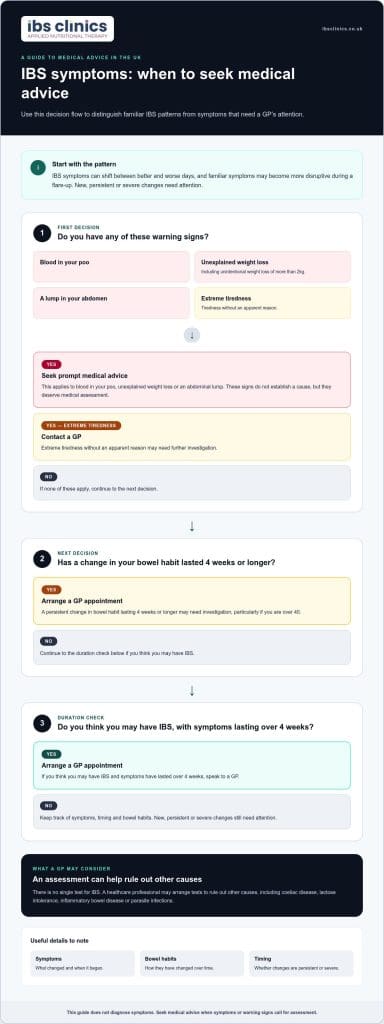
This guide also explains when IBS-like symptoms call for medical advice. In the UK, speak to a GP if you think you may have IBS and your symptoms have lasted over 4 weeks; seek prompt advice about signs such as blood in your poo, unexplained weight loss or a lump in your abdomen.
Key Takeaways
- Notice how cramps, bloating and changes in bowel habits vary, and keep track of patterns that may help explain difficult days.
- Foods, drinks and sweeteners can affect people differently; a simple record of meals and symptoms may help you spot personal triggers.
- Stress and menstrual-cycle changes can influence digestive symptoms, so consider how they relate to your own pattern.
- Speak to a GP if symptoms have lasted over 4 weeks, and seek prompt medical advice about blood in your poo, unexplained weight loss or an abdominal lump.
- Gentle movement, rest and a warm pack may help you manage discomfort during a flare-up.
Foods and sweeteners that may trigger symptoms
Food choices, stress and illness can all coincide with changes in IBS symptoms. A trigger for one person may not affect someone else, so patterns matter.
What can trigger an IBS flare-up? Possible triggers include spicy or fatty foods, caffeine, alcohol, some sweeteners, stress and anxiety. Gastrointestinal infections, colds, flu, stomach bugs and regular antibiotic use may also trigger or worsen symptoms.
How long does an IBS flare-up usually last? Most flare-ups peak within 2-4 days, then ease on their own. Some last longer, and the duration can depend on the trigger and how symptoms develop.
Common food and drink triggers
Commonly reported food triggers include dairy, wheat products, apples, pears, onions and garlic; fatty meals, spicy foods, caffeine and alcohol may also provoke symptoms. Over 8 in 10 people with IBS report food-related symptoms, but that doesn’t mean every listed food will affect you. For example, a coffee may be unproblematic for one person but coincide with urgency for another.
People with IBS are advised not to eat more than 3 portions of fresh fruit a day, with each portion defined as 80g, or drink more than 3 cups of tea, coffee or another caffeinated drink a day. If you have IBS-related diarrhoea, NICE advises avoiding sorbitol, found in some sugar-free sweets and drinks. Check ingredient labels for this sweetener.
Stress and anxiety can trigger symptoms, while gastrointestinal infections may worsen them. Regular antibiotic use is another possible trigger, so record medication changes alongside meals and symptoms. Sleep may be part of the same pattern: note disrupted nights and digestive changes together without assuming one caused the other. A short daily log can help distinguish a repeated association from a one-off coincidence.
The low FODMAP diet
The low FODMAP diet temporarily removes foods high in fermentable carbohydrates, then reintroduces them with a dietitian’s guidance. It may help identify specific dietary triggers, but it is a restricted approach, not a permanent list of foods to avoid. If you’re considering it, seek dietitian support for both the elimination and reintroduction stages.
For everyday dietary management, make one change at a time and record what you ate, when symptoms began and what followed. For example, note whether bloating or altered bowel habits appeared after a meal containing wheat, rather than removing several food groups at once. Keep meals as varied as possible while looking for repeated patterns. A food diary can also capture stress, infections and medication changes, giving you useful details to discuss with a trained practitioner.
IBS symptoms
Irritable bowel syndrome (IBS) is a long-term condition associated with abdominal pain and changes in bowel habits. Symptoms can shift between better and worse days, and the pattern varies from person to person.
Common symptoms include cramps, bloating, diarrhoea and constipation. Pain is often worse after eating and may ease after a bowel movement. Some people also experience flatulence, mucus in their stools, nausea, tiredness, backache, urinary problems, bowel incontinence or pelvic pain.
Bowel habits help describe the main IBS patterns. IBS-C involves constipation, IBS-D involves diarrhoea, and IBS-M includes both. About 1 in 3 people with IBS have IBS-C, while another third have IBS-D. These patterns can help explain which symptoms tend to dominate, though symptoms may still vary over time.
An IBS flare-up can bring familiar symptoms together or make them more disruptive. Sudden urgency, for example, may make journeys harder to plan, while cramps and bloating can affect eating and daily routines. There isn’t one cause for every change, so note the symptoms, timing and bowel habits that stand out.
Symptoms needing further investigation
Some symptoms should not automatically be put down to IBS, as they may need further investigation. Contact a GP about blood in your poo, unexplained weight loss, extreme tiredness without an apparent reason, or pain or a lump in your abdomen.
A persistent change in bowel habit lasting 4 weeks or longer may also need investigation, particularly in someone over 40. Unintentional weight loss of more than 2kg is another symptom to raise with a GP. These signs do not establish a cause, but they deserve medical assessment.
Managing symptoms during a flare-up
Managing symptoms may involve dietary changes, medicines aimed at particular symptoms and approaches that address stress. During a flare-up, try simple, easy-to-digest options such as white rice, plain crackers or boiled potatoes, and drink water. Choose foods that feel manageable rather than making several restrictive changes at once.
For ongoing dietary changes, a dietitian can help you decide whether a low FODMAP diet is suitable and guide food reintroduction. A restricted diet is not right for everyone. Tracking symptoms alongside meals and bowel habits can make discussions about your options more specific.
IBS has no cure, but symptoms can be managed with support suited to their pattern. If persistent digestive symptoms are affecting daily life, discussing IBS symptoms with a nutritionist may help you explore dietary approaches and ongoing support.
When to seek medical advice
IBS symptoms often follow a familiar pattern, but new, persistent or severe changes need attention. In the UK, the duration of symptoms and signs beyond typical IBS help guide when to seek medical advice.
If you think you may have IBS and symptoms have lasted over 4 weeks, arrange a GP appointment. IBS diagnosis is based on typical symptoms, as there’s no single test for the condition. A healthcare professional may arrange tests to rule out other causes, including coeliac disease, lactose intolerance, inflammatory bowel disease or parasite infections.
Some symptoms call for urgent advice rather than waiting for a routine appointment. In the UK, unexplained substantial weight loss, rectal bleeding or bloody diarrhoea, a hard abdominal lump or swelling, or shortness of breath with palpitations and unusually pale skin warrant an urgent GP appointment or help from NHS 111. Blood in your poo, unexplained weight loss, extreme tiredness, or abdominal pain or a lump are also reasons to contact your GP.
Seek medical care for IBS-like symptoms accompanied by fever or severe abdominal pain that doesn’t improve. New digestive symptoms after age 50 should be discussed promptly with a doctor. These changes deserve attention because symptoms that seem similar to IBS can have other causes.
Treatment depends on the symptoms being managed. Dietary changes, medicines for specific symptoms and stress-management approaches such as yoga, therapy or meditation can all form part of IBS care. If first-line dietary advice hasn’t managed symptoms and a restricted or exclusion diet is needed, NICE guidance says adults should be referred to a trained practitioner.
When discussing pharmacy medicines, describe the main problem, such as constipation, diarrhoea or cramps, and ask the pharmacist which symptom-specific option is suitable. Follow the product instructions and mention any other medicines you take. Regular antibiotic use can trigger IBS symptoms, so discuss antibiotic use with your GP or pharmacist if your symptoms change.
Probiotics are another option some people consider. UK guidance recommends trialling a new probiotic for 4-12 weeks to see whether symptoms improve. Keep track of symptoms during the trial, and stop if there’s no improvement by the end of that period.
Menstrual-cycle changes can also affect gut movement. Shifts in oestrogen and progesterone may worsen symptoms at certain points in the cycle. Note when symptoms occur in relation to your period and share the pattern with your GP, especially if symptoms are new or noticeably changing. Keeping a record can help distinguish recurring cycle-related changes from symptoms that need separate investigation.
Stress management
Stress and anxiety can trigger IBS symptoms, so managing them may be part of daily symptom care. A flare-up can also make ordinary routines harder, which is why practical steps for cramps, bloating, constipation and diarrhoea matter.
Try a warm heat pack or hot water bottle on your abdomen for 15-20 minutes to ease cramping. Gentle movement, such as walking or yoga, may also help during a difficult spell; even 15-20 minutes can be useful. Choose a pace that feels manageable, rather than pushing through discomfort.
Regular activity can support a steadier lifestyle beyond a flare-up. People with IBS are advised to aim for 150 minutes of moderate exercise weekly, which can be split into 30 minutes a day, five days a week. Walking is one example; gentle yoga is another. During more uncomfortable days, shorter movement may feel more realistic.
For bloating, cramps and farting, linseeds are one dietary option: people with IBS can eat up to 1 tablespoon a day. Increase fibre gradually, since a sudden change in certain foods or fibre intake may affect bowel symptoms. Note whether bloating changes as you adjust your routine, rather than adding several new foods at once.
Constipation and diarrhoea can call for different approaches, though psyllium husk may help with both. It can soften hard stools and firm up watery stools. The suggested intake is to build gradually from 1-3 tablespoons a day. For constipation, the page also suggests 1-2 kiwis or 10-12 prunes in the daily diet. Introduce changes gradually and track bowel habits.
During diarrhoea, keep meals and drinks manageable and avoid sorbitol, which NICE identifies in some sugar-free sweets and drinks. A symptom diary can help you spot links between bowel changes and certain foods, stress or activity. It gives you clearer examples to discuss when considering what affects your symptoms.
Stress approaches can include cognitive behavioural therapy, mindfulness and yoga. Gut-specific behavioural therapies may be considered if symptoms continue after 12 months of treatment. NICE recommends gut-brain therapy for gut-brain disorders. These approaches address the relationship between stress and digestive symptoms; they do not mean IBS is simply caused by stress.
Try one manageable change at a time, such as a 15-minute walk or a warm pack during cramps, then record what follows. Over time, that practical record can help you understand how lifestyle patterns relate to symptoms and which adjustments are worth continuing.
Hormones and menstrual-cycle changes
Menstrual-cycle changes can coincide with shifts in IBS symptoms, including abdominal pain and altered bowel habits. Changes in oestrogen and progesterone may affect gut movement and worsen symptoms. Women are up to twice as likely as men to be diagnosed with IBS. This describes a difference in diagnosis rates, not a reason to dismiss new digestive symptoms as hormonal.
A cycle diary can help you see whether stomach discomfort follows a recurring pattern. Record when you notice cramps, bloating, constipation or diarrhoea, alongside the start of your period. Also note how symptoms affect eating, sleep and usual activities. Reviewing several cycles may make recurring changes easier to describe to your doctor.
Meal routines can shift on painful or tiring days, complicating symptom patterns. Note skipped meals, altered portions and foods that differ from your usual choices. Aim for three healthy meals every day, as advised for dietary management of IBS. A steady routine gives you a clearer comparison between cycle-related symptoms and changes linked to eating.
Activity is another useful detail to track. Record whether you walked, exercised gently or rested more than usual, and whether symptoms changed around the same time. This doesn’t prove that movement caused a change; it gives you a practical picture of your routine. If abdominal pain makes usual activity difficult, record that impact rather than forcing exercise.
Consider dietary changes in context. If bowel habits worsen around your period, compare meals and symptoms across the cycle before removing several foods. A dietitian can help assess whether a particular eating approach, including a restricted diet, suits your needs. Broad food exclusions can make it harder to identify which changes relate to symptoms.
Discuss a clear or worsening pattern with your doctor, especially if symptoms are new or differ from your usual IBS. Mention cycle timing, weight changes, medication use and any effect on daily life. A recurring pattern can inform the discussion, but it should not replace assessment of symptoms that are persistent, severe or unusual for you.
If you’d like help considering how food and digestive symptoms relate to your cycle, use the Free 15 Minute Intro chat to ask questions about personalised nutritional care.
IBS Clinics: Free 15 Minute Intro chat / ask your questions
IBS Clinics provides personalised IBS care for people seeking support with ongoing digestive symptoms. If food patterns, recurring discomfort or possible triggers are difficult to make sense of, the clinic’s nutritionists can help you explore suitable dietary approaches and whether Gut Health Tests may be relevant. Special Diets can also form part of nutritional support.
A Free 15 Minute Intro chat gives you space to ask questions and explain what you’re experiencing. It can be a useful next step when you want to discuss nutrition-focused support alongside appropriate medical care. For urgent symptoms or signs that need medical investigation, contact your GP or NHS 111 rather than relying on nutritional support.
Contact IBS Clinics to arrange a Free 15 Minute Intro chat and ask your questions.
Take a thoughtful next step
Unpredictable digestive symptoms can make it difficult to know what to change first. Instead of adjusting everything at once, choose one pattern to explore and bring your questions to a nutrition professional. A clearer understanding of your experience can help shape a more considered approach to ongoing care.
IBS Clinics offers IBS care, Gut Health Tests and a Free 15 Minute Intro chat to ask questions. If you’re ready to discuss how these options might fit your needs, contact IBS Clinics for support. If an IBS flare-up comes with new or concerning symptoms, seek medical advice as well as nutritional support.
Progress can start with a conversation about your symptoms, priorities and next steps. You deserve to have your digestive concerns taken seriously and to move forward at a manageable pace.
Frequently Asked Questions
What is an IBS flare-up?
An IBS flare-up is a period when symptoms associated with irritable bowel syndrome become more noticeable or disruptive. Cramps might interfere with work, or urgency might change how you plan a journey. Symptoms can fluctuate without a clear trigger, so a difficult day doesn’t necessarily mean your usual pattern has permanently changed. Note what feels different from your baseline, including when symptoms began and how they affected daily activities.
What are the symptoms of IBS?
IBS can involve recurring abdominal pain and changes in bowel movements, including constipation, diarrhoea or both. Bloating and excess wind are also common. Some people experience nausea, tiredness, mucus in their stools, backache or pelvic pain. Symptoms vary, so you may have one dominant symptom rather than the full range. For example, record whether pain occurs alongside a change in stool pattern instead of considering either symptom alone.
What causes IBS?
IBS symptoms can be associated with several influences rather than one consistent trigger. Examples include particular foods, stress, anxiety, menstrual-cycle changes, gastrointestinal infections and regular antibiotic use. These factors may affect people differently, and sometimes no clear reason emerges. To look for patterns, note changes in meals, stress, illness and medicines alongside symptoms. This can help distinguish recurring associations from events that happened only once.
What is irritable bowel syndrome (IBS)?
Irritable bowel syndrome is a chronic condition associated with abdominal pain and changes in bowel habits. It differs from inflammatory bowel disease, which involves chronic intestinal inflammation. There’s no single test for IBS: assessment is based on typical symptoms, and tests may be used to rule out other conditions. If symptoms are new or changing, describe their duration and pattern to your GP rather than relying on the label alone.
Does caffeine or alcohol make IBS worse?
Caffeine and alcohol can trigger or worsen symptoms for some people with IBS, but their effects aren’t identical for everyone. UK dietary advice for IBS is to have no more than 3 cups of tea, coffee or another caffeinated drink daily. You could note the drink, amount and symptoms that follow, then discuss any repeated pattern with a dietitian or GP. Avoid assuming one uncomfortable episode proves a specific drink is the cause.
Is it normal to have diarrhoea or constipation during an IBS flare-up?
Yes. Diarrhoea and constipation are both recognised IBS bowel patterns, and some people experience both at different times. IBS is commonly described as constipation-predominant, diarrhoea-predominant or mixed. Even with IBS, symptoms need attention if they change substantially or persist. Keep a record of bowel habits and new symptoms, especially blood in your poo or unexplained weight loss, and contact your GP about these warning signs.
Is there a cure for IBS?
There’s no cure for IBS, but symptoms can be managed. Approaches may include dietary changes, medicines for particular symptoms and stress-management support. The right combination depends on which symptoms affect you and how your bowel habits vary. Rather than making several changes at once, discuss one concern at a time with a healthcare professional. That makes it easier to understand what you’re trying and whether it helps.
What symptoms can a flare-up cause?
Common symptoms include abdominal cramps, bloating, altered bowel habits and sudden urgency to use the toilet. For example, urgency may occur alongside diarrhoea, or discomfort alongside constipation. Symptoms vary, and a flare-up may happen without an obvious reason. Track which symptoms occur together and whether they disrupt eating, sleep or everyday plans. If the pattern is new, persistent or unusually severe, raise it with your GP.


