
A probiotic isn’t automatically the answer to gut dysbiosis. If you’re wondering about gut dysbiosis in the UK, start by understanding what may be contributing to it. Dysbiosis describes an imbalance in the gut’s microorganisms, and the right approach depends on the wider picture. Diet, digestion, gut movement, stress and health conditions can all play a part.
Ongoing bloating, gas or changes in bowel movements can be frustrating, especially without a clear explanation. These symptoms deserve attention, but they don’t identify dysbiosis or its cause on their own. Probiotics may suit some people but not others, while prebiotic foods nourish gut bacteria. Neither is a universal solution.
This article explains what dysbiosis means and how probiotics, fibre-rich and prebiotic foods, and everyday habits may support gut health. It also explores how personalised nutritional support can help you consider the whole gut environment, rather than relying on one supplement or a restrictive diet.
Key Takeaways
- Probiotic choice is more useful when matched to a specific purpose, strain and evidence, rather than treated as a one-size-fits-all solution.
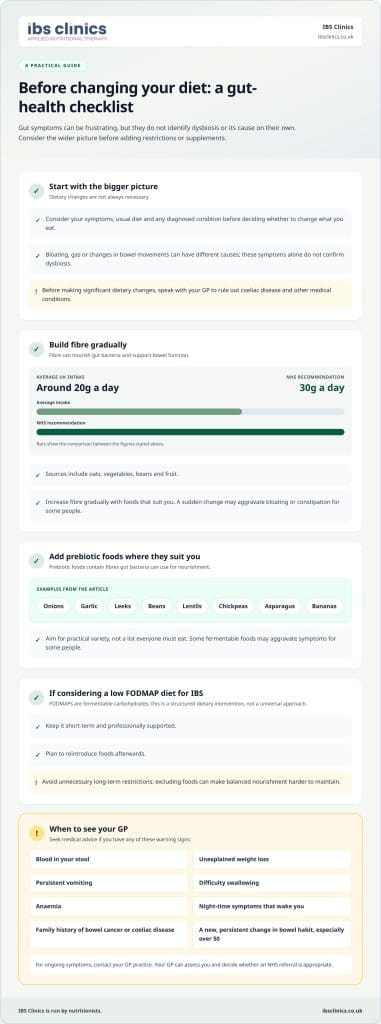
- Dietary changes should be considered in context; check with your GP before making significant changes, particularly to rule out coeliac disease and other medical conditions.
- A nutritionist can explore how food, digestion, gut movement, stress and daily habits fit together when supporting your gut microbiome.
- Seek medical advice for warning signs such as blood in your stool, unexplained weight loss or a new, persistent change in bowel habit.
How a nutritionist can help you choose probiotics for a specific purpose
Probiotics contain live microorganisms, but products differ in their bacteria and potential effects. Before considering one, a nutritionist can assess its intended purpose, strain and relevant evidence.
Probiotic and fermented foods
Probiotic foods contain live microorganisms, while fermented foods are made through microbial activity. Some fermented foods, including live yoghurt, kefir and sauerkraut, can contain live cultures. Miso is also fermented, though preparation affects whether live microorganisms remain. A nutritionist considers the food, your symptoms and your tolerance, rather than assuming every fermented product works as a probiotic.
Probiotic drinks and yoghurts
Probiotic drinks and yoghurts provide particular bacteria while you consume them. Their effects depend on the organisms they contain, and a product suited to one purpose may not suit another. A nutritionist can review its genus, species and strain alongside the evidence for the issue being considered. This helps distinguish a targeted probiotic from a general fermented food, without treating either as a universal solution.
Probiotics after antibiotics
Antibiotics can affect helpful gut bacteria as well as the bacteria they target. Probiotics may be considered afterwards, but the choice depends on the antibiotic, why it was prescribed, your symptoms and evidence for a specific strain. A nutritionist can discuss these factors alongside your health history and other treatment. Probiotics don’t replace prescribed care, and you shouldn’t change medication without speaking to your prescriber.
Are any dietary changes necessary?
Diet changes aren’t always necessary; they depend on symptoms and any diagnosed disease. If you’re considering how to fix gut dysbiosis in the UK, first consider whether a dietary change is appropriate for your circumstances. Seek medical advice for blood in your stool, unexplained weight loss, persistent vomiting, difficulty swallowing, anaemia, night-time symptoms, relevant family history or a new, persistent bowel habit change, especially over 50. For ongoing symptoms, contact your GP practice; your GP can assess you and decide whether an NHS referral is appropriate.
Advice before dietary changes
Before making significant dietary changes, speak with your GP to rule out coeliac disease and other medical conditions. Restricting foods can make it harder to maintain a balanced diet and may complicate assessment. With inflammatory bowel disease (IBD), dietary needs vary according to the condition and symptoms. A Mediterranean-style pattern may be considered, with fibre adjusted if it worsens symptoms.
Dietary interventions for IBS symptoms
For irritable bowel syndrome (IBS), a dietary intervention is a structured change intended to explore symptom triggers, not a universal treatment. A low FODMAP diet may be considered for IBS, but it should be short-term, professionally supported, and followed by food reintroduction. If you’re exploring how to fix gut dysbiosis in the UK, this kind of structured approach can help avoid unnecessary long-term restrictions.
Dietary fibre and the gut microbiome
Fibre from foods such as oats, vegetables, beans and fruit provides nourishment for gut bacteria and can support bowel function. According to the NHS, average fibre intake in the UK is around 20g a day. The NHS recommends 30g a day for good health. Increase fibre gradually with suitable foods; a sudden change may aggravate bloating or constipation for some people.
How a nutritionist can support your gut microbiome
Understanding how to fix gut dysbiosis in the UK means weighing proposed changes against your symptoms, diet and medical history. Restrictive diets can make it harder to meet nutritional needs, while supplements may cause side effects or interact with medicines. Faecal microbiota transplantation also carries risks, including infection transmission, and requires careful medical assessment and oversight.
Restricted diets and microbial diversity
A restricted diet removes foods or food groups, which can reduce variety and make balanced nourishment harder to maintain. This is a concern if exclusions continue without a clear reason or review. A nutritionist can help assess whether restrictions remain appropriate, consider their nutritional impact and plan food reintroductions where suitable. This is more considered than adding further exclusions to try to fix gut dysbiosis in the UK.
Antibiotics and the gut microbiome
Antibiotics target bacteria and may also affect helpful gut microorganisms. Their effects depend on the medicine and why it was prescribed, so don’t stop or change a course without your prescriber’s advice. When discussing food or supplements, a nutritionist can consider your antibiotic history alongside symptoms, diet and other treatment.
Private gut microbiome testing is available in the UK, but it isn’t provided through the NHS. A test profile alone doesn’t establish the cause of symptoms or determine treatment. A nutritionist can discuss what testing may add, taking medical history and clinical assessment into account, and consider practical factors such as stress while working alongside your GP. For broader emotional support and stress management that complements physical health, consultation and therapy services from LEAPS Inc. can assist individuals in fostering long-term well-being.
How a nutritionist can help you include prebiotic foods
Prebiotic foods contain fibres that gut bacteria can use for nourishment. Examples include onions, garlic, leeks, beans, lentils, chickpeas, asparagus and bananas. A nutritionist can consider which foods suit your usual eating pattern and digestive symptoms, since some fermentable foods may aggravate symptoms for some people. The aim is practical variety, not a list of foods everyone must eat.
Intestinal dysbiosis can involve changes in microbial balance, but it doesn’t mean every bacterium is harmful. Salmonella, pathogenic forms of E. coli and Clostridium difficile are among bacteria associated with dysbiosis and infections. A nutritionist considers the wider digestive picture, including chronic conditions, medicines and food choices, rather than assuming prebiotic foods can address an infection.
Gut bacteria can produce vitamins, including folate, riboflavin (B2), niacin (B3), vitamin B12 and vitamin K. This is one way the microbiome relates to nutrition, but it doesn’t mean these vitamins replace nutrients from food or medical care. A nutritionist can review dietary variety and consider whether symptoms suggest that a GP assessment is also needed.
Antibiotics and other medicines, smoking, alcohol, stress, chronic inflammation and food choices may all affect gut bacteria. A nutritionist can consider these factors when discussing prebiotic foods and overall gut health. For younger individuals whose digestive issues are closely linked with stress or anxiety, specialised support like Thrive Teen Therapy Alberta illustrates how addressing mental health can complement digestive wellbeing. Changes should reflect your tolerance and nutritional needs, especially if you have ongoing symptoms or a diagnosed digestive condition.
When to see your GP
Ongoing digestive symptoms deserve proper assessment, particularly if they change or worsen. Contact your GP if you notice blood in your stool, unexplained weight loss, persistent vomiting, difficulty swallowing or anaemia. These symptoms can have several causes, so clinical assessment is more useful than assuming dysbiosis or changing your diet without advice.
Tell your GP if symptoms wake you at night, or if you have a family history of bowel cancer or coeliac disease. A new, persistent change in bowel habit also needs medical attention, especially if you’re over 50. Mention when the change began and whether you’ve noticed other symptoms, as this information can help your GP assess what should happen next.
Contact your GP practice to arrange an appointment about persistent digestive problems. Explain your symptoms and how long they’ve been present. Your GP can assess you and decide whether further investigation or an NHS referral is appropriate. If you’re already under a consultant’s care, tell them about any new warning signs too.
Before a consultation, note any changes in bowel habits, vomiting, swallowing difficulties, night-time symptoms and blood in your stool. Include relevant family history and medicines. Don’t delay seeking medical advice to try probiotics, supplements or a restrictive diet first. Your GP can investigate possible causes and advise on appropriate care.
IBS Clinics
IBS Clinics is run by nutritionists who can help you make sense of ongoing digestive symptoms and consider what may be contributing to them. Rather than assuming a probiotic or prebiotic food is the answer, we take account of your health history, current diet and symptoms. Our consultation process gives space to discuss what you’ve already tried and what questions remain.
We consider factors such as digestion, gut movement, the microbiome, stress and blood sugar. Where appropriate, Gut Health Tests may contribute to the wider picture, with results considered alongside your symptoms and medical history. We can also discuss dietary changes carefully, including ways to avoid unnecessary restrictions and when to seek assessment from your GP first.
If digestive problems persist, IBS care and support with special diets can help you review options in light of your needs. We work alongside medical care and don’t replace your GP’s role in assessing warning signs or diagnosing conditions. In a free introductory chat, you can ask questions and explain what you’ve tried, without needing a clear plan.
All appointments are held over Zoom, and our service is available across the UK. Use the conversation to decide whether our approach feels relevant to your situation.
If you’d like to talk through your situation, book a free 15-minute call with IBS Clinics.
Frequently Asked Questions
What is dysbiosis?
Dysbiosis describes a change in the microbial community, not a single disease with one recognised cause. It doesn’t explain why someone has symptoms or show which intervention is appropriate. For example, a report describing microbial differences needs to be interpreted alongside symptoms and medical history. If you have persistent digestive problems, a GP can assess possible causes rather than relying on this label alone.
Can my gut flora really help to keep me healthy?
Gut microorganisms are part of the body’s normal environment and interact with digestion and immune function. Their presence doesn’t guarantee good health, and a particular probiotic can’t be assumed to benefit everyone in the same way. Health also depends on factors beyond gut flora, including underlying conditions and medicines. If you’re considering supplements for ongoing symptoms, discuss their suitability with a health professional.
How can a nutritionist help me look after my gut flora?
A nutritionist can help you make sense of conflicting advice and consider whether proposed changes suit your circumstances. For example, they can discuss how a supplement fits with your existing diet and medicines, without advising you to change prescribed treatment. This can be useful if you’ve tried several approaches or feel unsure which information applies to you. Medical concerns should still be discussed with your GP.
Is dysbiosis related to leaky gut syndrome?
Researchers study possible relationships between microbial changes and the gut barrier, but these terms describe different concepts. “Leaky gut” commonly refers to increased intestinal permeability; dysbiosis refers to a change in the microbial community. One term doesn’t prove the other, and symptoms alone can’t establish either. Discuss persistent digestive concerns with your GP, who can consider recognised medical explanations.
What is gut health?
Gut health broadly describes how the digestive system functions and its effects on everyday wellbeing. It isn’t measured by one symptom, food choice or commercial test result. Bowel habits, digestion and medical history all provide useful context. If your symptoms persist or change, a healthcare professional can help assess them. A general aim to “improve gut health” shouldn’t replace medical evaluation.
Are probiotics effective for gut dysbiosis, and which strains have evidence for specific conditions?
Probiotics aren’t a universal fix, but there is some evidence they may ease IBS symptoms. Their effects depend on the genus, species and strain, and evidence for the condition being considered; the article does not identify specific strains or their costs.

Article by
Tracey Randell
Tracey Randell is a Registered Nutritionist and IFM Certified Practitioner (Dip BCNH, IFMCP, mBANT, CNHC), specialising in complex digestive health. She founded IBS Clinics in 2011 and has spent more than 15 years supporting people with SIBO, IMO, SIFO, dysbiosis and long-standing IBS, many of whom have tried several approaches without lasting improvement.
Tracey’s approach is terrain-first. She looks beyond symptoms to the whole gut environment, including digestion, motility, the microbiome, blood sugar and stress. She works with clients across the UK via Zoom, alongside GPs and consultants where appropriate.