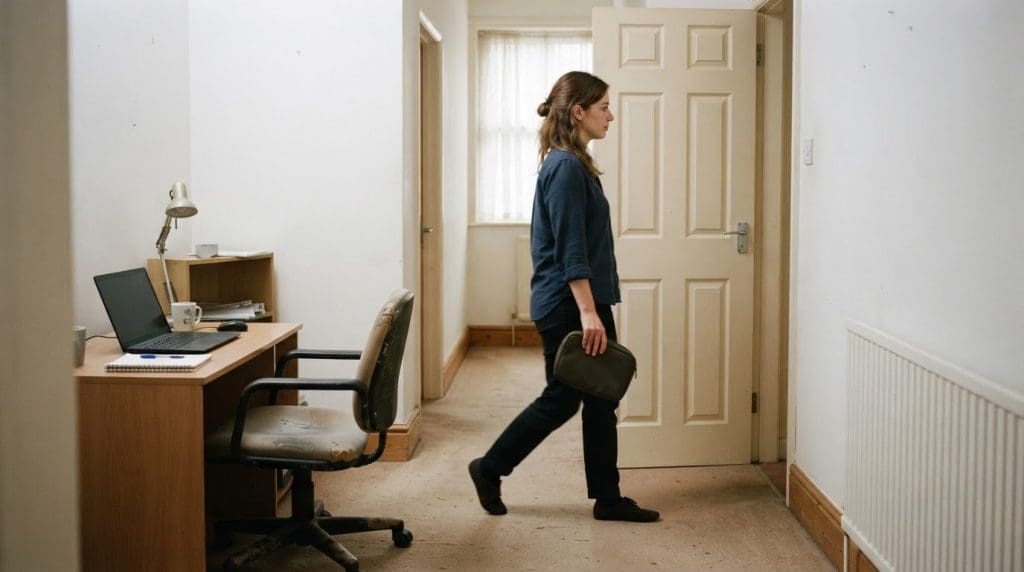
Should you tell your employer that you have irritable bowel syndrome with diarrhoea (IBS-D)? It’s a personal decision, and it can feel difficult when symptoms are unpredictable or you’re worried about being judged. Managing IBS-D at work isn’t only about getting through a flare-up; it can also mean finding practical ways to make your working day feel more manageable.
This article explores how workplace arrangements, stress support and decisions about sharing your symptoms may help. We’ll look at flexible hours, working from home, easier toilet access and short breaks, alongside ways to speak with a manager or trusted colleague. You’ll also find practical ideas for planning around urgency and easing pressure at work, without assuming one approach suits everyone.
Key Takeaways
- Consider practical adjustments such as easier toilet access or planned breaks, and understand when IBS may meet the disability definition under the Equality Act 2010 in the UK if its effects on normal daily activities are substantial and long-term.
- A simple plan for your commute and working day, including what to keep in an emergency kit, can help you feel more prepared for urgency.
- Short breaks, gentle movement and mind-body approaches may offer useful ways to manage stress alongside digestive symptoms.
- Learn when symptoms warrant a GP appointment, and how flexible working options or tailored nutritional support may fit into your next steps.
Combining symptom support with workplace arrangements
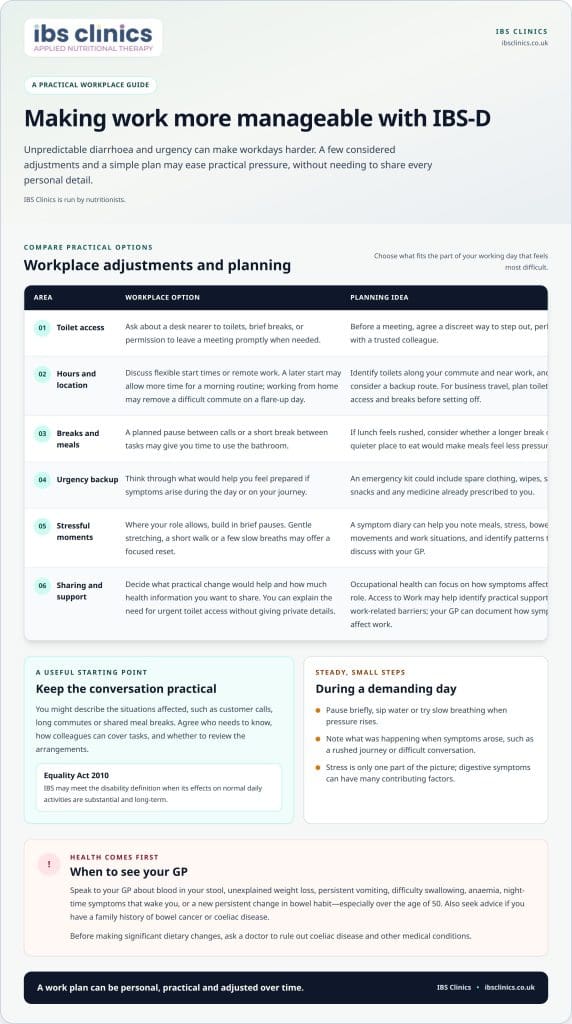
Symptoms of irritable bowel syndrome (IBS), especially diarrhoea and urgency, can make meetings, commuting and shared offices difficult. In our clinic, we recognise how disruptive this can be. Combining symptom support with a workplace plan may ease practical pressures without requiring you to explain every bowel movement. It may help to note the situations affected, such as customer calls, long commutes or shared meal breaks.
According to UK Parliament, IBS may meet the disability definition under the Equality Act 2010 when its effects on normal daily activities are substantial and long-term. Adjustments to discuss with your employer include a desk near toilets, flexible start times, brief breaks, remote work, or permission to leave meetings promptly. These may help when urgency disrupts scheduled work or symptoms fluctuate.
Before speaking with a manager, decide what practical change would help and how much health information you want to share. You could explain that symptoms sometimes mean you need urgent toilet access, without discussing private details about bowel movements or treatment. Agree who needs to know, how colleagues can cover tasks, and whether to review the arrangements.
Occupational health can discuss how symptoms affect your role and suggest adjustments, such as toilet access or breaks. Access to Work can help identify practical support for work-related barriers. Your GP can document how symptoms affect your work, while occupational health focuses on job-related needs. These arrangements can complement clinical support, but not replace it.
Can stress make IBS symptoms worse at work?
Stress and unpredictable IBS symptoms can interact, making abdominal pain, urgency or diarrhoea harder to manage during a busy workday. In our work as nutritionists, we find that keeping a symptom diary can help you track meals, stress, bowel movements and work situations, then identify patterns to discuss with your GP. Planning ahead is one part of managing IBS-D at work.
Before leaving home, identify toilets along your commute and near work, and consider a backup route. For meetings, agree on a discreet way to step out, perhaps with a trusted colleague. For business travel, plan toilet access and breaks in the journey before setting off. These preparations can make managing IBS-D at work feel less uncertain.
An emergency kit can provide practical backup. Pack spare clothing, wipes, safe snacks and any medicine already prescribed to you. During the day, pause briefly, sip water or try slow breathing when pressure rises. A short walk may help you reset between tasks.
A GP or pharmacist can discuss whether an antidiarrhoeal medicine or another option is suitable for your symptoms and health circumstances. Risks and side effects depend on the medicine, so follow professional advice and read the patient information leaflet. If you have questions about medication, speak to a clinician or pharmacist for advice.
Note what was happening when symptoms arose, such as a rushed journey or difficult conversation. This can help you explain patterns at a medical appointment and refine your plan for the workday.
Stress management and psychological therapies
Stress can influence communication between the brain and gut, and work pressure may make irritable bowel symptoms harder to manage. A looming deadline, tense call or crowded commute can add strain when bloating or urgency is already present. That doesn’t mean symptoms are “just stress”. As nutritionists, we recognise that digestive symptoms can have many contributing factors, and stress is only one part of the picture.
Where your role allows, we suggest building brief pauses into your routine. Between meetings, step away from your screen, stretch your shoulders or walk along the corridor. A few slow breaths can offer a focused reset before you return to a demanding task. Regular breaks may also make it easier to notice rising tension.
Mind-body approaches include mindfulness, relaxation techniques and gut-directed hypnotherapy. Cognitive behavioural therapy (CBT) can help some people recognise patterns between thoughts, feelings and responses to symptoms, then practise coping strategies. These approaches aren’t a cure, and suitability depends on your needs. Your GP can discuss psychological support options.
Movement can be modest and practical. We often encourage people to consider a short walk at lunchtime or gentle stretches after prolonged desk work, rather than setting an unrealistic exercise target. Regular physical activity supports general wellbeing and may help some people manage stress alongside irritable bowel symptoms.
If anxiety about sudden urgency is shaping your workday, choose one manageable step, such as a breathing exercise before a presentation. Practise it when you’re calm, so it feels familiar under pressure. Therapy may provide more structured support if worry or avoidance persists, alongside medical care for ongoing symptoms.
Flexible schedules, remote work and breaks
In our work with people who have IBS-D, we recognise that flexible arrangements can make bathroom access and unpredictable symptoms easier to plan around. A later start may allow more time for a morning routine, while remote work can remove a difficult commute on a flare-up day. These adjustments may make managing IBS-D at work more practical, particularly when symptoms vary from day to day.
Consider which part of the day is hardest. If a long meeting makes it difficult to leave, you could discuss a brief break or a discreet way to step out. If the toilets are far from your usual desk, you might ask about working nearer to them. A planned pause between calls may also give you time to use the bathroom.
Eating at work can bring different pressures, such as rushed lunch breaks or shared food. A longer lunch break may let you eat without hurrying, while a quieter place can make meals feel less pressured. From a nutritionist’s perspective, it may help to explain the specific difficulty and suggest an adjustment that fits your role.
If diarrhoea or urgency makes working impractical, tell your employer and follow its usual sickness-reporting process. Your contract and workplace policy explain how to report an absence and what pay arrangements apply. If difficulties recur, discuss whether flexible hours, remote work or planned breaks could support your return.
When to see your GP
Ongoing diarrhoea may fit an existing irritable bowel syndrome pattern, but new or concerning symptoms deserve medical attention. We encourage you to contact your GP if you notice blood in your stool, unexplained weight loss, persistent vomiting or difficulty swallowing. Don’t assume these changes are simply part of IBS-D; describe what has changed and when it began.
Arrange a GP appointment for anaemia, symptoms that wake you at night, or a family history of bowel cancer or coeliac disease. Seek advice too about a new, persistent change in bowel habit, especially if you’re over 50. According to UK Parliament’s Equality Act 2010, IBS may meet the disability definition when its effects on normal daily activities are substantial and long-term.
In our work as nutritionists, we find it can help to note changes in your bowel habits, other symptoms and how they affect daily activities, such as needing to leave work suddenly. Include when the change started, whether it is ongoing and any relevant family history. These details can help your GP assess which checks may be appropriate.
Speak to your doctor before making significant dietary changes, so coeliac disease and other medical conditions can be considered first. This is particularly important if you’re thinking about restricting several foods. Your GP can discuss investigations and appropriate next steps. If symptoms are severe or rapidly worsening, seek urgent medical advice rather than waiting for a routine appointment.
IBS Clinics
IBS Clinics is a nutritionist-run practice supporting adults with diagnosed IBS and persistent digestive symptoms. If urgency, diarrhoea or worry about toilet access is shaping your working day, nutritional care can complement workplace adjustments and medical input from your GP. The focus is to understand your symptom pattern and consider practical next steps, not to treat work difficulties as a personal failing.
A free 15-minute call gives you space to explain what is happening, ask questions and consider whether support fits your needs. You can discuss how symptoms affect meals, commuting, meetings and concentration, as well as what you have already tried. This call can help clarify whether you want ongoing IBS care, further investigation or dietary guidance.
Gut Health Tests may be considered where appropriate to investigate digestive factors, but testing doesn’t replace GP assessment. Special Diets can provide structured nutritional guidance, but significant dietary changes should follow medical assessment, including consideration of coeliac disease. The aim is to make dietary decisions thoughtfully, avoid unnecessary restrictions and keep everyday needs, including work, in view. Decisions take account of your symptoms, health history and goals.
For a calm first call, book a free 15-minute call with IBS Clinics. All appointments are held over Zoom across the UK.
Frequently Asked Questions
Should I tell my employer that I have IBS?
It’s your choice how much to share, and you can focus on the effect symptoms have on your work. For example, explain that you may need to leave a meeting unexpectedly, without discussing private details. Ask who needs to know and how the information will be handled. According to UK Parliament, IBS may meet the disability definition under the Equality Act 2010 when its effects on normal daily activities are substantial and long-term.
How can I manage IBS at work and explain it to my employer?
Start with a brief explanation and a practical request. You might say, “I have a digestive condition that can cause sudden urgency. Could we discuss how I can step away briefly when needed?” Then describe the work situation that’s difficult, such as a long customer call. You can also ask your manager or HR contact what information they need to consider your request.
How do I deal with IBS at work?
Think through what would help you resume a task after an interruption. For example, save your work before a scheduled call and keep a brief note of your next step. If a symptom flare makes you unable to work, follow your employer’s sickness-reporting process. If disruption recurs, consider discussing a work arrangement that addresses the specific difficulty.
When should workday symptoms prompt medical advice?
Contact your GP about blood in your stool, unexplained weight loss, persistent vomiting, difficulty swallowing, anaemia or symptoms that wake you at night. Seek advice if you have a family history of bowel cancer or coeliac disease, or a new, persistent change in bowel habit, especially over 50. Note when symptoms began and how they differ from your usual pattern.
Can I take time off work for IBS-D in the UK, and what are the sick-leave rules?
If symptoms make working impractical, tell your employer and follow its usual sickness-reporting process. Your contract and workplace policy explain how to report absence and what pay arrangements apply. If IBS has substantial, long-term effects on normal daily activities, it may meet the Equality Act 2010 disability definition.

Article by
Tracey Randell
Tracey Randell is a Registered Nutritionist and IFM Certified Practitioner (Dip BCNH, IFMCP, mBANT, CNHC), specialising in complex digestive health. She founded IBS Clinics in 2011 and has spent more than 15 years supporting people with SIBO, IMO, SIFO, dysbiosis and long-standing IBS, many of whom have tried several approaches without lasting improvement.
Tracey’s approach is terrain-first. She looks beyond symptoms to the whole gut environment, including digestion, motility, the microbiome, blood sugar and stress. She works with clients across the UK via Zoom, alongside GPs and consultants where appropriate.