
Could a breath test help explain persistent bloating, abdominal discomfort or changes in bowel habits? If you’re considering private SIBO testing in the UK, testing typically involves drinking a prepared solution and providing breath samples over several hours to measure gases in your breath.
When symptoms keep returning, it’s understandable to want a clearer explanation, particularly after trying different approaches. A breath test measures hydrogen and, depending on the test, methane. Results need to be considered alongside your symptoms and health history: the test alone does not provide a diagnosis.
This article explains how small intestinal bacterial overgrowth (SIBO) breath testing works, when persistent symptoms may prompt investigation, and what a positive result could mean. It also covers test preparation and the nutrition-focused support or other options that may be discussed afterwards, so you know what to expect.
Key Takeaways
- Understand what hydrogen and methane breath tests measure, and how they differ from tests for lactose or fructose intolerance.
- Learn why a positive result needs context and what follow-up options, including repeat testing, may be considered.
- Recognise symptoms that warrant medical advice, and why a GP should rule out other conditions before significant dietary changes.
- Find out how remote testing and nutrition-led support can help you explore next steps from anywhere in the UK.
What is a SIBO breath test?
A small intestinal bacterial overgrowth (SIBO) breath test measures gases after you drink a test solution. Hydrogen and methane results can help investigate whether bacterial overgrowth may be relevant.
Hydrogen and methane testing
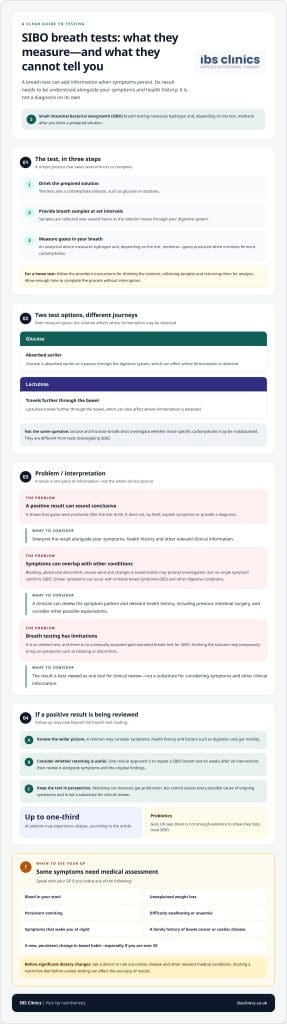
After drinking a carbohydrate solution, you provide breath samples at set intervals. An analytical device measures hydrogen and methane, gases produced when microbes ferment carbohydrates. For a home test, follow the provider’s instructions for drinking the solution, collecting samples and returning them for analysis. Allow enough time to complete the full process without interruption.
Glucose and lactulose test options
Glucose and lactulose breath tests both measure gases after the solution passes through your digestive system. Glucose is absorbed earlier, while lactulose travels further through the bowel, which can affect where fermentation is detected. Neither test provides a definitive answer on its own. Lactose and fructose breath tests investigate a different question: whether those specific carbohydrates may be malabsorbed, rather than whether SIBO is present.
Test accuracy and limitations
Breath testing is indirect, and there is no universally accepted gold-standard test for SIBO. Results need interpretation alongside symptoms and other clinical information. Small-intestine fluid culture instead involves collecting fluid through an endoscope and testing it for bacteria; direct sampling is described as the best diagnostic method, but is used in research. Drinking the solution may temporarily bring on digestive symptoms, such as bloating or discomfort.
Getting treatment after a positive result
A positive breath test shows gases were produced after the test drink; it needs clinical interpretation alongside symptoms and health history. A consultant may consider antibiotics for small intestinal bacterial overgrowth, with the choice guided by the assessment. Antibiotic courses described for SIBO last two weeks. From a nutritionist’s perspective, herbal antibiotics are usually the first recommendation, with suitability considered in light of the person’s circumstances.
Follow-up may also consider factors that contribute to overgrowth, including digestion and gut motility. Addressing these alongside symptoms can form part of a broader plan, rather than making the breath-test result the sole focus. Guts UK says there isn’t enough evidence to show that probiotics help treat SIBO, so they should not be presented as an established treatment. A positive result alone does not explain why symptoms such as bloating occur.
Repeat testing can measure gas production after an intervention, but it cannot assess every possible cause of ongoing symptoms. One clinical approach is to repeat a SIBO breath test six weeks after an intervention, then consider the result alongside changes in symptoms and the original findings. Up to one-third of patients may experience relapse, so follow-up may explore whether contributing factors remain. Retesting is one possible tool, not a substitute for clinical review.
Elemental diets are reserved after two to three antibiotic courses and low FODMAP nonresponse; some patients following one for 14 days had negative breath tests, with an 80% response.
SIBO symptoms and investigation
Digestive symptoms may prompt investigation, but no single symptom confirms bacterial overgrowth. A clinician will consider your symptom pattern and relevant health history.
Common SIBO symptoms
SIBO may involve bloating, abdominal discomfort, excess wind and changes in bowel habits. Some people experience diarrhoea, while others report constipation. Methane-related findings may be discussed as intestinal methanogen overgrowth (IMO), sometimes searched for as “methane SIBO”. These symptoms also occur with other digestive conditions, so they cannot confirm SIBO on their own. A specialist can consider when symptoms occur, how long they persist and whether they relate to meals.
SIBO symptoms and IBS
SIBO and irritable bowel syndrome (IBS) can cause similar symptoms, including bloating and altered bowel habits. Their relationship remains debated, and symptoms alone cannot establish whether bacterial overgrowth is present. Guts UK notes that UK IBS guidance for gastroenterologists advises against using breath tests. This reflects uncertainty about how testing should inform IBS assessment, not doubt about whether symptoms are real.
Prevalence and investigation
Estimates of SIBO prevalence can vary depending on how it is assessed. One study of people with IBS found 2 out of 1,000 tested positive, illustrating that findings can vary. Investigation starts with a clinical review of symptoms and history, including previous intestinal surgery. A specialist may then consider whether testing is appropriate, alongside other possible explanations for symptoms.
When to see your GP
Persistent digestive symptoms deserve careful assessment. Some signs call for medical advice rather than a SIBO test alone. Speak with your GP if you notice any of the following:
- Blood in your stool.
- Unexplained weight loss or persistent vomiting.
- Difficulty swallowing or anaemia.
- Digestive symptoms that wake you at night.
- A family history of bowel cancer or coeliac disease.
- A new, persistent change in bowel habit, especially if you’re over 50.
These symptoms can have different causes, so your GP can assess which investigations are appropriate. Explain when the change began, whether it is continuing and what else you have noticed. This information can help guide next steps, including checks for conditions other than SIBO.
Before making significant dietary changes, ask a doctor to rule out coeliac disease and other relevant medical conditions. Starting a restrictive diet before coeliac testing can affect the accuracy of results. If a structured diet is considered later, professional support can help ensure it is appropriate and that foods are reintroduced rather than excluded indefinitely.
A breath-test result does not replace medical assessment, particularly if warning signs are present. Speak with your GP about those symptoms before focusing on bacterial overgrowth, or consult an independent doctor at Kingsford Medical Services for prompt clinical evaluation. You can also discuss digestive concerns, including bloating, diarrhoea or constipation, and explain what you have already tried. A clear account of changes in your symptoms helps your clinician consider the whole picture.
SIBO testing for patients across the UK
Private SIBO testing in the UK can be arranged remotely, so you don’t need to live near a testing centre. Before booking, check what the test measures: some measure hydrogen, while others also measure methane, a gas relevant to intestinal methanogen overgrowth. The substrate used, such as glucose or lactulose, also affects what the test investigates.
At home, the process involves drinking the prepared solution and collecting breath samples at set intervals. A test may last three hours, with samples taken every 15 minutes. Set aside the full testing period and follow the preparation instructions carefully. Preparation can affect results, so share relevant health information, including recent antibiotics, with the clinical team before testing.
When arranging private SIBO testing in the UK, find out how samples are analysed and how results will be interpreted alongside your symptoms. A gas reading is not a diagnosis by itself: the pattern and clinical context matter. Ask what the report covers, how results are explained and whether follow-up interpretation is included. This helps you distinguish between a test that provides measurements and one supported by considered interpretation.
The practical takeaway is to choose a UK testing option that clearly explains the test type, preparation, sample collection and interpretation. Remote testing can be accessed across the country, and clear instructions help you complete it at home. If you have warning signs, speak with your GP rather than relying on a breath test alone.
IBS Clinics: Hydrogen Breath Tests for SIBO
IBS Clinics offers hydrogen breath tests for small intestinal bacterial overgrowth (SIBO), alongside support from its nutritionists. If you’re considering private SIBO testing in the UK, we can discuss how a breath test may fit into a wider digestive investigation. The test measures hydrogen production, and results are considered alongside your symptoms and relevant health history.
We order and interpret functional tests as part of a broader review, rather than treating one result as a diagnosis. Alongside a SIBO breath test, our Gut Health Tests may be relevant to the questions being explored. The choice depends on your symptoms and which information could help make sense of persistent digestive problems.
For people considering private SIBO testing in the UK, testing is one part of our nutrition-led approach. We consider the wider gut environment, including digestion, motility, the microbiome, blood sugar and stress, and can work alongside your GP or consultant. This puts test findings in context and supports a considered discussion about possible next steps. If medical assessment should come first, testing may not be the right starting point.
If you’re unsure whether testing fits your situation, you’re welcome to book a free 15-minute introductory chat with IBS Clinics to talk through your questions. All appointments are held over Zoom across the UK.
Frequently Asked Questions
What guidance will I receive about my regular medications before a private SIBO breath test?
You’ll receive test-specific instructions explaining what to do about medicines before testing. Tell the clinical team about prescriptions, over-the-counter medicines and supplements you take, including GLP1’s. Don’t stop or change prescribed medication on your own. If an instruction raises concerns, speak with the clinician who manages that medicine before making any changes.
How can I make an appointment?
You can book an introductory chat with IBS Clinics using the booking link in the final section. Beforehand, note your main symptoms, previous investigations and questions about testing. This can help you explain what you hope to understand and make the conversation more focused. Appointments are held over Zoom for people across the UK.
How will I be advised to prepare for a private SIBO breath test?
You’ll receive instructions for the specific test before it takes place. These may cover food, drink, smoking and medicines, so read them in advance and raise uncertainties with the clinical team. Preparation requirements vary by protocol. The SIBO breath test information can help you understand the test, while your own instructions explain how to prepare for it.
How long does an HBT take to complete?
A hydrogen breath test (HBT) does not have one fixed duration: the schedule depends on the protocol used. Check your test instructions and keep your diary clear for the stated appointment period. Avoid booking another commitment immediately afterwards if it might make you feel rushed. The test-specific schedule is the best guide to how much time to allow.
How much does it cost?
The cost depends on whether you need testing alone or a consultation as well. Testing and consultations are separate parts of the overall cost, so the relevant test and support determine what applies to your situation. The services and fees information explains consultation charges and helps you understand the options before deciding on a next step.
What do hydrogen, methane and hydrogen sulfide results mean?
Hydrogen and methane are produced when microbes ferment carbohydrates, and measuring these gases can help investigate SIBO. Methane-related findings may be discussed as intestinal methanogen overgrowth (IMO).

Article by
Tracey Randell
Tracey Randell is a Registered Nutritionist and IFM Certified Practitioner (Dip BCNH, IFMCP, mBANT, CNHC), specialising in complex digestive health. She founded IBS Clinics in 2011 and has spent more than 15 years supporting people with SIBO, IMO, SIFO, dysbiosis and long-standing IBS, many of whom have tried several approaches without lasting improvement.
Tracey’s approach is terrain-first. She looks beyond symptoms to the whole gut environment, including digestion, motility, the microbiome, blood sugar and stress. She works with clients across the UK via Zoom, alongside GPs and consultants where appropriate.